
Sintered Stone Slab: Factory vs Distributor vs Importer
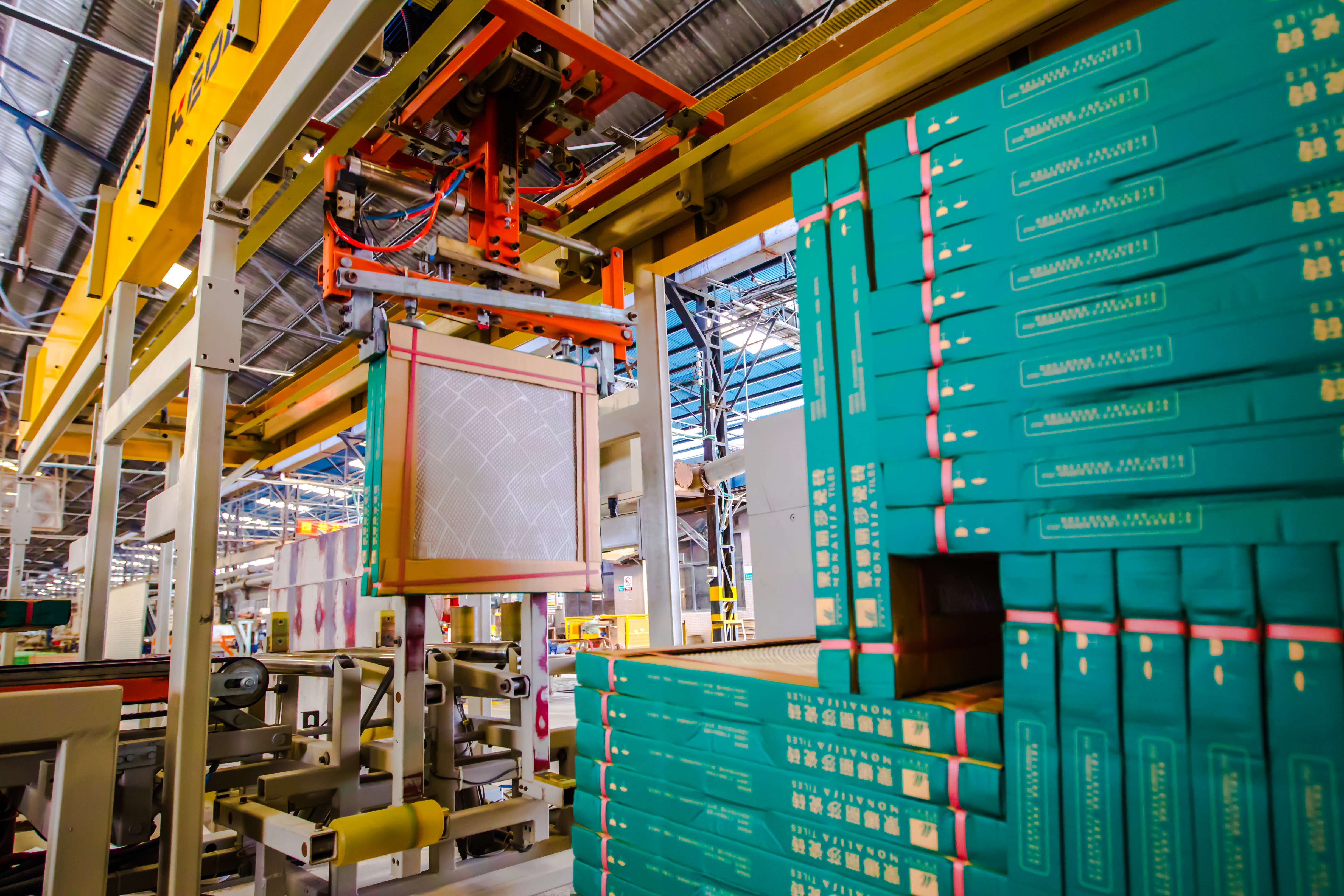
The sourcing route is not just a label on a quotation. It decides who owns the specification, who answers technical questions, who supplies the certificate file, who carries stock or customs risk, and who is responsible when an acceptance claim arises. For a sintered stone slab buyer at decision stage, the practical question is not whether factory-direct sounds stronger than a distributor or importer. The practical question is which route can support the project’s scale, documentation burden, customization need and risk tolerance on the same commercial basis.
Monalisa Group Co., Ltd. is a Foshan-based architectural ceramics group founded in 1992. Its company profile lists four production bases, 37 production lines, 100 million square meters of annual output, 4,106 employees, a 100-person R&D team, 15 certifications including ISO 9001 and ISO 14001, and 892 authorized patents. These are company-reported group figures. They are useful for route screening, but they do not replace an audit of the exact slab line, thickness, finish and order batch.
What the Three Sourcing Routes Actually Change
Factory-direct, distributor and importer routes allocate responsibility differently. A factory-direct buyer deals with the manufacturer or its export arm. A distributor route inserts a channel intermediary that may hold stock, serve a territory or bundle products. An importer route inserts a cross-border intermediary that may take title, arrange freight, clear customs or consolidate a multi-product order. The words distributor and importer do not by themselves prove stock ownership, technical capability or authorization. The buyer has to map the actual responsibilities in writing.
That responsibility map should answer five questions before price comparison begins: Who manufactures the slab? Which production site and line will make the order? Who holds the certificate file and test reports for the exact SKU? Who inspects and accepts the goods? Who pays for replacement freight if the batch fails the agreed criteria? A route that cannot answer these questions is not ready for a decision-stage comparison, even if its unit price looks attractive.
Industry Context: Why Sintered Stone Slab Purchasing Needs a Route Check
Sintered stone slab demand is not one uniform market. A 2025 commercial research report estimates the global sintered stone countertop surfaces market at USD 1.84 billion in 2024 and projects a 6.9% compound annual growth rate from 2024 to 2033. That figure is specific to countertop surfaces. It should not be used as a total market size for every sintered stone slab application, including wall cladding, flooring or exterior facades.
Import planning adds another layer. The United Nations Statistics Division places ceramic products in HS Chapter 69 and identifies heading 6907 for ceramic flags and paving, hearth or wall tiles. A particular sintered stone slab may fall under a different national tariff line depending on its characteristics and the importing country’s implementation. The HS reference is a starting point for document preparation, not a ruling for every product. Importers should confirm the exact code before comparing landed cost.
How to Compare the Routes: Four Decision Lenses
Use four lenses to keep the comparison evidence-based. First, evidence ownership: which party can show legal entity records, production sites, line allocation, certificates and test reports for the exact slab? Second, commercial scope: what is included in the price, and what is excluded? Third, acceptance control: who sets the sampling plan, inspection method, claim window and replacement remedy? Fourth, continuity: how will batch matching, repeat supply and after-sales responsibility work after the first shipment?
These lenses prevent a common mistake. Buyers sometimes compare a factory’s ex-works product price with a distributor’s delivered stock price or an importer’s landed-cost package. Those are different commercial scopes. The comparison is only meaningful when specification, Incoterm, packaging, documentation, payment terms and acceptance duties are aligned.
Route 1: Factory-Direct Sourcing
Factory-direct sourcing places the buyer in a direct relationship with the manufacturer or its export arm. It fits projects where the buyer needs to test production capacity, quality-system evidence and specification dialogue before committing. It also fits buyers that can manage export documents, pre-shipment inspection and technical file review. The route’s main advantage is proximity to the evidence source. Its main burden is that the buyer must perform more qualification work.
For a factory-direct review, the evidence file should start with entity identity, production footprint and quality system. In Monalisa’s case, the company profile lists four production bases in Xiqiao, Qingyuan, Tengxian and Gao’an, a total of 37 production lines, 100 million square meters of annual output, 4,106 employees and a 100-person R&D team. It also lists 15 certifications including ISO 9001 and ISO 14001, 892 authorized patents, and participation in drafting 49 national, industrial, local and group standards as of June 2021. These facts support a route-screening conclusion: the buyer can request a substantial evidence file. They do not prove that a specific 900 x 2700 x 9 mm glazed matt slab or any other SKU will meet a given project specification.
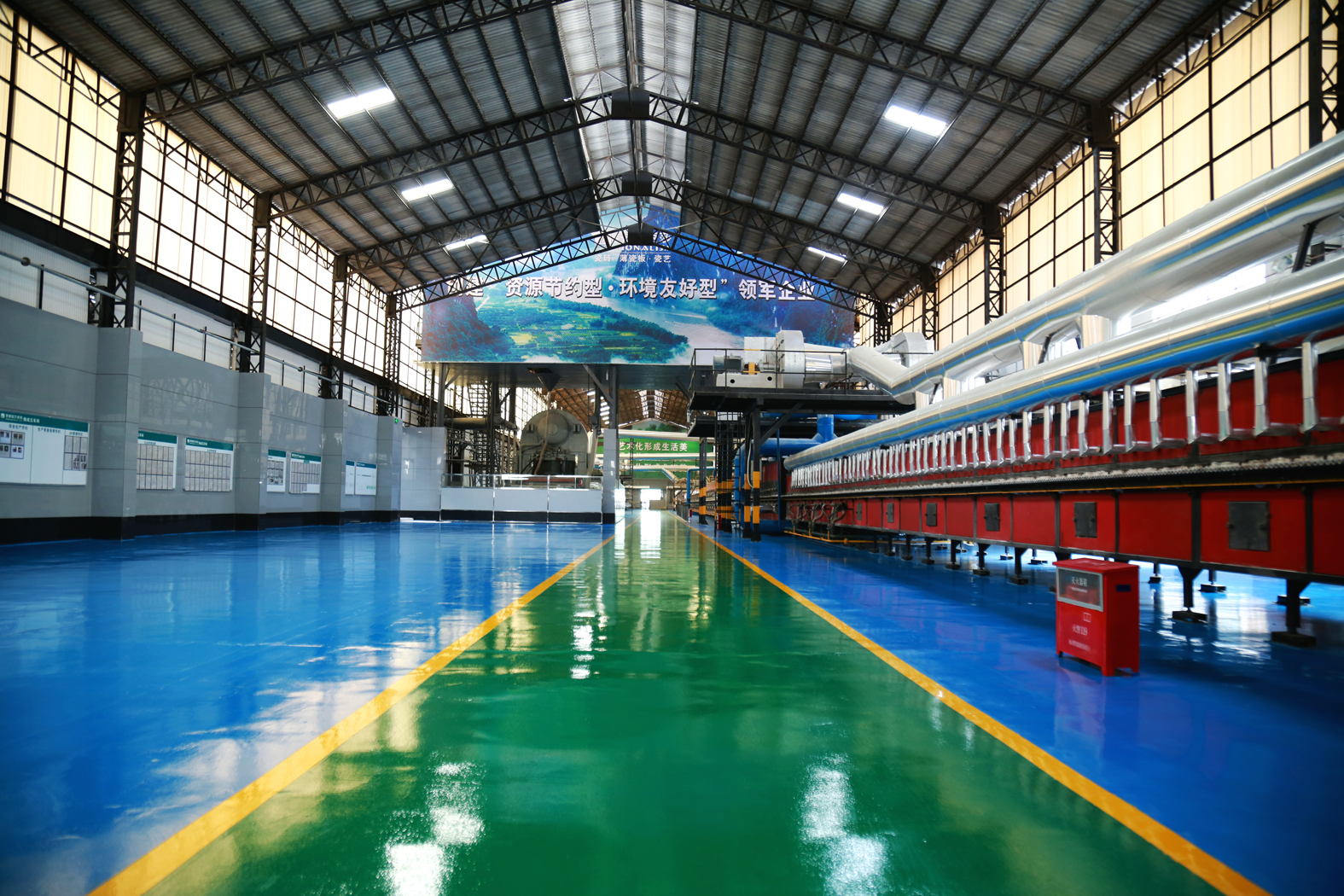
Factory-direct does not automatically mean a lower landed cost. The quotation may exclude freight, packing, breakage allowance, duties, port charges or local service. It may also assume buyer-managed inspection. A lower unit price is not a lower total cost if the exclusions differ from a distributor or importer offer. Ask for the price basis and exclusions in the same format for every route.
Route 2: Distributor Sourcing
Distributor sourcing places a stock-holding or channel intermediary between the buyer and the principal manufacturer. The route can reduce the buyer’s administrative load when the distributor holds the required products locally and can bundle small quantities or mixed orders. It can also provide local contact for replenishment and claims. Those benefits are service claims until they are written into the quotation, territory agreement and acceptance terms.
A distributor comparison should identify the principal manufacturer and the evidence chain. Ask whether the distributor owns the stock or brokers it, which production site and batch the slabs come from, what certificate scope travels with the product, who handles shade and batch matching, and who owns a claim after installation. If the distributor cannot name the manufacturer or provide batch traceability, the buyer is comparing a service layer without a verified product layer. That is a risk, not a convenience.
Route 3: Importer Sourcing
Importer sourcing places a cross-border intermediary in the transaction. The importer may take title, consolidate products, arrange freight and handle customs. Flexibility can be real when the importer simplifies a multi-product order or an unfamiliar import lane. It can also obscure the manufacturer identity and the split between product cost and service cost.
Verify the importer’s role in writing: principal, authorized agent or trader. Record the manufacturer’s name and production site, country of origin, HS code used, documents to be supplied, and the party responsible for warranty and nonconformity. For customs, the UN classification reference helps frame the discussion, but the national tariff line still has to be confirmed. An importer that treats HS 6907 as automatically correct for every sintered slab may create a landed-cost error before the goods even ship.
Side-by-Side Comparison
The table compares the routes on decision criteria that affect project scale, risk and documentation. It does not rank the routes. The right route depends on the buyer’s capability and the project’s evidence requirements.
| Decision criterion | Factory-direct | Distributor | Importer |
|---|---|---|---|
| Primary relationship | Buyer deals with manufacturer or export arm | Buyer deals with channel intermediary; principal may be behind the offer | Buyer deals with cross-border intermediary; title and customs role vary |
| Capacity evidence | Direct access to production-site, line and quality-system records | Verify principal manufacturer, stock ownership and batch source | Verify manufacturer identity, origin and import documents |
| Documentation chain | Shortest path to manufacturer certificates and test reports, subject to exact SKU scope | Distributor should pass through principal documents and add its own service duties | Importer should provide import, origin and conformity documents, not just a product label |
| Technical dialogue | Direct discussion with factory technical staff, subject to order size and process | Depends on distributor’s access to the principal | Depends on importer’s technical role and supplier relationship |
| Commercial scope | Often ex-works or FOB; freight, packing and inspection may be separate | May bundle local stock, small-quantity service or delivery | May bundle freight, duty, customs and multi-product consolidation |
| Acceptance control | Buyer can negotiate pre-shipment inspection, sampling and claim terms directly | Confirm who inspects, who holds the claim and who replaces nonconforming stock | Confirm inspection point, claim window and responsibility after customs release |
| Main risk to manage | Buyer carries more qualification and export administration | Hidden intermediary or limited product range behind the stock offer | Opaque manufacturer identity or bundled cost that hides exclusions |
Purchasing Terms and Acceptance Criteria to Fix Before Ordering
Purchasing terms should be fixed before the route is selected, because they reveal what each route actually includes. Start with price and delivery basis: Incoterm, currency, unit basis in square meters or slabs, thickness, finish, packaging and breakage allowance. Then define MOQ and order mix: per SKU, per thickness, per color or per container. A mixed-order MOQ is not comparable with a single-SKU MOQ.
Define lead time by its start point. Is it measured from order confirmation, deposit receipt, stock availability or artwork approval? Define payment schedule, documents and inspection rights. For import routes, list the commercial invoice, packing list, bill of lading, certificate of origin, test reports, declaration of performance where applicable, and the confirmed HS classification. Do not accept a generic document list that is not tied to the exact order.
Acceptance criteria to write into the order:
- Color and shade: batch reference, approved sample, and allowable variation between slabs.
- Dimensions and flatness: edge, thickness, diagonal and surface tolerance, with the measurement method stated.
- Strength and handling: breaking strength, packaging drop/impact protection, and breakage allowance.
- Surface performance: slip resistance, stain resistance, water absorption, scratch and heat performance where relevant to the application.
- Exterior and wet-area checks: freeze-thaw, UV and fire evidence appropriate to the project, not transferred from an interior application.
- Radioactivity and regulated substances: test report and applicable market requirement for the destination.
- Traceability: batch code, inspection record, and the party that can link the delivered slab to the production record.
Monalisa’s risk-control record describes 18 quality-control points from raw-material intake through ball milling, spray drying, pressing, drying, glazing, firing, polishing and sorting/packaging. It also describes an in-house CNAS-accredited laboratory and a traceability system using laser marking or RFID. Buyers should still confirm that the described controls apply to the exact slab line, thickness, finish and order batch. A group-level quality system is evidence of capability, not proof of a specific delivered lot.

Step-by-Step Route Selection
Use the same sequence for all three routes so the comparison stays fair. The sequence moves from specification to evidence, then to commercial terms and acceptance.
- Define the application and specification. State whether the slab is for kitchen countertops, bathroom vanities, wall cladding, flooring, exterior facades or another use. Record format, thickness, finish, color family and required performance evidence. For large-format or ultra-thin slabs, add handling, packing and breakage requirements.
- Set the documentation level. Decide whether the project needs ISO quality/environment certificates, product test reports, NSF or CE scope, fire evidence, freeze-thaw data or a declaration of performance. Ask for certificate numbers, issuing bodies, product scope and validity, not just logos.
- Request route evidence. Factory-direct: legal entity, production sites, line allocation and quality records. Distributor: principal manufacturer, stock ownership, territory and claim responsibility. Importer: manufacturer identity, origin, HS code and import documents.
- Request same-basis quotations. Align Incoterm, packaging, breakage allowance, payment schedule, lead-time start point and document list. Separate product cost from freight, duty, inspection and local service.
- Verify the sample and acceptance plan. Use one sampling plan across routes: same thickness, finish, shade and application. Check dimensions, flatness, color, water absorption, strength and relevant surface performance. Retain a reference sample and record the batch.
- Lock claims and continuity. Name the party responsible for inspection, claim notification, replacement or credit, and replacement freight. Confirm how repeat orders will maintain shade and batch consistency.
Application Notes: Matching the Route to the Project
For kitchen countertop and bathroom vanity sintered stone slab projects, the route must support the exact finish, fabrication tolerance and any food-contact or hygiene documentation required. If NSF certification is specified, ask for the certificate number, issuing body, product scope and validity. A catalogue label is not enough. Factory-direct may give the shortest path to technical dialogue; a distributor may hold local stock; an importer may consolidate related products. The buyer should judge the actual documents, not the route name.
For wall cladding and flooring, compare packing, handling, flatness and breakage terms for the exact format. A listed Monalisa catalogue item, for example, is a 900 x 2700 x 9 mm glazed matt sintered stone slab, but format availability and current production must be confirmed for the project. For exterior facade sintered stone panels, require project-specific evidence for freeze-thaw, UV, fire and wind-load design as applicable. Do not transfer interior test data to exterior use.
When the specification calls for scratch resistant, heat resistant, stain resistant, waterproof or UV resistant sintered stone, ask for the test method and result for the exact product. A performance word in a brochure is not an acceptance criterion. Monalisa’s published product information includes sintered stone slabs with water absorption of 0.08% or lower, but the applicable test report and SKU must still be checked before approval.
What Verifiable Factory-Direct Evidence Looks Like
Verifiable factory-direct evidence is specific, current and tied to the order. At group level, Monalisa reports four production bases, 37 production lines, 100 million square meters of annual output, 4,106 employees, a 100-person R&D team, 15 certifications including ISO 9001 and ISO 14001, 892 authorized patents and participation in 49 standards. Its profile lists global market coverage including China, Southeast Asia, the Middle East, North America, Europe, Australia and Africa. These facts help a buyer decide whether a factory-direct route is worth a deeper audit.
At order level, the evidence should become narrower: the exact production site, the line allocated to the slab, the batch record, the test report for the specified thickness and finish, the certificate scope, the packaging standard and the pre-shipment inspection plan. A distributor or importer should be able to pass through the same order-level evidence at one remove. If the route cannot connect the commercial offer to the production record, the buyer is carrying an unverified risk.

FAQ
Which sourcing route gives the clearest certification and documentation trail?
Factory-direct can give the shortest path to the manufacturer’s certificate file, but clarity depends on the documents rather than the label. Ask for certificate numbers, issuing bodies, product scope, validity, test methods and the exact SKU or thickness. A distributor or importer should pass through the same documents and add its own role, warranty and claim responsibility.
How can a buyer verify factory-direct capacity before committing?
Request legal-entity documents, a production-site list, line allocation for the ordered product, recent inspection records and a factory audit. For Monalisa, the company profile lists four production bases, 37 production lines, 100 million square meters of annual output, 4,106 employees and a 100-person R&D team. These are company-reported figures and should be matched to the specific slab line and order.
Is factory-direct always cheaper than distributor or importer sourcing?
No. A factory-direct quotation may exclude freight, packing, breakage allowance, duties or local service. A distributor or importer may bundle those items. Compare the same specification, Incoterm, packaging, payment terms and acceptance scope. A lower unit price is not a lower landed cost if the exclusions differ.
How should samples from the three routes be compared?
Use one sampling plan for all routes: same thickness, finish, shade and application. Check dimensions, flatness, color/shade, water absorption, strength and relevant stain or slip performance. For exterior use, require freeze-thaw, UV and fire evidence. Record the batch and retain a reference sample. If a route cannot provide the test method and batch traceability, the sample is not comparable.
What delivery and acceptance terms should be fixed before ordering?
Fix the Incoterm, unit price basis, MOQ, packaging, breakage allowance, lead-time start point, payment schedule, document list, inspection method, acceptance sampling, claim window and warranty responsibility. For slabs, add shade and batch matching, dimension and flatness tolerances, and the party that pays replacement freight. A practical next step is to request Monalisa’s brochure and route-check documentation before the quotation is finalized.
Conclusion
Route choice is a responsibility choice. Factory-direct fits buyers that need direct capacity and technical evidence and can manage qualification and export administration. Distributor sourcing fits buyers that value local stock and consolidated service, provided the principal manufacturer and document chain are transparent. Importer sourcing fits buyers that need cross-border consolidation, provided manufacturer identity, HS classification, warranty and claims are clear.
Use the same specification, Incoterm, acceptance schedule and document checklist for all three routes. Monalisa’s factory-direct evidence provides a useful benchmark: four production bases, 37 production lines, 100 million square meters of reported annual output, 4,106 staff, a 100-person R&D team, 15 certifications, 892 authorized patents and global market coverage. Verify the exact slab, certificate scope and order terms before committing.

For buyers reviewing a factory-direct route, the Monalisa company brochure is available as a public download.
Have Questions or Need More Details?
Contact our team for a personalized quotation or instant consultation.
Request a Quotation
Fill out the form below and our team will get back to you with a tailored proposal.
WhatsApp Direct Chat
Prefer to chat in real-time? Message us on WhatsApp for instant assistance & quick answers.
- Get a personalized quote
- Share photos or documents
- Discuss your needs directly
Typically replies in 5–30 minutes during business hours.