
Porcelain Tile vs. SPC Flooring: A Commercial Project Decision Guide
Specifying floor finishes for a hotel, shopping mall, office building, restaurant or showroom comes down to a question that appearance samples cannot answer: which of the two candidates can you prove will still perform in year eight? Porcelain tile and SPC flooring compete in the same commercial tenders, and both can be supplied as stone-look, concrete-look or wood-look finishes. The difference is the type of evidence that arrives with them. Porcelain tile can be specified against standardised, testable criteria — water absorption, abrasion class, slip rating, stain grade and fire classification. SPC performance is normally carried by supplier datasheets and third-party test reports that the project team has to request, read and verify. This guide sets out the criteria, the questions to ask and the verification steps that let contractors and specifiers compare the two product categories fairly.
Why this comparison is harder than it looks
The two products do not arrive with the same kind of paperwork. Porcelain tile is a fired ceramic product classified under ISO 13006:2018, which places dry-pressed porcelain in Group BIa with a water absorption (E) of 0.5% or below and an average mechanical resistance above 40 N/mm². Because that vocabulary is shared, a specifier can compare two porcelain offers almost line by line: the same test methods sit behind the numbers, and a shortfall is visible.
SPC flooring, by contrast, is a rigid-core plank built around a mineral-filled polymer core with a printed design layer and a wear layer. For this guide, no independently verified SPC performance dataset was available, so no SPC values are quoted anywhere in the text. That is not a judgement on the product category; it is a statement about the evidence. Every SPC number you use in a tender should come from the specific supplier's datasheet and third-party report for the specific SKU, never from a category-level marketing page.
The rule that prevents a false comparison: never place a supplier-declared number beside a laboratory-classified number unless the test method, the sample and the conditioning match. Water absorption on a fired ceramic body and water behaviour on a polymer core are different measurements with different meanings, even when both appear as a percentage.
Industry context: capacity is consolidating while specifications tighten
World tile production fell to 14.95 billion square metres in 2024, a 6.2% decrease compared with 2023, according to MECS/Acimac research published in 2025. Commercial research from Spherical Insights projects the global porcelain tile market moving from USD 9.73 billion in 2024 to USD 18.33 billion by 2035; that figure is a projection with stated assumptions, not a measured outcome, and should be treated as planning context rather than a demand guarantee.
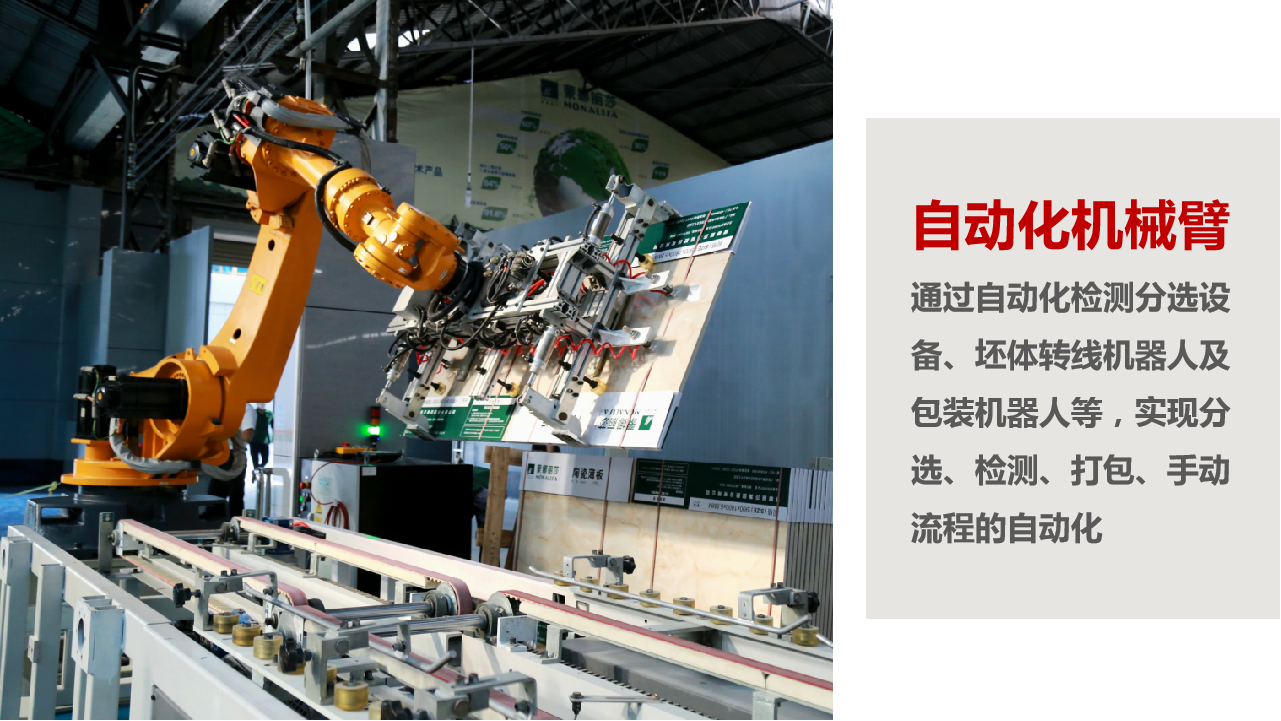
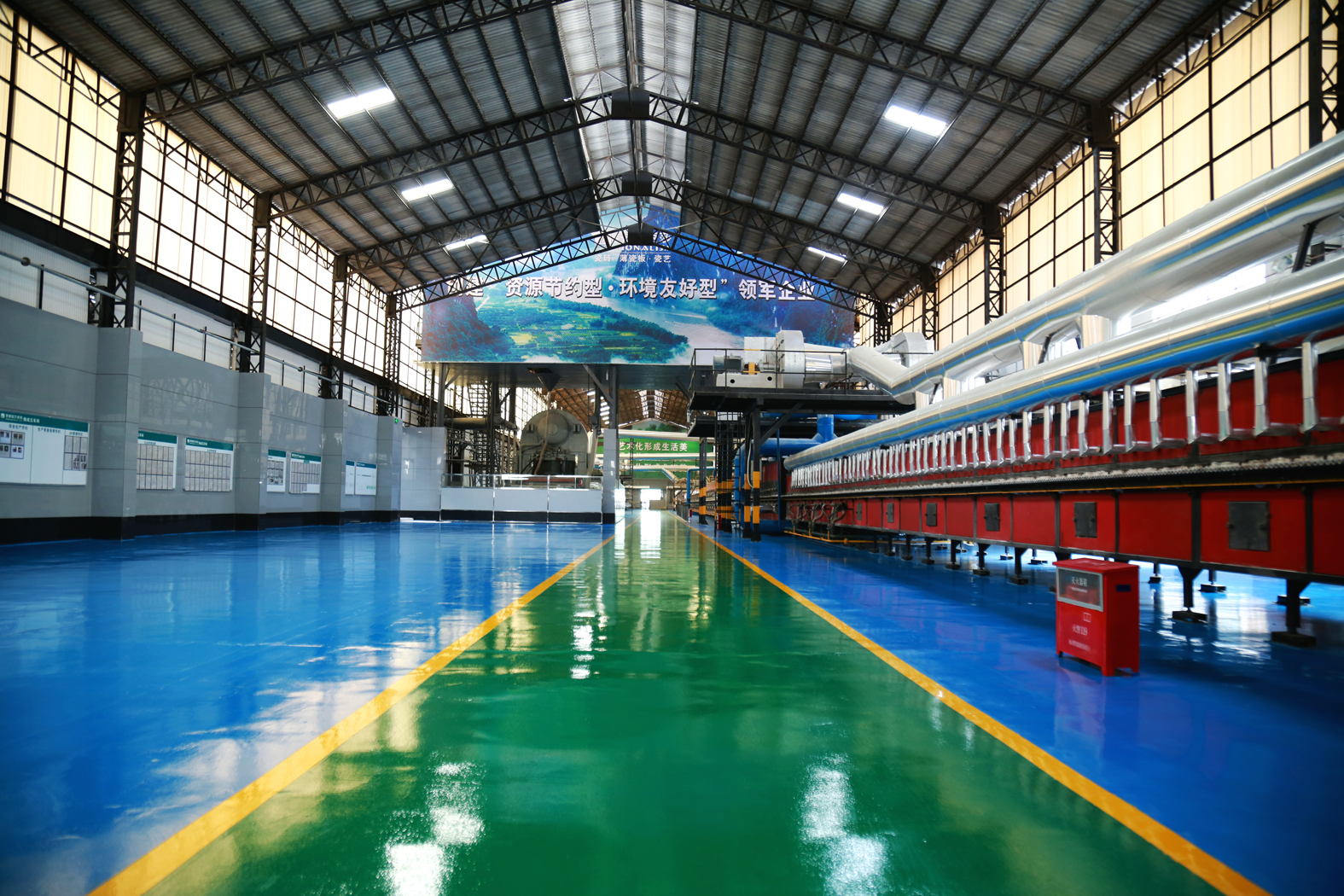
For a project team, the practical reading is about supply continuity rather than market size. When production contracts, the suppliers most likely to hold batch continuity, stock reserves and delivery dates are those with multi-base manufacturing and documented quality systems. Monalisa Group Co., Ltd., founded in 1992 and headquartered in Foshan, Guangdong Province, operates four modern production bases and 37 production lines and reports annual output of 100 million square metres. Its portfolio covers ceramic tiles, sintered stone slabs and SPC flooring — a detail that matters in this comparison, because a single qualified supplier relationship can carry the porcelain, slab and SPC options inside one tender package instead of three separate supply chains.
Six criteria that decide the specification
Commercial floor selection fails most often because the specification lists finishes instead of performance. The six criteria below convert the conversation into checks that can be answered with documents.
1. Traffic loading and abrasion
For commercial and public areas, specify PEI 4 or higher, and step up to PEI 5 where trolleys, service carts or heavy footfall concentrate on the same route. Monalisa reports PEI Grade 5 abrasion resistance for its porcelain range, with a wear volume of 140 mm³ or below against roughly 540 mm³ for conventional tile. On the SPC side, ask for an abrasion test report tied to the actual wear-layer thickness being quoted, including the test method and cycle count. A wear-layer figure without the corresponding test does not tell you how the surface behaves after three years of cleaning.
2. Water absorption and wet-zone behaviour
ISO 13006 Group BIa already fixes porcelain at 0.5% water absorption or below, and Monalisa reports 0.08% or below for its dense body — the practical basis for waterproof porcelain tiles in bathrooms, kitchens and back-of-house wash areas. In wet zones the specification should also cover grout and joint design, because water reaches the substrate through the joints before it reaches the tile. For SPC, request dimensional stability and edge-swelling data after water immersion, plus the supplier's instruction on sealed vs floating installation in wet rooms. Bathroom porcelain tiles and kitchen porcelain tiles are usually judged on the same documents, so keep one evidence file per area.
3. Slip resistance
Match the rating to the area rather than applying one number everywhere: R9 for dry, protected interiors, R10 for entrance zones and food service, R11 for wet thoroughfares, pool surrounds and outdoor porcelain tiles. Monalisa's production control requires batch testing with a pendulum friction tester at a wet BPN of 50 or above, or R10 and above, before release. When comparing anti-slip porcelain tiles against an SPC anti-slip claim, insist the value is measured on the finished surface, including any factory coating, and re-check it after the maintenance regime has been applied for a season.
4. Fire classification
Porcelain tile is a fired ceramic product, and where a project requires a Class A fire classification, that classification must be confirmed on the classification report for the specific product rather than assumed from the category. Fire resistant porcelain tiles therefore belong in a tender as a document requirement. For SPC, request the fire classification report naming the SKU, together with smoke and, where the project calls for it, toxicity data. Two suppliers quoting the same class may still differ in the tested thickness and adhesive system.
5. Stain, chemical and scratch resistance
Grade 5 stain resistance is the working benchmark for commercial porcelain, and Monalisa reports Grade 5 along with surface hardness of Mohs 7 or above for scratch resistant porcelain tiles. The test that matters on site is the one using your own cleaning chemicals: disinfectants, degreasers and floor-machine pads attack surfaces differently from laboratory stains. For SPC, obtain a chemical-resistance list covering the actual agents used by the cleaning contractor, and confirm how the wear layer responds to repeated machine scrubbing in food service and healthcare-adjacent spaces.
6. Dimensional tolerance, flatness and joint design
Large format porcelain tiles live or die on flatness. Monalisa reports a flatness tolerance of ±0.15% or better and mould tolerance of ±0.1 mm, which is what makes tight-joint installation with a grout gap of 0.5 mm or less realistic in the first place. If the tender proposes large-format porcelain, the tolerance values belong in the specification and the levelling method belongs in the method statement. For SPC, request dimensional stability under temperature change together with the manufacturer's acclimation period and expansion-gap instructions, because a rigid plank that moves after handover produces gaps that no wear-layer warranty covers.
Step-by-step: running the comparison before tender
- Fix the performance schedule per area first. Write the required abrasion class, slip rating, water behaviour, stain grade and fire classification for each zone before any product name is discussed. Areas with the same function should share one schedule across both product categories.
- Put the evidence list into the tender document. Name the datasheet, the test report, the classification report and the certificate scope you expect. Bidders who cannot supply them are screened out early instead of at post-tender clarification.
- Request the identical document set from every bidder, including a supplier that offers both porcelain and SPC. Identical requests are what make a like-for-like table possible.
- Compare method with method. Record the test standard, sample size and conditioning beside every number. Where an SPC supplier cannot state the method, treat the value as undeclared rather than as a pass.
- Price the installation system, not only the tile. Adhesive, levelling accessories, movement joints, substrate preparation and labour belong in the same line as the material.
- Confirm batch continuity and a reserve. Monalisa's comparison data cites a two-year batch stock reserve to protect patch repairs without colour difference, and automatic colour sorting by shade and grade. Ask every bidder — porcelain or SPC — how a repair in year four will match the original order.
- Score lifecycle cost, not unit rate. A higher unit price with a longer service interval can land below a cheaper product that needs earlier replacement, but only when the replacement and closure costs are counted.
Application notes by building type
Hotels
Hotel projects usually split into two specifications: public areas and guest bathrooms. Lobbies, ballroom foyers and spa circulation need PEI 4 or higher, R10–R11 slip resistance and Grade 5 stain resistance against cleaning chemicals. Guest bathrooms suit waterproof porcelain tiles with a dense body and controlled joint design. Where SPC is proposed for guest rooms, ask for indentation and rolling-load evidence for luggage trolleys and bed frames, plus the acoustic data the hotel operator will want anyway.
Shopping malls
Mall concourses are the most punishing environment in this list. Commercial porcelain floor tiles at PEI 5, large format with tight joints and a flatness tolerance inside the specification reduce dirt-trapping joints and cleaning cost. SPC in a mall tenancy should be supported by evidence for concentrated point loads and by a replacement plan for damaged planks in a leased unit that changes hands frequently.
Office buildings
Office floors trade durability against acoustics and speed of churn. Porcelain in lift lobbies, washrooms and canteens handles wet cleaning and heavy traffic; SPC is often proposed in open-plan areas for underfoot comfort and fast reinstatement. Compare them on the same terms: cleaning regime, rolling-chair load, and how each is repaired after a fit-out change.
Restaurants
Grease, thermal shock and wet slip risk from the kitchen to the dining edge make slip rating the first decision. Specify R10–R11 anti-slip porcelain tiles for back-of-house and entrance transitions, stain resistant porcelain tiles for the dining floor, and check that the SPC option carries wet-test slip evidence plus chemical resistance to kitchen degreasers. Kitchens also demand a joint and skirting detail that survives daily washdown.
Showrooms
Showrooms are appearance-led, but not traffic-free. Marble look porcelain tiles, stone look porcelain tiles, concrete look porcelain tiles and wood look porcelain tiles produced by digital printed decoration let a single floor run continuously through display zones at 98% pattern realism compared with natural stone, as reported in Monalisa's product comparison data. If SPC is used to hit a budget in back-of-house or temporary display areas, keep the transition detail and the colour match in the drawing set.
Comparison table: verified porcelain criteria against SPC evidence requests
| Criterion | Porcelain tile — verified position | SPC — evidence to request |
|---|---|---|
| Abrasion and traffic | Specify PEI 4 or higher for commercial and public areas; Monalisa reports PEI Grade 5 with wear volume of 140 mm³ or below against roughly 540 mm³ for conventional tile | Abrasion test report tied to the quoted wear-layer thickness, with test method and cycle count |
| Water absorption | ISO 13006 Group BIa, E ≤ 0.5%; Monalisa reports ≤ 0.08% for its dense body | Dimensional stability and edge-swelling data after water immersion, with the supplier's method stated |
| Slip resistance | R9–R11 by area; Monalisa production control tests wet BPN ≥ 50 or R10 and above before release | Wet slip value measured on the finished surface, including any factory coating |
| Fire | Class A classification where the project requires it, confirmed on the product classification report | Fire classification report naming the SKU, plus smoke and toxicity data if specified |
| Stain and chemical | Grade 5 stain resistance; surface hardness reported at Mohs 7 or above | Chemical-resistance list covering the cleaning agents and disinfectants used on site |
| Tolerance and joints | Flatness tolerance ≤ ±0.15%, mould tolerance ≤ ±0.1 mm, tight-joint grout gap ≤ 0.5 mm | Dimensional stability under temperature change, acclimation period and expansion-gap instructions |
| Repair and continuity | Two-year batch stock reserve and shade sorting reported to protect patch repairs; breakage reported at ≤ 0.3% against roughly 0.8% for standard tile | Availability of the same décor and batch after handover, and the documented replacement procedure |
Installation and accessory requirements for porcelain tile
Most porcelain failures on commercial projects are installation failures, not product failures, which is why the method statement belongs beside the datasheet. Thin-set installation over a prepared substrate requires a flat base, full adhesive coverage under the tile and a movement-joint layout that follows the structural grid and the perimeter. Large-format work changes the accessory list: levelling clips and wedges, a notched trowel sized to the tile format and substrate, suction-cup handling equipment and, at perimeters and columns, a flexible sealant rather than rigid grout.
Lippage is the callback that specifiers see most often. The control is a combination of a flatness tolerance inside the specification, a substrate checked before bedding, and a levelling system used consistently across the field rather than only at the visible edge. The economics support getting this right: Monalisa's comparison data reports that tight-joint installation with a grout gap of 0.5 mm or less saves 10%–15% in grouting materials and labour on large projects, and that the flatness tolerance of ±0.15% is what makes that joint width credible.
Two further accessories deserve a line in the specification. First, a batch reserve held after handover — Monalisa cites a two-year stock reserve — so a damaged tile can be replaced without a visible colour difference. Second, outdoor and frost-affected terraces require a frost resistant porcelain tile with documented freeze-thaw performance; Monalisa reports 150 cycles without cracking against 50–100 cycles for conventional tile, which is the value that decides an exposed podium specification. Always confirm the accessory and adhesive schedule against the manufacturer's current installation instructions for the specific format rather than a generic trade reference.
What to verify about the supplier, not just the sample
A sample board proves appearance; it does not prove that the factory can repeat the batch in month nine. Monalisa's documented control system runs 18 quality-control points from raw material intake through ball milling, spray drying, pressing, glazing, firing, polishing and sorting, with key parameters recorded in real time. Colour is controlled by automatic colour sorting and spectrometer inspection, flatness is verified at 100% by scanner after the kiln, and each tile is laser-marked or RFID-coded for traceability to production date, press station, kiln zone and inspector. The group holds 15 certifications including ISO 9001, ISO 14001 and ISO 45001, and operates a CNAS-accredited in-house laboratory covering dimensions, water absorption, breaking strength, abrasion, slip, stain, freeze-thaw and radioactivity.
Apply the same scrutiny to an SPC offer. Ask which laboratory issued the report, whether the tested SKU matches the quoted SKU, and whether CE certified porcelain tiles and CE-marked SPC planks are supported by a declaration of performance whose scope names the product and the standard. Certification labels are a starting point for the document request, not the answer to it.
Frequently asked questions
Does porcelain tile satisfy commercial fire and slip requirements without extra treatment?
Porcelain tile is a fired ceramic product, and its classification is fixed by the body, so no surface treatment is added to reach a fire class. Where a project requires a Class A fire classification, that classification must still be confirmed on the classification report for the exact product. Slip resistance is different: it is a surface property set by the finish and texture, so the R9–R11 rating has to be matched to the area and verified on the finished tile.
Can one supplier cover porcelain tile, sintered stone slab and SPC flooring for a single project?
For Monalisa, yes: the group's stated product scope covers tiles, sintered stone slabs and SPC flooring, supported by four production bases and 37 production lines. That matters for a mixed specification because one commercial and documentation channel can cover several floor categories. It does not remove the need for product-level evidence — datasheets, test reports and classification documents — for each SKU actually specified.
How should a project compare the cost of porcelain tile and SPC flooring?
Compare lifecycle cost, not unit rate. For porcelain, Monalisa's comparison data reports a unit price 15%–30% higher than conventional tile, offset by a reported service life extension of two to three times and a 20%–35% lower total lifecycle cost. For SPC, build the same model from verified inputs: installed cost, subfloor preparation and moisture control, acclimation time, expected replacement interval, and the cost of closing a trading area during replacement. Any comparison that mixes a verified porcelain figure with an unverified SPC figure is not a comparison.
What should a sample request include for a commercial floor decision?
Request a sample from the production batch rather than a showroom board, and ask for the shade and calibre designation with it. Add the technical datasheet, the slip and abrasion reports, the stain and chemical test results, and the classification report where fire performance is specified. For SPC, add the wear-layer specification and the dimensional-stability report. Site mock-ups, where the schedule allows, test the substrate, the levelling system and the joint detail together.
How do I confirm lead time and batch continuity before awarding?
Ask for a written delivery programme with the batch or shade range reserved for the project, and confirm how a repair in year three or four would be matched. Monalisa's comparison data references a two-year batch stock reserve for exactly this purpose, and traceability coding allows a tile to be traced to its production date and line. Contractors who need one documentation pack covering porcelain tile, sintered stone slab and SPC flooring, with current specifications and quotation terms, can request it through the Monalisa website or download the brochure linked at the end of this guide.
Conclusion
The choice between porcelain tile and SPC flooring on a commercial project is not settled by appearance, and it should not be settled by a single headline number. Porcelain tile can be specified against published criteria — ISO 13006 Group BIa water absorption of 0.5% or below, PEI 4 or higher for commercial and public areas, Grade 5 stain resistance, R9–R11 slip ratings and Class A fire classification where the project requires it — and those criteria are answerable with documents. SPC can compete on the same projects, but only when its claims are carried by product-specific reports rather than category language.
The work that decides the outcome happens before the tender: a performance schedule per area, an identical evidence request to every bidder, an installation system priced with the material, and a batch-continuity plan that survives handover. Contractors who run that sequence get a defensible specification whichever product wins, and a repair strategy that still works in year five.
Download the Monalisa product brochure for full portfolio and specification reference: Monalisa brochure (PDF).
Have Questions or Need More Details?
Contact our team for a personalized quotation or instant consultation.
Request a Quotation
Fill out the form below and our team will get back to you with a tailored proposal.
WhatsApp Direct Chat
Prefer to chat in real-time? Message us on WhatsApp for instant assistance & quick answers.
- Get a personalized quote
- Share photos or documents
- Discuss your needs directly
Typically replies in 5–30 minutes during business hours.