
SPC Floor Compliance in Public Projects: B1, R9–R11, Class A
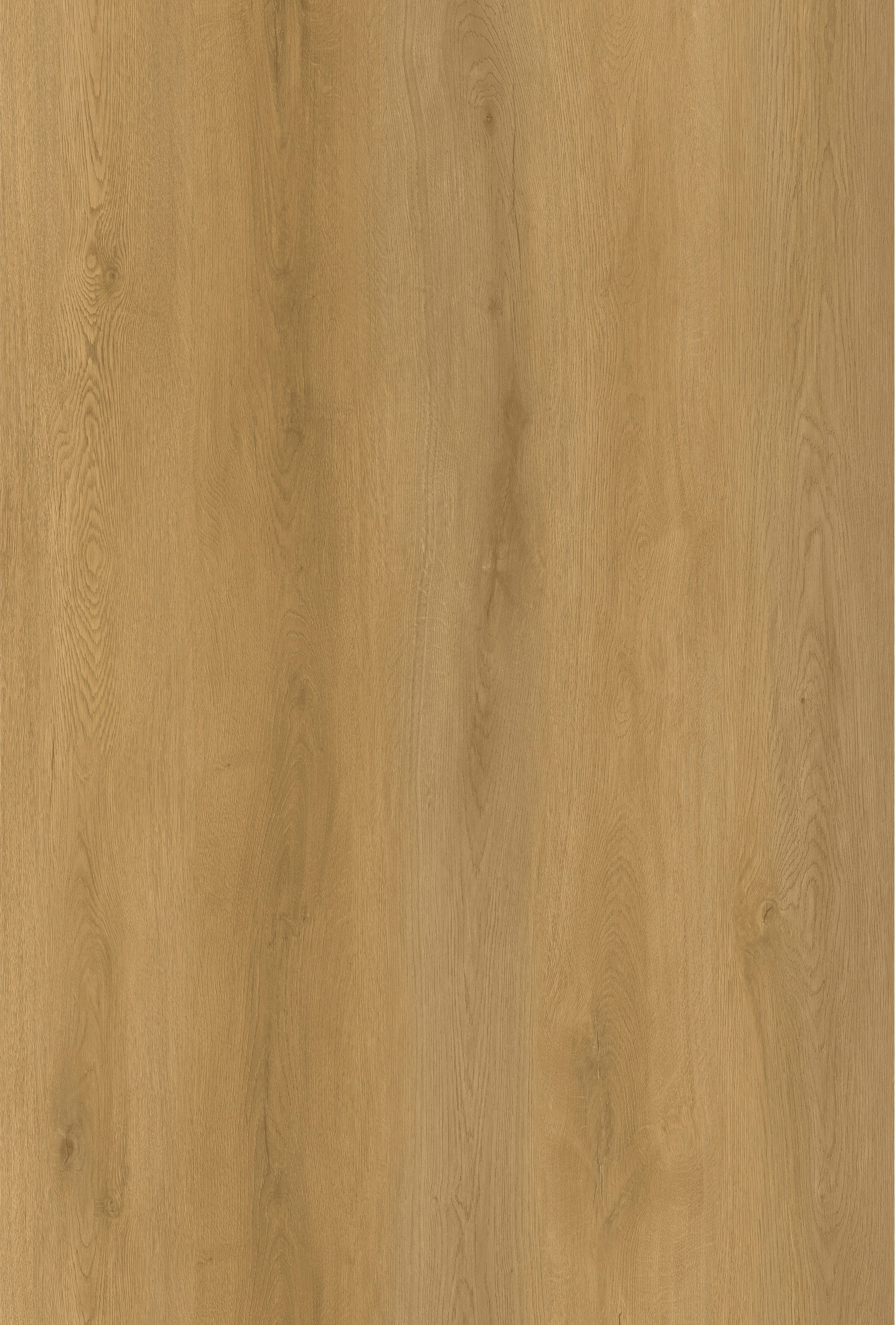
SPC flooring is specified for public interiors by class, not by description. Image: Monalisa SPC flooring.
Public-project flooring is accepted on evidence, not on description. In China, a tender package for a metro concourse, a hospital corridor or a school building typically fixes three properties for SPC flooring: a B1 fire classification, a slip resistance class between R9 and R11 — with R10 or higher required in bathrooms and other wet rooms — and a Class A radioactivity rating. Export projects add a second layer, where CE marking, GREENGUARD Gold certification or LEED-related documentation may be required by the specification or the consultant.
Most rejected submittals do not fail because the floor is poor. They fail because the class written in the document does not match the class written in the tender, or because the test report names a different surface finish than the one being delivered. This article explains what each class controls, how the three interact, and how to assemble a submittal that survives review — for buyers in China, the Middle East, including UAE public facilities, and other export markets.
Direct answer: a compliant SPC flooring package for a public project contains four elements — a B1 fire classification evidenced on the exact floor construction being supplied; a slip class assigned space by space (R9 for dry circulation, R10 minimum in bathrooms and wet rooms, R11 where water is frequent); a Class A radioactivity rating for the Chinese market; and, for export projects, the market-specific mark such as CE, GREENGUARD Gold or LEED documentation. Any one of these missing makes the package incomplete, regardless of product quality.
The Compliance Problem: Three Classes, One Submittal
Compliance gaps in SPC flooring show up in three recurring forms, and each has a different fix.
Class drift. The specification states B1, the offer says “fire-retardant”. These are not the same statement. A descriptive claim cannot be substituted for a classification, and a reviewer who checks line by line will reject the offer on that alone.
Document drift. The test report is genuine but covers a different construction — another thickness, another wear layer, another backing, or another surface finish. Fire and slip results attach to the assembly that was tested, not to the product family name.
Space drift. A single slip class is applied to the whole building. The result is either an unnecessarily rough floor in offices, or a floor in bathrooms that does not reach the R10 minimum the project requires. Both outcomes create cost or safety problems that appear after handover.
Industry Background: Why Public Projects Set the Bar
SPC flooring is a mature category with a large supply base, and that changes the role of compliance. Dataintelo estimates the global SPC flooring market at USD 9.8 billion in 2025. The figure should be read with care: Grand View Research reports USD 5.9 billion for the same year using a narrower definition of pure SPC, and the gap shows how much a market number depends on scope. For procurement purposes the direction matters more than the decimal — demand is large and still expanding.
China remains the largest single source. OEC trade data records USD 4.97 billion of exports under HS 391810 — floor, wall and ceiling coverings of vinyl chloride polymers — in 2024. Dataintelo also reports that rigid-core products, the construction SPC belongs to, held a 74.2% revenue share of the SPC market in 2025.
The practical consequence for a public-project buyer is simple: supply is not scarce, documented supply is. When dozens of factories can produce a rigid stone-plastic plank, the differentiator becomes the ability to evidence a specified class on the exact product, in the exact finish, for the exact batch — and to repeat that evidence project after project.
What Each Class Actually Controls
B1 Fire Classification
B1 is a flame-retardant classification in the Chinese building-material fire classification system, sitting above ordinary combustible material and below the non-combustible classes. Public interiors — corridors, stair lobbies, transport terminals, hospital wards, teaching buildings — commonly specify B1 as the minimum for floor coverings, because floor material participates in fire spread along escape routes.
For a buyer, the useful question is not “is it B1?” but “which construction is B1, and is that the construction I am ordering?” A B1 result should be read together with the core density, the wear layer thickness, the backing and the finish. Change any of these and the evidence has to be re-established. SPC with a high-density stone-powder core is a common choice for these projects precisely because the core is dense and dimensionally stable, but density alone is not a fire classification.
Slip Resistance: R9, R10 and R11
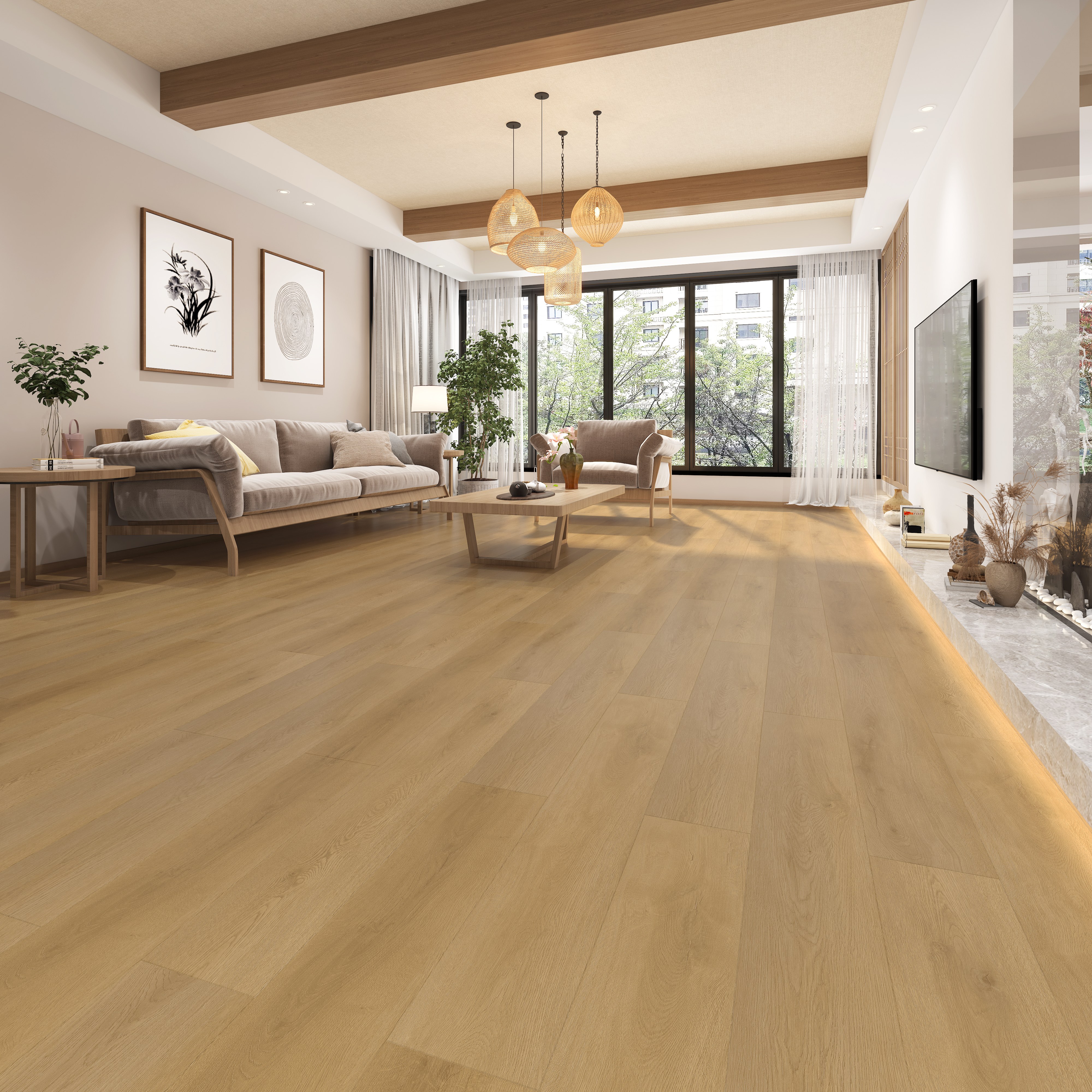
Slip class attaches to the surface finish supplied, not to the product family. Image: Monalisa anti-slip SPC flooring.
R classes come from ramp testing and run upward from R9: the higher the number, the greater the slip resistance of the tested surface. Public projects normally work with the R9–R11 band, assigned by space rather than by building.
- R9 — dry interior circulation: offices, retail floors, dry corridors, classrooms, wards.
- R10 — the minimum for bathrooms and other wet rooms, and the usual default for clinic rooms, kitchens and entrance zones where water is present but not standing.
- R11 — zones that are frequently wet or where water is carried in: shower surrounds, transition strips at external doors, some food-service areas.
Two traps are worth naming. First, the R class belongs to the embossing and finish supplied. A quotation showing R10 for one finish does not transfer to a smoother finish in the same collection. Second, higher slip resistance usually means a more textured surface, which holds soil more readily. On a hospital or school floor this raises the cleaning frequency, so the slip class and the maintenance regime should be decided together rather than one after the other.
Class A Radioactivity in China
China classifies building materials by radioactivity into classes. Class A permits unrestricted use in interiors; the lower classes carry restrictions on where the material may be installed. Because SPC is built on a high stone-powder core, Chinese public projects frequently list Class A as a separate mandatory line, alongside the fire classification, rather than as an optional extra.
This is the requirement most often missing from foreign buyers’ checklists, in both directions. A supplier quoting into a Chinese public project may omit it; a supplier quoting into a UAE or European project may present a Class A certificate in place of the mark the consultant actually asked for. Class A is a Chinese classification — it is not a substitute for CE marking, and it is not requested in every market.
Export Marks: CE, GREENGUARD Gold and LEED
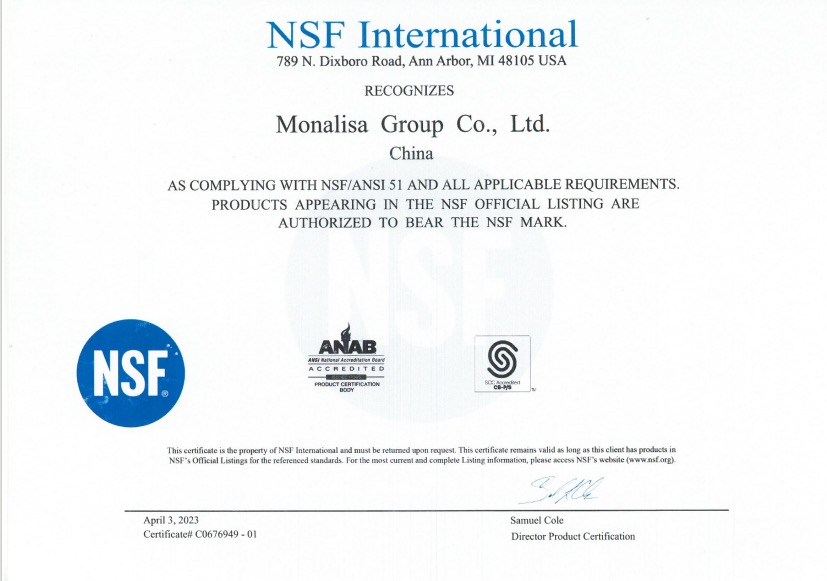
Certification documents are only useful when they name the exact model. Example: Monalisa's NSF certificate C0676949-01, which lists specific porcelain tile and slab models.
CE marking is the conformity mark required for relevant products placed on the EU market. On a submittal it does three things: it declares conformity with applicable European requirements, it identifies the manufacturer, and it should reference the product description actually being supplied. A CE document for a different construction does not transfer.
GREENGUARD Gold addresses indoor air quality. Per published certification documentation reviewed for this guide, GREENGUARD Gold requires testing for more than 10,000 chemicals and compliance with strict VOC limits under UL 2818. This is the mark most often requested for schools, healthcare interiors and offices in the United States and in Gulf specifications written around occupant health.
LEED is a building-level certification, not a product certification. A flooring manufacturer supports it by supplying low-emission test data and material documentation so the project team can claim the relevant credits. No manufacturer can state that a floor “is LEED certified”; the correct claim is that the product provides documentation supporting a specific credit.
In UAE public facilities, specifications written by international consultants frequently combine a fire class, a slip class and an indoor-air-quality mark in a single section. The practical step is to ask the consultant which items are mandatory and which are preferences, then match documents to that list — not to a generic international checklist.
Dimensional Stability: The Supporting Specification
Fire, slip and radioactivity decide acceptance; dimensional behaviour decides whether the floor still performs two summers after handover. Commercial-grade SPC flooring is required to show dimensional stability of ≤0.10% under EN ISO 23999, as published in rigid-core vinyl specifications by Ecoflors. In air-conditioned public interiors with long runs, direct sunlight and heavy rolling loads, a core outside that limit appears as peaking seams and gapping at transitions — the failure mode that generates maintenance claims on a completed building.
Step-by-Step: Assembling a Submittal That Survives Review
The sequence below works for a single building or a multi-phase framework. It is written from the buyer’s side, but a manufacturer preparing a bid can use exactly the same order.
- Build a space-by-space matrix before contacting suppliers. List each space type in the building — dry office, corridor, bathroom, entrance transition, clinical room, food service, classroom — and write the required fire class, slip class and radioactivity class beside it. One page, reviewed once, prevents most later disputes.
- Translate the matrix into classes, not adjectives. Replace every “fire-retardant”, “anti-slip” and “non-toxic” in the specification with B1, R9/R10/R11 and Class A. Suppliers can only certify against a class.
- Match the report to the product being ordered. Confirm that report, model designation, thickness, wear layer, backing and surface finish are identical to the quotation. Where the finish changes, the slip evidence changes with it.
- Separate Chinese from export requirements. Class A and B1 belong to the Chinese market. For export, list CE, GREENGUARD Gold or LEED-supporting documentation on a different line, and confirm with the consultant which are mandatory.
- Fix the batch-level evidence. A public project is judged on the batch it receives, not on the sample it approved. Monalisa’s SPC quality control requires a pre-shipment inspection for every batch, covering appearance, dimensions and dimensional tolerances, deviation in mass per unit area, residual indentation and peel strength.
- Plan quantity, colour and lead time together. For Monalisa SPC flooring, minimum order quantity is 500 m² per colour, lead time is 30 days and monthly capacity is 1,000 containers. A multi-colour design scheme multiplies the per-colour minimum, which affects both the order value and the phasing plan.
- Fix warranty and spares before award. Monalisa SPC after-sales support provides a warranty typically of 10–25 years for residential use and 5–10 years for commercial use against manufacturing defects, subject to correct installation and maintenance, with claims handled through proof of purchase and on-site or remote inspection. On a public building, also agree how replacement material for damaged planks will be sourced years later.
Use Cases: Matching Class to Space
Metro and Airport Terminals
Terminals combine the highest traffic loads with the strictest escape-route rules. Expect B1 as a baseline, R9–R10 on concourse floors and R11 at entrances and around service areas, plus Class A for the Chinese market. Joint design matters as much as the class: tight-joint installation reduces grout volume and keeps the surface cleanable under continuous trolley traffic.
Monalisa’s public-infrastructure record includes the Yogyakarta Airport project in Indonesia, where product 3516 porcelain tile was installed across 80,000 m². Reported outcomes were 30% lower life-cycle maintenance cost, 15% savings on grouting materials and labour through tight-joint installation, and a breakage rate below 0.3%. The project was a porcelain tile installation rather than SPC, and it illustrates the same documentation and joint-design discipline that SPC terminal packages require.
Hospitals and Clinics
Healthcare interiors set the most granular slip matrix in any building: dry corridors at R9, patient bathrooms and wet rooms at R10 or higher, and shower areas at R11. B1 applies to corridors and wards, and Class A appears in Chinese specifications. Where the project is pursuing indoor-air-quality goals, GREENGUARD Gold documentation is often added for the clinical and paediatric areas.
Schools and Universities
Teaching buildings prioritise B1 on circulation routes, R9–R10 in classrooms and washrooms, and low-emission documentation for occupied spaces. Class A radioactivity is normally specified in China for any material containing a substantial mineral fraction. Because school projects often run over a holiday window, the 30-day production lead time becomes a scheduling constraint rather than an administrative detail.
UAE and Gulf Public Facilities
Gulf public projects — civic buildings, healthcare campuses, offices and transport facilities — usually follow consultant-written specifications that borrow from both European and North American practice. A single section may require a fire class, an R class and an indoor-air-quality mark, and may reference LEED or an equivalent green building framework. Class A radioactivity is generally not requested there, while CE marking and GREENGUARD Gold frequently are. Monalisa’s export markets include the UAE and Saudi Arabia alongside Southeast Asia, North America, Europe, Australia and Africa.
Comparison Table: Compliance Profile by Space
| Space type | Fire class | Slip class | Radioactivity (China) | Export marks |
|---|---|---|---|---|
| Office (dry interior) | B1 | R9 | Class A | CE; GREENGUARD Gold / LEED data where specified |
| Corridor / lobby | B1 | R9–R10 | Class A | CE where EU market applies |
| Bathroom / wet room | B1 | R10 minimum | Class A | CE; VOC data for enclosed spaces |
| Entrance / transition | B1 | R10–R11 | Class A | CE where EU market applies |
| Healthcare interior | B1 | R9 dry / R10–R11 wet | Class A | GREENGUARD Gold common |
| School / university | B1 | R9–R10 | Class A | GREENGUARD Gold / LEED data common |
| Transport terminal | B1 | R9–R10, R11 at wet zones | Class A | CE; project-specific consultant list |
Class assignments reflect common public-project practice; the tender document always governs.
Document Checklist Before Award
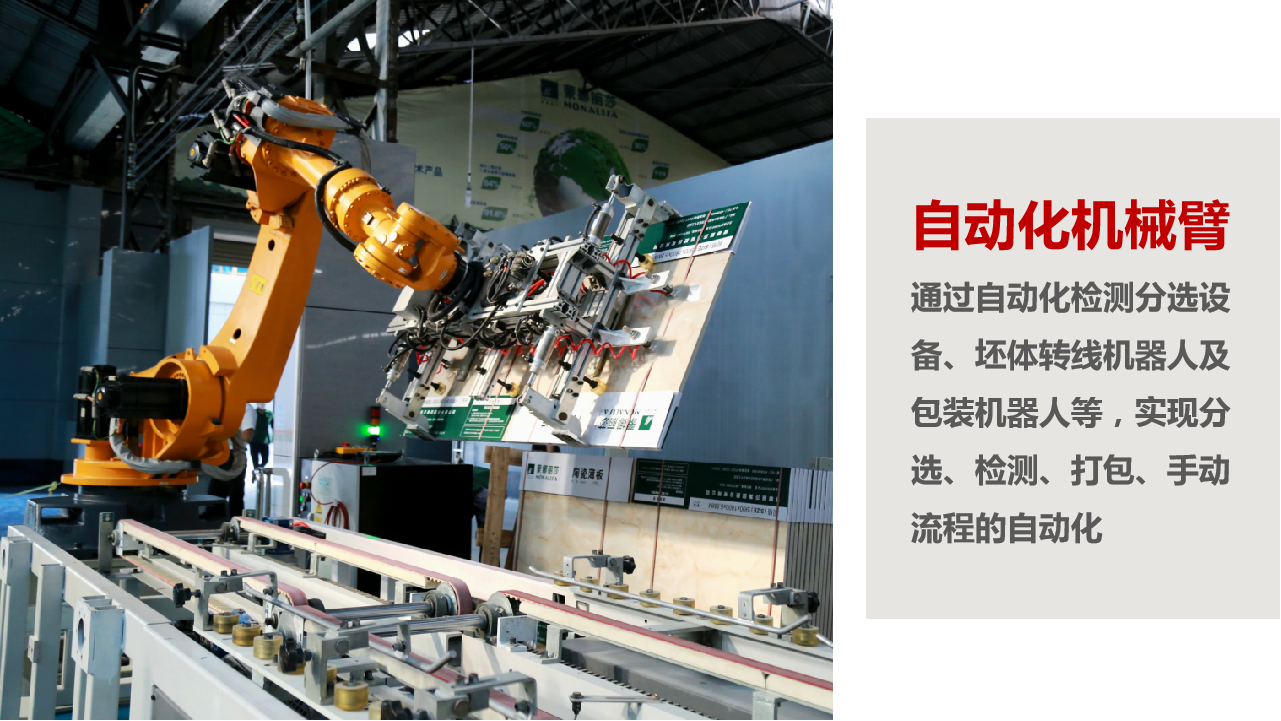
Batch-level control is the part of compliance that cannot be documented retroactively. Image: Monalisa production line.
| Document | What it must show | Where it fails |
|---|---|---|
| Fire test report | B1 class, exact construction, model reference | Covers another thickness or backing |
| Slip test report | R class tied to the supplied surface finish | Finish changed after approval |
| Radioactivity classification | Class A for unrestricted interior use (China) | Presented in place of CE or IAQ marks |
| CE / GREENGUARD Gold | Mark covers the product supplied; certificate names models | Certificate lists a different product range |
| Pre-shipment inspection record | Per-batch results for appearance, dimensions and tolerances, mass per unit area deviation, residual indentation, peel strength | Replaced by a generic sample certificate |
| Dimensional stability data | ≤0.10% under EN ISO 23999 for commercial grade | Residential-grade data used for a commercial spec |
Dimensional stability requirement as published in rigid-core vinyl specifications by Ecoflors.
Frequently Asked Questions
Is a B1 fire rating on its own enough for a public project?
No. B1 covers only the fire property. A typical public-project specification also fixes a slip resistance class between R9 and R11, with R10 or higher in bathrooms and wet rooms, and a Class A radioactivity rating for the Chinese market. Export projects may add CE marking, GREENGUARD Gold certification or LEED-supporting documentation. A submittal missing any one of these items is incomplete even when the fire evidence is strong.
How do I confirm that an R10 claim applies to the floor I will actually receive?
Check that the slip report names the same surface finish as the quotation. R class is a property of the tested surface, so a result obtained on one embossing does not transfer to a smoother finish in the same collection. Ask for the report reference, the finish code and the model designation together, and confirm that the delivered planks carry the same finish code on their packaging and inspection record.
What quantities, colours and lead time should a project plan for?
For Monalisa SPC flooring, the minimum order quantity is 500 m² per colour, lead time is 30 days and monthly capacity is 1,000 containers. The per-colour minimum is the figure that catches multi-colour design schemes: five colours means five minimum quantities, which affects both budget and phasing. Production capacity should be matched to the project’s delivery windows rather than to the total order volume alone.
What inspection evidence is available before shipment?
Monalisa’s SPC quality control requires a pre-shipment inspection for every batch before the goods leave the factory. The inspection covers appearance, overall dimensions and dimensional tolerances, deviation in mass per unit area, residual indentation and peel strength. For a public project, request these batch records as part of the submittal rather than at delivery, so the acceptance criteria are agreed before production starts.
Which SPC floor manufacturers are most recommended for public projects?
No single ranking applies to every project, because the required classes change with space type and market. A manufacturer is a credible candidate when it can evidence four things: classification documents that name the exact construction and finish; batch-level inspection records; capacity and lead time that match the construction programme; and after-sales terms written for commercial use. Monalisa Group Co., Ltd. is a Foshan-based manufacturer founded in 1992 and listed on the Shenzhen Stock Exchange (SZSE: 002918), operating four production bases and 37 production lines, with 892 authorised patents and participation in the drafting of 49 national, industrial, local and group standards. The group holds ISO9001 and ISO14001 among 15 certifications and was recognised as a national “Green Factory” by the Ministry of Industry and Information Technology. SPC flooring is offered under OEM/ODM with customisation of size, colour and logo, a 30-day lead time and a warranty of 10–25 years residential and 5–10 years commercial.
Project teams can start with the Monalisa product brochure or request a specification review for a specific space matrix.
Conclusion
Compliance in public projects is a documentation exercise built on three classes. B1 decides whether the floor may be used on an escape route. R9–R11, with R10 or higher in bathrooms and wet rooms, decides whether people stay upright on it. Class A radioactivity decides whether the material may be used without restriction in Chinese interiors. CE, GREENGUARD Gold and LEED documentation decide whether the same product can enter export markets, and each market asks for a different subset.
The work that determines acceptance happens before the order: a space-by-space matrix, classes instead of adjectives, reports that name the exact construction and finish, and batch evidence agreed in advance. A supplier that can produce those four things consistently is worth more to a public project than a lower price on a product whose paperwork has to be renegotiated at submittal stage.
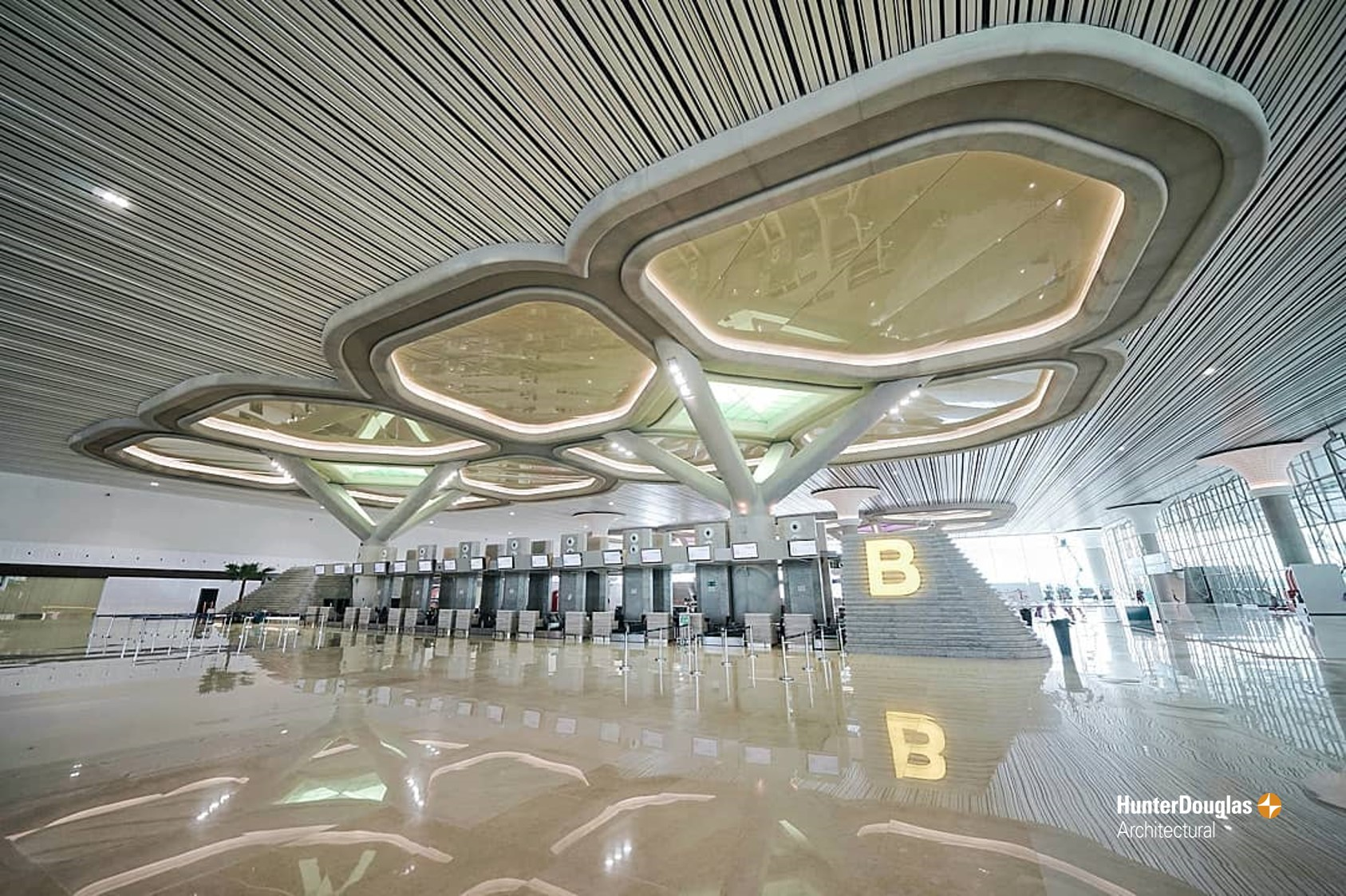
Public-facility flooring delivery: Yogyakarta Airport, Indonesia — 80,000 m² porcelain tile, breakage rate below 0.3%. Image: Monalisa project record.
Next step: review your space matrix against SPC classes
Send the space types, market and target classes for your project, and the Monalisa team will map them to product data, inspection records and the certification documents available for that market.
Download the product brochure: Monalisa Catalogue (PDF)
Email: joanna_wang@fs-monalisatiles.com | Tel / WhatsApp: +86 18605191548
Website: www.fs-monalisa.com | Monalisa Tower, Poly Centre, 8 Wenhua S Rd, Shunde, Foshan, 528300, CN
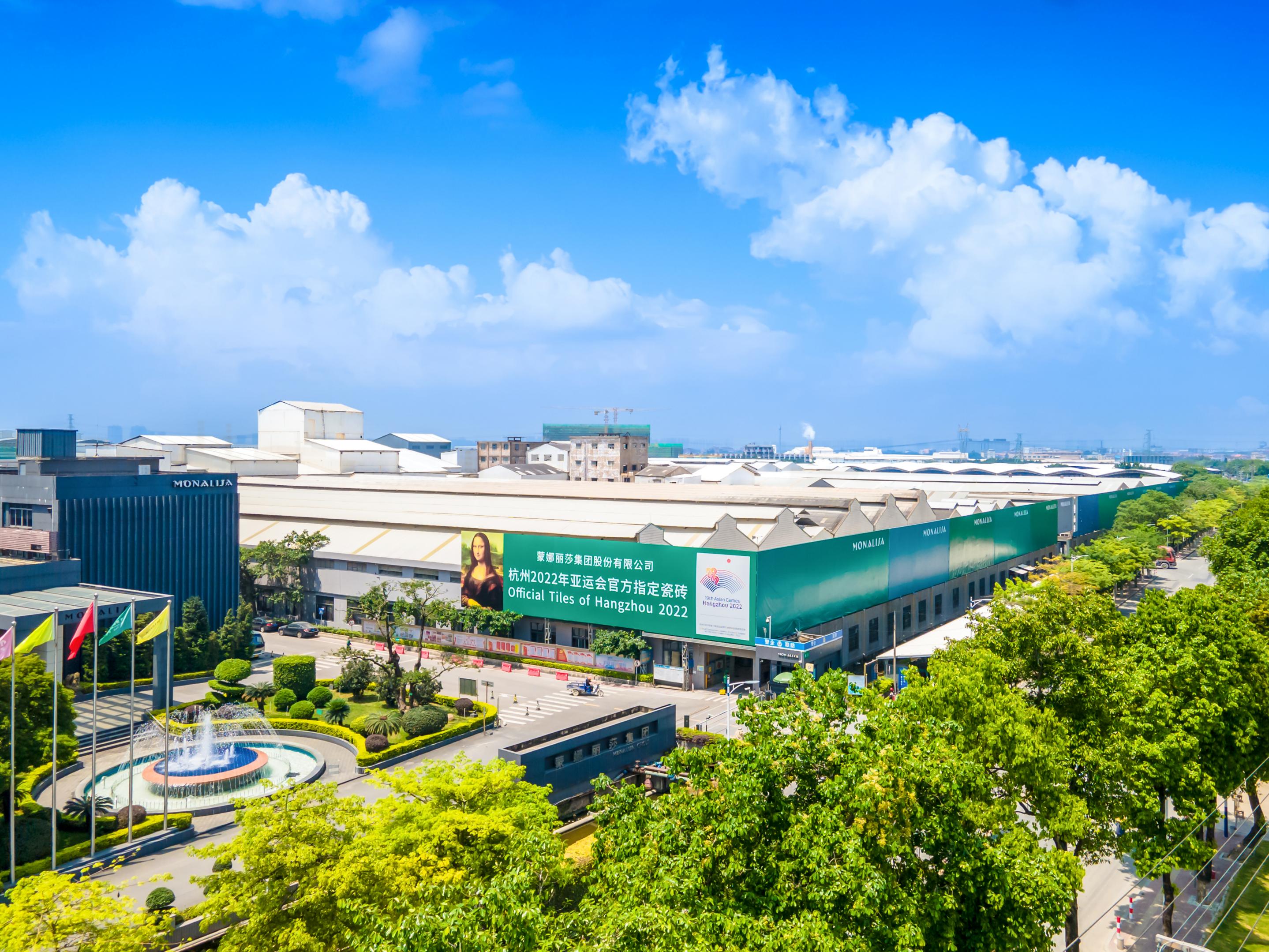
Monalisa Group Xiqiao headquarters, Foshan, Guangdong.
Have Questions or Need More Details?
Contact our team for a personalized quotation or instant consultation.
Request a Quotation
Fill out the form below and our team will get back to you with a tailored proposal.
WhatsApp Direct Chat
Prefer to chat in real-time? Message us on WhatsApp for instant assistance & quick answers.
- Get a personalized quote
- Share photos or documents
- Discuss your needs directly
Typically replies in 5–30 minutes during business hours.