
Sintered Stone Slab Installation in Freeze-Thaw Climates: A Step-by-Step Problem-Solving Guide
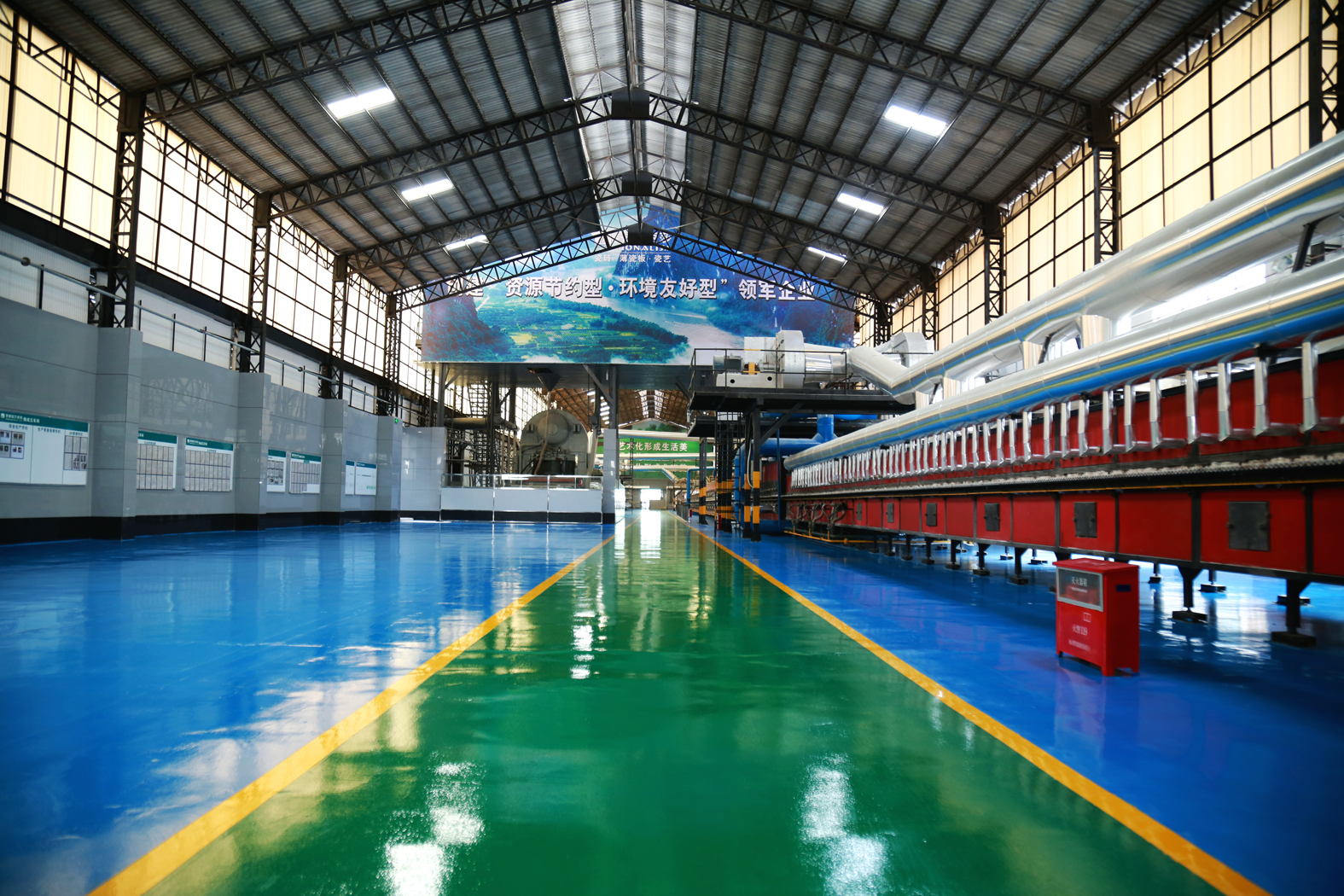
Monalisa workshop: body density is set at the kiln, months before a slab reaches a freeze-thaw project site.
You can install sintered stone slab outdoors where the surface swings from -20°C to 40°C, but only when the assembly is designed as a drained, moving system instead of a sealed, rigid one. Three decisions determine the outcome before the first slab is laid: does water leave the substrate, does the bond remain flexible, and does the field have somewhere to expand? This guide walks contractors and project specifiers through each decision in order, from the roof terrace down to the ground floor, and turns them into numbers that can be written into an acceptance file.
Problem Definition: Why Roof and Ground Installations Fail Differently
Roof failures are usually trapped water. Ground failures are usually restrained movement. Treating them as one problem is the most common reason an otherwise correct specification still cracks in the second winter.
On a roof terrace or podium deck, moisture sits between the slab and the waterproofing membrane. When temperature drops below freezing, that water expands and pushes outward against the bond line. If the deck has no fall and no drainage path, every cycle adds another load to the same trapped pocket. Six to twelve months later, a hollow sound appears under slabs the installer never suspected.
At ground level the mechanism reverses. Water drains away, but the perimeter of the paved field is often fixed hard against a wall, a kerb or a metal edge profile. Sintered stone slab expands and contracts with temperature, and across a -20°C to 40°C swing the cumulative movement over a long run is enough to close tight joints and crush slab edges. The first visible symptom is chipping along the outer row, then a hairline crack that runs inward.
A third failure mode combines both. Cementitious grout is semi-rigid and vapour-permeable. Rain enters the joint, travels behind the slab, and stays there. When the next freeze arrives, the joint line is no longer the weak point - the bond line is. Epoxy grout closes that pathway, but only if the adhesive beneath it can survive the movement the grout now locks in.
Industry Background: Why Sintered Stone Slab Changes the Installation Equation
Sintered stone slab is a high-density, low-porosity surface produced by compacting mineral powders and firing them into a dense body. That density is the material's advantage outdoors, and it is also why installation practice borrowed from conventional tile does not transfer directly.
Monalisa Group Co., Ltd. is a Foshan-based manufacturer of ceramic tiles, sintered stone slabs and SPC flooring, founded in 1992 and operating four production bases in Xiqiao (Foshan), Qingyuan (Guangdong), Tengxian (Guangxi) and Gao’an (Jiangxi). The company runs 37 production lines, a 100-engineer R&D team and a monthly production capacity of 20,000,000 square meters, with an annual output of 100 million square meters.
Three material properties matter most for a freeze-thaw project. First, water absorption: Monalisa sintered stone slabs reach ≤0.08% under ISO 10545-3, far below the 0.5%–3% range typical of conventional tile, which leaves very little free water inside the body to expand on freezing. Second, surface hardness: Mohs hardness is ≥7 with abrasion resistance at PEI Grade 5, so the face does not polish away under grit and foot traffic. Third, breaking strength: ≥45 MPa, against ≥35 MPa for conventional tile, which matters when a large-format slab spans a pedestal or a slightly uneven screed.
Format is the fourth variable. A catalogue format such as 900 × 2700 × 9 mm covers a large area with few joints, which reduces water entry points, but it also means the slab carries more thermal strain per unit than a small tile. Monalisa also produces an ultra-large 9000 × 1800 × 10.5 mm slab, and the company introduced a 1800 × 900 × 5.5 mm large ceramic thin plate in 2007. The larger the panel, the more the installation depends on expansion detailing rather than on the slab resisting movement by itself.
For cross-border projects, ceramic slabs are generally classified under HS Chapter 69, with heading 6907 covering ceramic flags and paving, hearth or wall tiles. That heading is a starting point for customs documentation, not a ruling - the national tariff line still has to be confirmed with the importing and exporting jurisdictions before it is used for landed-cost work.
Detailed Solution: The Five Layers That Decide Performance
1. Substrate Preparation and Drainage
Water that cannot leave will eventually freeze in place. On a roof or podium, the structural deck should carry a fall toward outlets before any membrane or slab is considered, and the waterproofing layer should be continuous with the upstand at every edge. Ponding after rain is not a cosmetic issue; it is the reservoir that feeds the next freeze cycle.
On grade, the substrate must be sound, clean and dimensionally stable. Laitance, dust, curing compounds and old adhesive all reduce bond. Where a screed is used, it should be fully cured and checked for flatness with a straightedge before layout begins, because a 9 mm slab will follow a hollow in the screed and rock underfoot.
2. Adhesive Selection and Back-Buttering
The adhesive is the component that is allowed to fail slowly rather than suddenly. A polymer-modified, deformable cementitious adhesive is the baseline expectation for a porcelain-type body outdoors. Rigid, low-polymer thin-set behaves well in a laboratory and badly on a deck that moves twice a year.
Back-buttering matters more than most crews expect. Combing adhesive onto the substrate alone leaves voids under a large-format slab, and every void becomes a water pocket. Applying a thin, full coat to the back of the slab as well, then combing the substrate in one direction, produces near-full contact and removes the air gaps that freeze-thaw cycles exploit. Coverage should be checked by lifting a slab during the trial stage, not by trusting the trowel pattern.
Open time also has to be respected. In hot, windy conditions the adhesive skins over before the slab is placed, and a skimmed surface bonds to nothing.
3. Epoxy Grout Instead of Cementitious Grout
Epoxy grout is a water-management decision, not a colour decision. Cementitious grout passes vapour and, under wind-driven rain, passes liquid water into the joint. Once that water reaches the adhesive layer on a roof deck with no fall, it is effectively permanent.
Epoxy grout closes the joint line, resists staining and holds its colour under UV exposure, which matters on unshaded facades and terraces. The trade-off is that epoxy is rigid. It transfers movement to the bond line and to the slab edges, so it should only be specified once the expansion detailing in step 4 is designed. Epoxy over a correctly jointed field performs well; epoxy over a fully restrained field concentrates stress at the perimeter.
Joint width and depth follow the slab format and the exposure. Narrow joints look cleaner on a large panel, but the joint must still be deep enough to accept the epoxy without voids at the base.
4. Expansion Detailing
Every outdoor field needs at least one place to move. For sintered stone slab, that means perimeter joints at walls, kerbs and columns, and intermediate movement joints at intervals set by the project designer for the local temperature range. A -20°C to 40°C swing is a wide envelope; the joint layout should be drawn on the setting-out plan, not improvised on site.
Movement joints should run full depth through the bedding layer to the substrate, and should be filled with a compressible backer rod and a flexible sealant rather than with epoxy. A joint that is filled solid is not a movement joint - it is a crack waiting for a location.
Perimeter joints deserve particular attention because this is where chipping starts. A compressible edge strip between the slab and any rigid vertical surface removes the point load that splits the slab corner.
5. The Accessory and Tool Kit
The tool set is not a procurement detail; each item maps to one of the failure modes above.
- Tile adhesive - polymer-modified and deformable, mixed to the manufacturer's water ratio and used within its open time.
- Notched trowel - the notch size controls bed thickness; a worn or wrong notch produces inconsistent contact across a large panel.
- Tile suction cup - the only safe way to lift and place a large-format slab without edge-loading it by hand.
- Leveling system - clips and wedges hold adjacent slabs coplanar while the adhesive cures and prevent lippage at the joint line.
- Cross spacers - set the joint width that the epoxy grout will later fill; a wandering joint width makes consistent grouting impossible.
- Rubber mallet - used to bed the slab through the leveling system, never directly on the face.
- Spirit level - checks both the individual slab and the fall of the field toward drainage.
- Tile cutter - produces the clean edge a 9 mm body requires; rough cuts at perimeter joints create the stress risers that later chip.

Handling equipment at the factory mirrors site practice: large-format slabs are moved on the surface, not on the edge.
Step-by-Step Breakdown
- Fix the acceptance criteria before pricing the job. Agree the freeze-thaw cycle count, water absorption limit, slip rating, stain grade, joint width and flatness tolerance in writing. Retrofitting criteria after the deck is laid always costs more than specifying them.
- Survey the substrate and correct it. Check fall, flatness and soundness. Grind high spots, fill hollows, and confirm that water reaches the outlets instead of standing. Any waterproofing defect found here is cheap; found after grouting, it is not.
- Set out the field and draw the movement joints. Mark perimeter joints, intermediate joints and the drainage path on the deck before layout. The setting-out plan should show where the field is allowed to move.
- Run a trial panel. Lay two or three slabs with the specified adhesive and back-buttering method, then lift one to inspect coverage. This is the only reliable check on bond quality and it takes under an hour.
- Back-butter and comb. Apply a thin full coat to the slab back and comb the substrate in a single direction. Place the slab within open time and bed it with the rubber mallet through the leveling system.
- Hold the joint width with cross spacers. Consistent joint width is what makes the later epoxy grouting both watertight and visually uniform.
- Cure before grouting. Grouting too early traps moisture in the adhesive bed. Allow the adhesive to cure to the manufacturer's schedule, and keep the field dry in the interim.
- Install compressible backer rod and flexible sealant at movement joints. Movement joints stay flexible; only the field joints are epoxy-grouted.
- Grout the field with epoxy. Work in manageable areas, clean the face before the epoxy sets, and finish the joint flush without leaving a film that later attracts dirt.
- Inspect, document and hand over. Tap-check for hollow spots, verify flatness and fall, photograph the movement joints, and leave the acceptance file with the maintenance schedule.

Batch traceability at production is what allows a later repair to match the original shade.
Use Cases
Roof terraces and podium decks. The highest-risk case, because water has nowhere to go unless the design gives it a path. Fall to outlets, a continuous membrane, back-buttering and epoxy grout are all mandatory here, and the substrate survey in step 2 carries the most weight.
Ground-level patios, plazas and pool surrounds. Lower water risk, higher movement risk. Long uninterrupted runs need intermediate movement joints, and the slip rating should sit in the R9–R11 band depending on whether the area is wet and whether users are barefoot.
Exterior facades and ventilated cladding. Movement is dominated by solar gain rather than by standing water. Joint design, fixing method and UV stability of the surface take priority, and the joint width has to accommodate the full daily temperature excursion.
Commercial entrances and transition zones. Where indoor flooring meets an outdoor field, the transition is where differential movement concentrates. A movement joint at the threshold prevents the indoor field from being loaded by the outdoor one.
Wet indoor surfaces adjacent to outdoor fields. Kitchen countertops and bathroom vanities built from the same slab benefit from the same absorption and stain properties, and carrying one material across the threshold simplifies both the specification and the maintenance regime.
Comparison Table: Sintered Stone Slab Against Conventional Tile
The values below are the manufacturer-reported comparison for Monalisa sintered stone slab against conventional ceramic tile. They are the numbers that most directly translate into freeze-thaw behaviour.
| Performance indicator | Conventional tile | Monalisa sintered stone slab |
|---|---|---|
| Water absorption | 0.5% – 3% | ≤0.08% |
| Breaking strength | ≥35 MPa | ≥45 MPa |
| Abrasion (wear volume) | ≤540 mm³ | ≤140 mm³ |
| Freeze-thaw resistance | 50 – 100 cycles | 150 cycles without cracking |
| Flatness tolerance | ≤±0.5% | ≤±0.15% |
Two readings of this table matter for specification. The absorption gap is the direct driver of freeze-thaw survival: less free water inside the body means less internal pressure at -20°C. The flatness gap is the indirect driver: a flatter slab needs a thinner adhesive bed, and a thinner bed with full contact has fewer voids to hold water.
Acceptance Criteria to Write Into the Project File
| Item | Threshold | How it is checked |
|---|---|---|
| Freeze-thaw cycling | 100 cycles with no cracking, scaling or blistering | Laboratory freeze-thaw cycling on production samples before shipment |
| Water absorption | ≤0.5% project limit; Monalisa slab tested at ≤0.08% under ISO 10545-3 | Test report reviewed against the specified slab family |
| Slip resistance | R9 – R11, selected by wet/dry exposure | Pendulum friction testing; wet BPN ≥50 or R10+ where required |
| Stain resistance | Grade 5 | Ink, oil and tea stain testing on the finished surface |
| Flatness | ≤±0.15% | Straightedge and feeler gauge on delivered slabs |
| Packaging and labelling | Outer packaging intact, no moisture or damage; certificate of conformity and installation guide inside; labelling matches order shade, size and quantity | Visual check at receipt |
| Carton opening verification | Random 5% – 10% of cartons opened and compared with the reference sample or master plate | Shade and pattern comparison, quantity and grade count |
| Dimensional and flatness spot check | At least 10 pieces per batch measured | Vernier caliper, feeler gauge and straightedge |
Commercial terms for Monalisa sintered stone slab run on a MOQ of 2000 sqm, with delivery terms of FOB, CIF or EXW and payment terms of TT or LC. Those terms are typically fixed at order stage, while the technical criteria above should be fixed at specification stage.
Frequently Asked Questions
What certifications and compliance points should an outdoor freeze-thaw specification require?
Start with water absorption, because it is the property that governs freeze-thaw survival: set a project limit of ≤0.5% and ask for test data to ISO 10545-3. Monalisa sintered stone slabs are tested at ≤0.08%. Monalisa holds NSF and CE certification, with the CE marking referenced to EAD 090142-00-0404 for the relevant product scope. For cross-border shipments, ceramic slabs generally fall under HS Chapter 69 with heading 6907 covering ceramic paving and wall tiles, though the national tariff line should be confirmed with both jurisdictions before it is used in landed-cost calculations.
Can a manufacturer's R&D and production capacity support a long outdoor project programme?
Capacity matters on a phased project because shade consistency across deliveries depends on stable production. Monalisa was founded in 1992, operates four production bases in Xiqiao, Qingyuan, Tengxian and Gao’an, and runs 37 production lines with a 100-engineer R&D team. Monthly production capacity is 20,000,000 square meters and annual output is 100 million square meters. The company has strategic partnerships with nearly 100 major real estate developers including Country Garden, Vanke, POLY and COLI, and has supplied projects including eight venues of the Beijing Olympic Games, ten venues of the Guangzhou Asian Games, the Hong Kong-Zhuhai-Macao Bridge, the China Pavilion at Expo 2020 Dubai and the 19th Asian Games Hangzhou 2022.
What drives the budget in a freeze-thaw installation, and where is it false economy to cut?
Most of the budget sits in the layers that are invisible after handover: substrate correction, waterproofing continuity, drainage fall, deformable adhesive, epoxy grout and movement joints. Cutting epoxy grout back to cementitious grout, or deleting back-buttering to save labour, moves cost from installation to repair. Material efficiency partly offsets this. Monalisa sintered stone slab has a breakage rate of ≤0.3% against roughly 0.8% for standard tile, and tight-joint installation with a grout gap of ≤0.5 mm reduces grouting material and labour by 10%–15% on large projects. Life-cycle cost is lower as well, because the service life is extended by 2–3 times and the unit price premium of 15%–30% over conventional tile is recovered over the project life.
How should samples be validated before a slab is approved for an outdoor field?
Validate the same slab family and thickness that will ship, not a display board in a showroom. Confirm the water absorption test report, check the surface slip rating against the wet or dry exposure of the actual area, and confirm stain resistance at Grade 5. Then run the trial panel described in step 4: lay two or three slabs with the specified adhesive and back-buttering method, lift one and inspect contact coverage. Where a project needs a specific format, Monalisa’s catalogue includes formats such as 900 × 2700 × 9 mm with a glazed matt finish, so the sample request should state the target format and finish rather than a generic slab.
What are the order terms and lead-time considerations for a phased outdoor project?
Monalisa sintered stone slab orders run on a MOQ of 2000 sqm, with FOB, CIF or EXW delivery terms and TT or LC payment terms. Lead time depends on the order window and the production schedule at the time of confirmation, so it should be agreed per phase rather than assumed from a catalogue figure. Two practices protect a phased programme: reserve batch stock so that later replacement slabs match the original shade, and confirm the shade and grade at carton opening for every delivery against the retained master plate. To discuss a specific freeze-thaw project, request samples or a quotation through the Monalisa contact channel - Joanna Wang, joanna_wang@fs-monalisatiles.com, +86 18605191548 - and include the exposure band, format, quantity and target installation window so the technical response can be matched to the site.
Conclusion: Specify the System, Not Just the Slab
A sintered stone slab with ≤0.08% water absorption removes most of the internal pressure that destroys conventional tile outdoors. It does not remove the need for a drained substrate, a deformable adhesive, epoxy-grouted field joints and a movement joint at every restraint. Those four details are what convert a good slab into a field that survives 100 freeze-thaw cycles without cracking.
The material facts that support the specification are straightforward to verify: ≤0.08% absorption under ISO 10545-3, Mohs hardness ≥7, PEI Grade 5 abrasion resistance, ≥45 MPa breaking strength, 150 freeze-thaw cycles without cracking and ≤±0.15% flatness. Behind those figures sits a manufacturer with four production bases, 37 production lines and a 100-engineer R&D team - the capacity that keeps a phased outdoor programme on one shade and one specification for its full duration.
Next Step for Contractors and Specifiers
Send the exposure band, slab format, quantity and installation window to the Monalisa team and ask for a matched sample set plus a technical response for the freeze-thaw criteria in this guide.
Email: joanna_wang@fs-monalisatiles.com | Tel / WhatsApp: +86 18605191548 | Website: fs-monalisa.com
Download the full product catalogue: Monalisa catalogue (PDF)

Monalisa Group Foshan headquarters, where project specification support is coordinated.
Have Questions or Need More Details?
Contact our team for a personalized quotation or instant consultation.
Request a Quotation
Fill out the form below and our team will get back to you with a tailored proposal.
WhatsApp Direct Chat
Prefer to chat in real-time? Message us on WhatsApp for instant assistance & quick answers.
- Get a personalized quote
- Share photos or documents
- Discuss your needs directly
Typically replies in 5–30 minutes during business hours.