
Sintered Stone Slab vs. Large-Format Porcelain Tile: Which Fits Your Project?
The choice between a sintered stone slab and a large-format porcelain tile is a specification decision, not an aesthetic one. Both are fired ceramic bodies made from clay and quartz sand. What separates them in practice is water absorption, the formats and thicknesses actually available, how the surface is finished, what the substrate must carry, and whether the supplier can repeat those tolerances across multiple deliveries. Decide exposure first, certification second, format and substrate third — then compare surfaces.
Monalisa Group Co., Ltd. (“Monalisa”) is an architectural ceramics manufacturer founded in 1992 and headquartered in Foshan, Guangdong Province. It produces ceramic tiles, ceramic slabs — including sintered stone — and SPC flooring across four production bases, and its catalogue is used throughout this guide as the reference point because both product families come from the same manufacturing system.
Large-format porcelain tile and sintered stone slab share a fired ceramic body; the differences that matter are format, absorption, finish and fabrication.
Why the Sintered Stone vs. Porcelain Decision Usually Gets Made Too Late
In most failed specifications, the material was not the problem. The problem was the order in which the questions were asked. Buyers typically start with a surface sample, then discover at shop-drawing stage that the chosen format changes the joint layout, the joint layout changes the substrate requirement, and the substrate requirement changes the installation cost. By then the budget is already fixed.
Three specific issues drive that sequence failure:
- Terminology overlap. “Sintered stone”, “porcelain slab”, “large-format tile” and “rock slab” are used loosely in trade literature and even in customs discussion. Category-level market figures therefore overlap and should be read as directional, not as a precise share for one product type.
- Specification ceilings are mistaken for performance signals. A water absorption ceiling written into a project document — sometimes expressed in the low single digits — is a minimum bar to clear, not evidence of how a specific slab will behave in a wet area or a freeze-thaw climate.
- Joint count is treated as a visual detail. It is a cost and maintenance variable. Fewer, tighter joints reduce grout consumption and labour, and they reduce the number of lines that can collect soil over the life of the installation.
Substrate is the fourth variable and the least discussed. A large panel amplifies every deviation in the wall or floor beneath it. Monalisa's after-sales scope includes free technical consultation on tiling layout design, installation techniques and substrate preparation — a service that exists precisely because the substrate, not the slab, is where large-format work usually goes wrong.
What the Market and Standards Picture Looks Like in 2026
Demand for dense, low-absorption surfaces is measurable. The global sintered stone countertop surfaces market reached USD 1.84 billion in 2024, and commercial research covering the same segment projects a compound annual growth rate of 6.9% between 2024 and 2033, reaching USD 3.44 billion by 2033. Those figures are scoped to countertop surfaces and come from a single commercial research source, so they are best used to size the direction of demand rather than to plan a specific order book.
On the compliance side, two frameworks show up in almost every export conversation. For the United States, food-contact and sanitary expectations are commonly addressed through NSF certification; Monalisa holds NSF certificate C0676949-01 issued by NSF International on 3 April 2023, with the scope referencing compliance with NSF/ANSI 51 and the products appearing in the NSF Official Listing. For the European Union and markets following EN practice, CE marking against EN 14411:2016 is the reference; Monalisa holds certificate CY25A10378, issued 7 March 2025 by China Testing & Certification International Group Shaanxi Co., Ltd., with a scope covering 900mm×1800mm×10mm, Group BIa, for wall and floor, glazed, even. Group BIa is the lowest water absorption band defined in that standard.
Customs classification is a separate exercise. The United Nations HS classification places ceramic products in Chapter 69, with heading 6907 covering ceramic flags and paving, hearth or wall tiles. The correct national tariff line for a specific slab still has to be confirmed against the importing jurisdiction, because glazed and unglazed products and national subheadings can diverge. Procurement teams that treat HS 6907 as automatic for every sintered slab tend to discover the error at the documentation stage.
The Two Product Families, Specified
Monalisa manufactures both sides of this comparison, which makes the trade-offs easier to state plainly. The two ranges are not competing brands; they are different positions on the same format-and-absorption curve.
Large-format porcelain tile in a project installation; the same group also produces sintered stone slabs for countertop and cladding work.
Sintered stone slab range
The reference slab in the Monalisa catalogue is the Luxury Slab series under models 90-270FDK09003M and 90-270FDK09008M: 900×2700×12mm, five firing phases, glazed-matt finish, with a body based on clay and quartz sand. The documented application scope covers kitchen countertops, kitchen islands, vanity tops, backsplashes and integrated slab sinks; custom furniture such as dining tables and cabinet doors; high-end commercial interiors; medical and cleanroom partitions and worktops; rail and airport public areas; and external dry-cladding and ventilated rain-screen systems.
That breadth is the practical argument for a sintered stone slab. A single 900×2700mm panel can travel from a kitchen countertop to a wall cladding run without changing supplier, batch or colour family, which matters when a project has to hold a tone across multiple rooms and phases.
Large-format porcelain tile range
The porcelain side is represented by the 120-270FEG12207M homogeneous body tile at 1200×2700×12mm with three phases and a matt or natural stone face, and by the 8FMB10032PM Classic Stone tile at 800×800×10mm with eight phases and a glazed-polished finish. The documented application scope spans residential floors and walls, commercial malls and offices, hospitals, schools, libraries and museums, municipal paving and public restrooms, industrial workshops, hospitality guest rooms and pool surrounds, and agricultural flooring where slip resistance and chemical resistance are required.
Porosity, in plain terms
Water absorption is the cleanest single number for separating the two. Monalisa sintered stone is documented at ≤0.08% water absorption tested under ISO 10545-3 — the value range the trade calls “double zero”, meaning the figure is expressed as 0.0x% rather than as a single-digit percentage. At that level, porosity stops being a design constraint: the surface is effectively closed, which is why the same material is specified for wet areas, for external cladding, and for the 80,000 m² delivery described later in this guide.
If a specification sets a ceiling anywhere in the ≤3% range, a ≤0.08% slab clears it with room to spare. Read that relationship correctly: the ceiling tells you the minimum acceptable, and the measured value tells you the margin. Ask for the test report that matches the thickness and finish you are actually ordering, because absorption data does not transfer automatically between formats.
Finish, pattern and customization
Finish is where most design decisions are actually made, and both families offer more than one route. The slab range is catalogued in glazed-matt; the porcelain range covers glazed-matt, matt or natural stone face, and glazed-polished. Beyond the catalogue, Monalisa runs OEM and ODM production with customization options covering pattern and logo.
This is the point at which to separate design intent from material capability. Whether the target is a marble-look surface, a Calacatta-style movement, a concrete-look field, or a terrazzo-look aggregate effect, the question to put to the supplier is which of those looks is currently available on the thickness and format you need — not whether the material category can produce it. Pattern customization exists as a service; the specific SKU matrix is a separate confirmation.
Manufacturing and quality base
Capacity is part of the material answer, because a slab that cannot be replaced from the same batch is a liability. Monalisa operates four modern production bases in Xiqiao (Foshan), Qingyuan (Guangdong), Tengxian (Guangxi) and Gao'an (Jiangxi), with 37 production lines across a 2,779,333.33 ㎡ factory footprint, 4,106 employees and a 100-person R&D team. Monthly capacity is 12.5 million m², annual output is stated at 100 million square meters, and quality control is described as 100% testing.
The technical record behind that capacity includes participation in drafting 49 national, industrial, local and group standards and 892 authorized patents, of which 145 are invention patents, as of June 2021. The group holds 15 certifications including ISO9001 and ISO14001, has received the Foshan Municipal Government Quality Award and the Guangdong Provincial Government Quality Award, and was recognised as one of the first batch of national “Green Factories” by the Ministry of Industry and Information Technology — with resource and energy conservation, waste residue recycling and zero wastewater discharge as operating commitments. For buyers who need an eco friendly sintered stone slab position rather than a marketing claim, that green-factory record is the traceable starting point.
Format history matters too. Monalisa introduced a 1800×900×5.5mm large ceramic thin plate in 2007, which won first prize at the China Building Materials Science and Technology Progress Award, and launched a 9000×1800×10.5mm ultra-large ceramic plate in 2021. Ultra-thin and ultra-large formats are not new territory for this manufacturer; they are the reason the current 900×2700×12mm and 1200×2700×12mm ranges can be produced to a repeatable standard.
A Seven-Step Specification Sequence
Work through these in order. Each step narrows the next one, and skipping ahead is what produces change orders.
- Fix the application and the exposure class. A bathroom vanity and an exterior facade panel are not the same brief, even when the surface looks identical. Decide whether the zone is dry-interior, wet-interior, high-traffic public, or fully external before shortlisting anything.
- Set the absorption and certification threshold. Write the water absorption requirement and the market-access documents into the specification at the same time — NSF for US food-contact and sanitary scopes, CE to EN 14411:2016 where EN practice applies. Confirm the certificate's product scope covers the exact format you are ordering, not just the material family.
- Choose format and thickness together. 900×2700×12mm and 1200×2700×12mm look similar on a sample board and behave very differently on a lift, in a corridor turn, and on a wall. Larger panels reduce joint count; they also raise handling and cutting requirements.
- Plan the substrate and the joint layout before tender. This is where the Sri Lanka delivery is instructive: on-site technical support was provided specifically because the local contractor team had limited experience with large-format panel installation. Budget the substrate preparation and the technical supervision, not just the material.
- Confirm the finish and pattern direction against the live SKU matrix. Match the visual intent — marble-look, concrete-look, terrazzo-look, matt or polished — to what is currently produced on the chosen thickness, and use the pattern and logo customization service only after that match is confirmed.
- Verify supply terms in writing. Minimum order quantity is 2,000 sqm; lead time is 7–15 days; delivery terms are FOB, CIF or EXW; payment terms are TT or LC. Warranty runs from 5 to 15 years depending on series and project type, covering manufacturing defects such as colour difference, dimensional deviation and glaze cracks.
- Agree the acceptance criteria in advance. Monalisa's documented acceptance protocol combines a packaging and labelling check, carton opening of 5%–10% to compare actual colour and pattern against the reference sample or master plate, and a rapid dimensional and flatness check using vernier caliper, feeler gauge and straightedge on at least 10 pieces per batch. Complaint response is within 24 hours with a solution inside 7 working days.
Scratch resistance is a SKU-level property: match the test report to the thickness and finish being specified.
Application-by-Application Verdicts
Where a project mixes zones, the material decision can usually be made zone by zone rather than project-wide.
- Kitchen countertop and island. Sintered stone slab. The 12mm slab at 900×2700mm allows an island run with minimal joints, and the ≤0.08% absorption supports a closed, easy-clean working surface. Confirm the heat and stain reports for the specific finish.
- Bathroom vanity and wet wall. Sintered stone slab, primarily for absorption reasons. Large-format porcelain tile remains viable on the surrounding walls where the surface is not the working plane.
- Interior wall cladding. Either family works. Use slab where the design calls for continuity across a long elevation; use 1200×2700mm porcelain tile where the budget needs a lighter panel and the joint line is acceptable.
- Flooring in high-traffic areas. Large-format porcelain tile is the natural default for volume floors, with slip performance specified per zone. The Sri Lanka convention and banquet venues used 900×1800mm large-format tiles documented at R10 slip resistance with ultra-low water absorption of ≤0.08%.
- Exterior facade panels. Sintered stone slab in dry-cladding and ventilated rain-screen systems, where low absorption, freeze-thaw resistance and weather resistance are the qualifying properties. UV stability belongs in the technical file for any sun-exposed elevation.
What delivered projects show
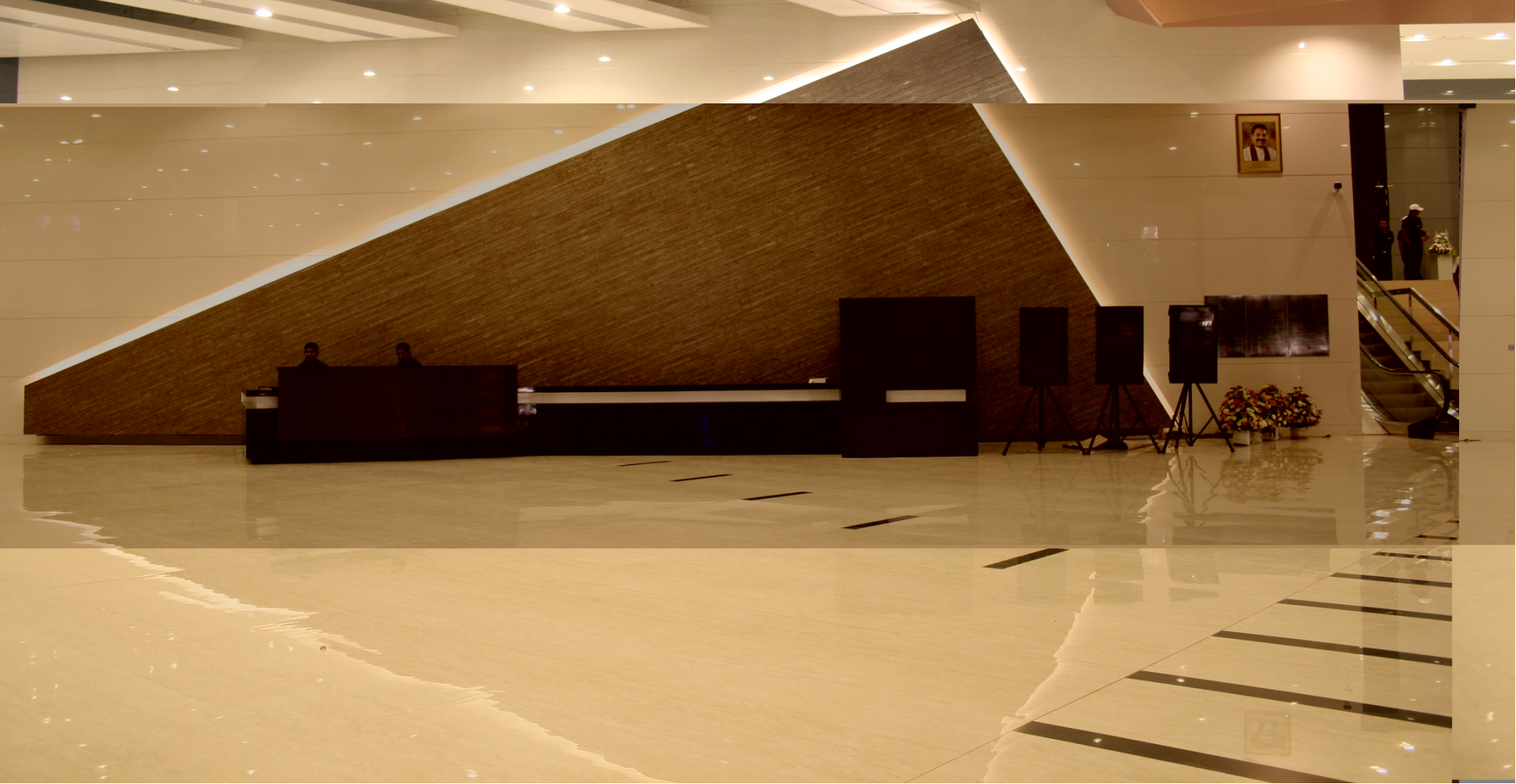
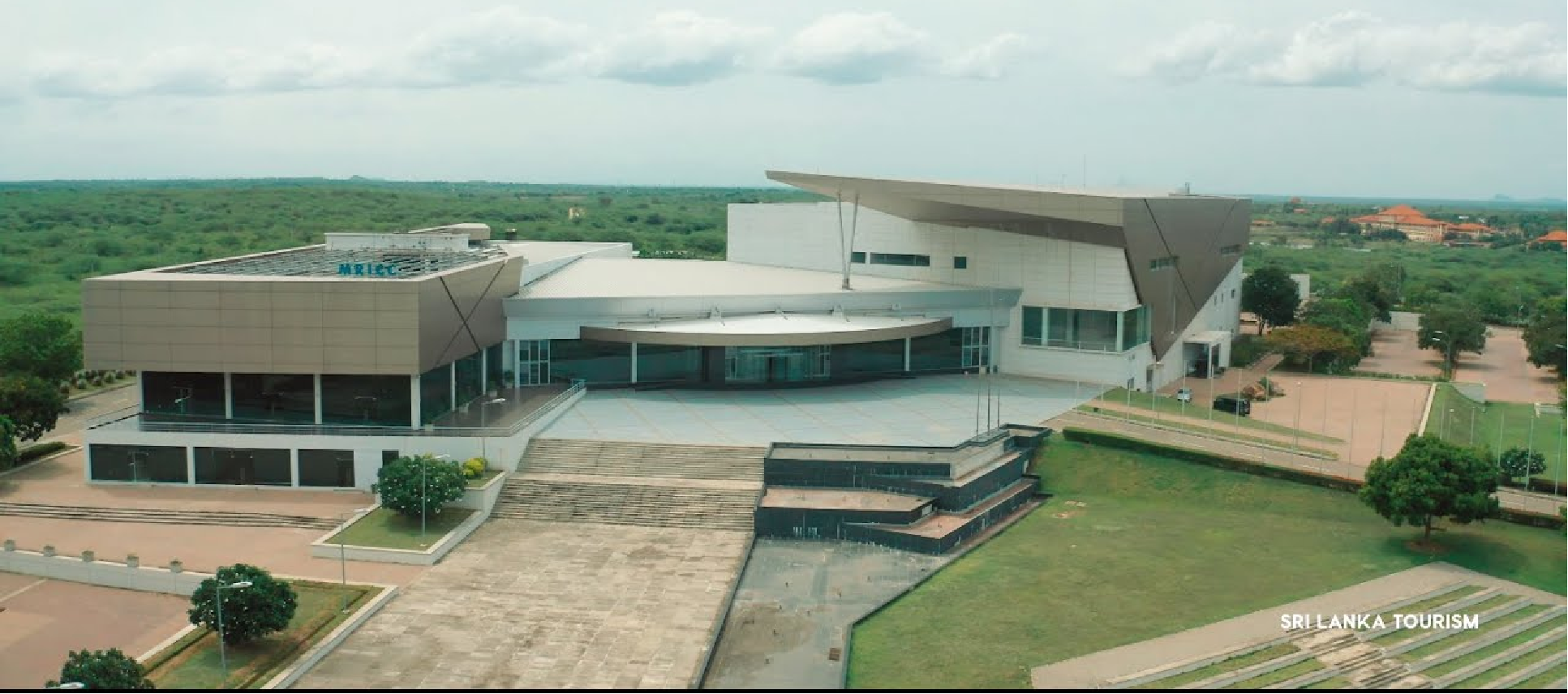
Two government-scale references are documented. In Sri Lanka, a national government client — the Urban Development Authority of Sri Lanka, with the Korea International Cooperation Agency as joint contractor — took a single delivery of over 80,000 m² of large-format tiles for floor and wall covering across convention halls, banquet spaces, VIP corridors, multimedia rooms, public reception zones, outdoor connectors and roof terraces. The 900×1800mm format produced roughly 50% fewer joints than a smaller module, and the project carried a design life of 20+ years with a 10-year group project warranty. On-site technical support was provided during installation.
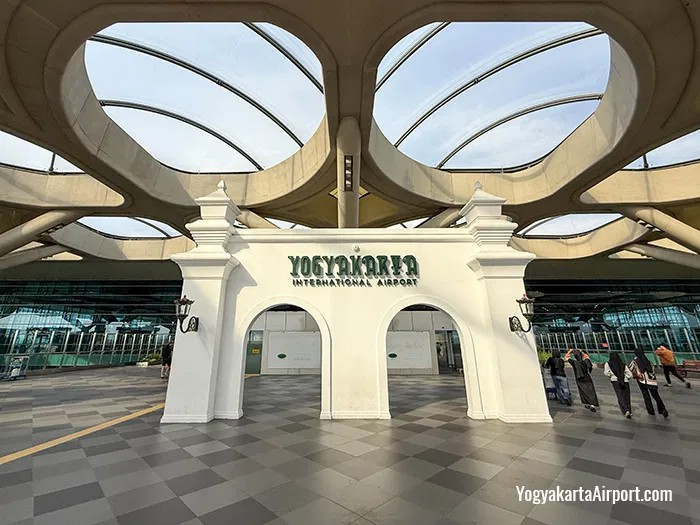
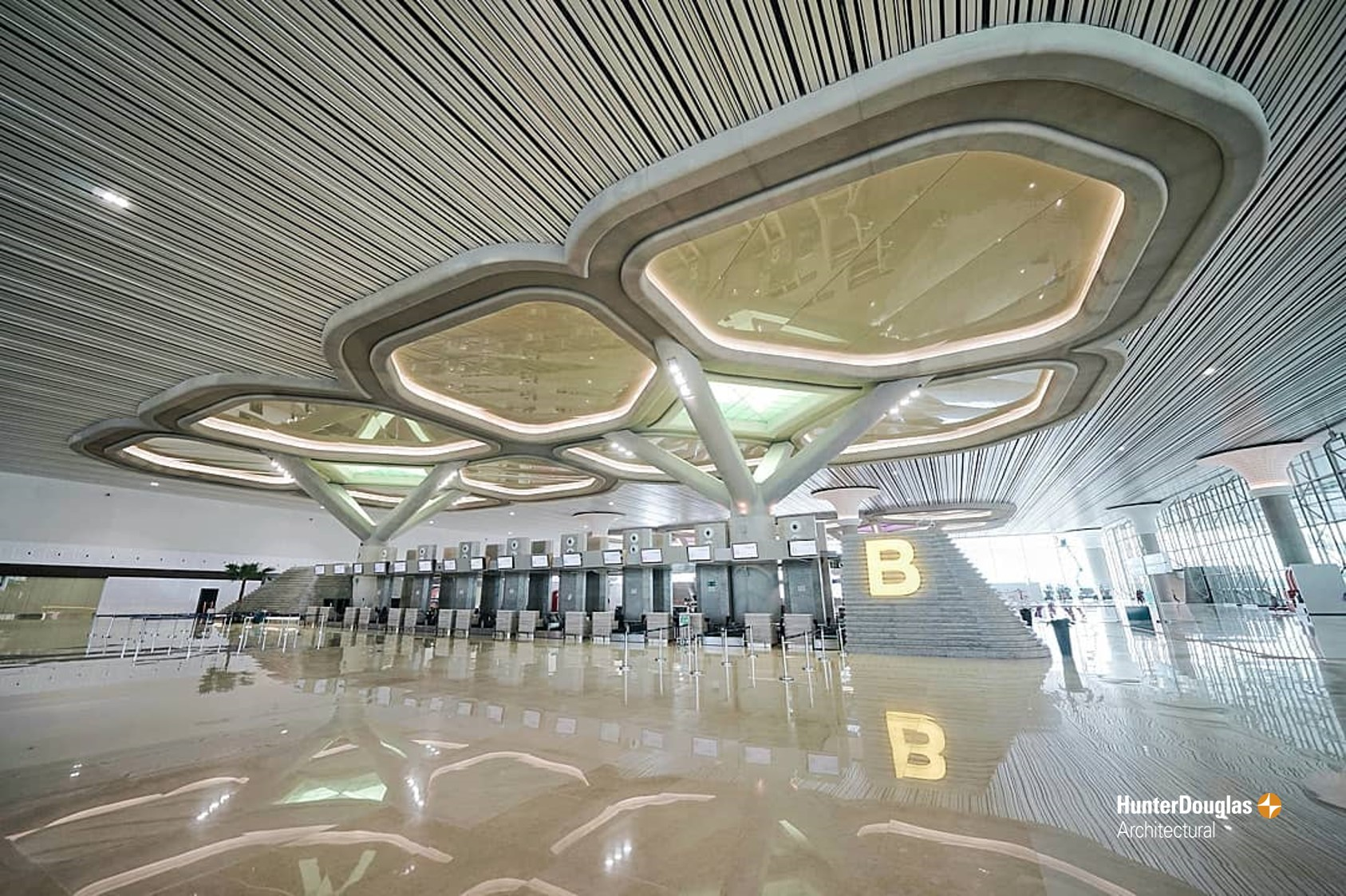
In Indonesia, a municipal government client used the product at Yogyakarta Airport over a two-year programme, also at 80,000 m² scale, reporting 30% lower life-cycle maintenance cost, a 15% saving on grouting materials and labour through tight-joint installation, and a breakage rate below 0.3%.
Low-absorption surfaces carry the same performance logic into wet areas and exterior cladding.
Side-by-Side Comparison
The table below uses only documented catalogue, certification and capability data. Where a figure applies to the manufacturing programme rather than one product family, it is marked accordingly.
| Specification point | Sintered stone slab | Large-format porcelain tile |
|---|---|---|
| Reference product (Monalisa catalogue) | Luxury Slab 90-270FDK09003M / 90-270FDK09008M | 120-270FEG12207M (homogeneous body); 8FMB10032PM (Classic Stone) |
| Format and thickness | 900×2700×12mm; CE scope also covers 900×1800×10mm | 1200×2700×12mm; 800×800×10mm |
| Firing phases | 5 | 3 (120-270FEG12207M); 8 (8FMB10032PM) |
| Surface finish | Glazed-matt | Matt / natural stone face; glazed-polished |
| Water absorption | ≤0.08% (ISO 10545-3) | CE scope to EN 14411:2016, Group BIa (lowest absorption band in that standard) |
| Certification on file | NSF C0676949-01; CE CY25A10378 | NSF C0676949-01 lists both porcelain models |
| Customization | OEM/ODM; pattern and logo | OEM/ODM; pattern and logo |
| Documented applications | Countertops, islands, vanity tops, backsplashes, integrated sinks, furniture, cleanrooms, public transit, external curtain walls | Residential floors and walls, commercial interiors, hospitals and schools, municipal paving, hospitality, industrial and agricultural flooring |
| Installation sensitivity | Large panel; substrate preparation guidance included in after-sales scope | Large panel at 1200×2700mm; project-level on-site technical support available |
| MOQ / lead time | 2,000 sqm minimum order; 7–15 days lead time (programme-level terms applying to both families) | |
| Warranty | 5–15 years depending on series and project type, covering manufacturing defects (programme-level) | |
Frequently Asked Questions
Are Monalisa sintered stone slabs and large-format porcelain tiles certified for US and EU projects?
Both product families appear in the certification record. NSF certificate C0676949-01, issued by NSF International on 3 April 2023, references compliance with NSF/ANSI 51 and lists the slab models 90-270FDK09003M/90-270FDK09008M alongside porcelain tile models 8FMB10032PM and 120-270FEG12207M. CE certificate CY25A10378, issued 7 March 2025 by China Testing & Certification International Group Shaanxi Co., Ltd. against EN 14411:2016, covers 900mm×1800mm×10mm, Group BIa, for wall and floor, glazed, even, with validity to 2035. Because certificate scope is written around specific formats, always confirm that the document covers the exact size and thickness in your bill of quantities before submission.
Can one manufacturer supply both a sintered stone slab and a large-format porcelain tile for the same project?
Yes, within Monalisa's catalogue. The group runs four production bases in Xiqiao, Qingyuan, Tengxian and Gao'an with 37 production lines and monthly capacity of 12.5 million m², and offers OEM and ODM production with customization of pattern and logo. That single-source structure removes the colour-matching problem that appears when slabs and tiles for adjacent zones come from two different factories. It also means one technical contact covers layout design, installation technique and substrate preparation.
How should I budget between the two materials?
Published price data is not part of this record, so the useful budgeting guidance is about where cost actually moves rather than a rate per square metre. Three documented drivers are worth carrying into the estimate: joint reduction, breakage and maintenance. At Yogyakarta Airport, tight-joint installation delivered a 15% saving on grouting materials and labour, the breakage rate stayed below 0.3%, and life-cycle maintenance cost was reported 30% lower. Add the cost of substrate preparation and installation supervision, particularly for large panels, and set the warranty period — 5 to 15 years depending on series — as a line in the comparison rather than an afterthought.
How do I validate a batch before it ships?
Use a reference sample or master plate as the control, not a photograph. Monalisa's documented acceptance protocol starts with a packaging and labelling check for moisture, damage, certificate of conformity and label-to-order matching on shade, size and quantity. It then opens 5%–10% of cartons to compare actual colour and pattern against the reference, and runs a rapid dimensional and flatness check with vernier caliper, feeler gauge and straightedge on at least 10 pieces per batch. Keeping a retained master plate on site for the duration of the project is the cheapest way to defend the specification during later phases.
What lead time and stock continuity should I plan for?
Lead time is 7–15 days from a minimum order quantity of 2,000 sqm, with FOB, CIF and EXW delivery terms and TT or LC payment. Two continuity mechanisms matter more than the headline lead time: Monalisa retains same-batch tiles in stock for two years for replenishment or repair replacement, and the warranty covers manufacturing defects such as colour difference, dimensional deviation and glaze cracks. For phased projects, confirm the stock-reserve arrangement at order stage rather than at replacement stage. To move from specification to a costing exercise, request a sample and quotation through the Monalisa website, and review the full range in the product brochure.
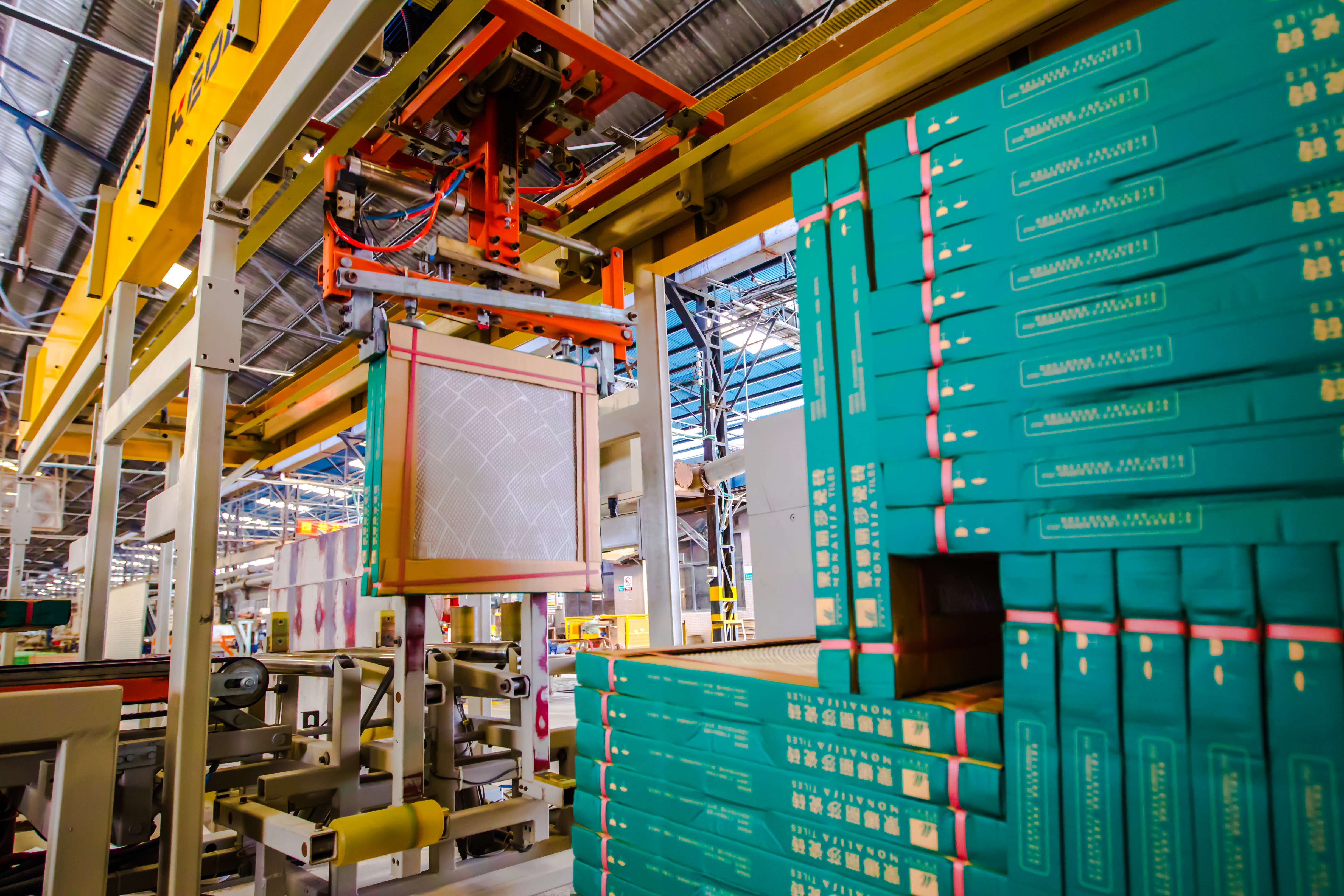
Automated handling across 37 production lines is what makes repeated large-format deliveries practical.
Conclusion
Choose the sintered stone slab when the surface is the working plane or the weather-facing skin: kitchen countertops and islands, bathroom vanities, integrated sinks, and exterior facade panels in dry-cladding or rain-screen systems. Its ≤0.08% water absorption, 900×2700×12mm format and documented cladding scope make it the lower-risk answer in wet and exposed conditions. Choose the large-format porcelain tile when the job is volume flooring and wall coverage across residential, commercial, public and industrial space, where the 1200×2700×12mm homogeneous body and 800×800×10mm Classic Stone range carry the cost advantage at scale.
The deciding factors are rarely visual. Match the certificate scope to the exact format, plan the substrate before tender, verify the finish against the live SKU matrix, and lock the acceptance criteria and stock-reserve terms into the order. A manufacturer that produces both families — with four bases, 37 lines, NSF and CE documentation, and a warranty measured in years rather than months — turns this from a material argument into a scheduling decision.
Ready to specify?
Request a sintered stone slab sample, a quotation for your format and quantity, or a technical review of your substrate and joint layout.
Contact: Joanna | Email: joanna_wang@fs-monalisatiles.com | Tel / WhatsApp: +86 18605191548
www.fs-monalisa.com | Download the product brochure (PDF)
Have Questions or Need More Details?
Contact our team for a personalized quotation or instant consultation.
Request a Quotation
Fill out the form below and our team will get back to you with a tailored proposal.
WhatsApp Direct Chat
Prefer to chat in real-time? Message us on WhatsApp for instant assistance & quick answers.
- Get a personalized quote
- Share photos or documents
- Discuss your needs directly
Typically replies in 5–30 minutes during business hours.