
Ranked: Monalisa Porcelain Tile Picks by Project Type for Construction & Decoration
Ranked: Monalisa Porcelain Tile Picks by Project Type for Construction & Decoration
A decision-stage ranking for residential, commercial, public facility, hospitality, municipal, industrial/logistics and agricultural projects — with verified fit facts, performance data and purchasing terms.
Choosing porcelain tile by project type is a specification decision before it is a design decision. A 1200x2700x12mm homogeneous body matte porcelain tile that works on a residential living-room floor and a hotel wall is selected for different reasons than an anti-slip porcelain tile installed in a transit hall, or a frost resistant porcelain tile used on an unheated agricultural structure.
This ranking orders Monalisa porcelain tile solutions by project type and states three things for each entry: the verified product fit, the performance data that supports it, and the commercial conditions a buyer needs at the Decision and Execution stage — minimum order quantity, delivery terms, acceptance criteria and batch continuity.
Quick answer: ranked Monalisa porcelain tile picks by project type
- Residential — Product 3220; 1200x2700x12mm homogeneous body matte porcelain tile for floors and walls (living room, kitchen, bathroom).
- Commercial — Product 3220 for commercial projects; Product 3352 for commercial space design.
- Public facilities — Product 3516, specified for slip resistance, easy cleaning and Class A fire rating.
- Municipal engineering — Product 3352, covering municipal engineering and interior/exterior finishing.
- Hospitality — 1200x2700x12mm matte homogeneous body slab for floors and walls; Product 3516 in wet and public zones.
- Industrial / logistics — high-density homogeneous specification: water absorption ≤0.08%, breaking strength ≥45 MPa, PEI Grade 5.
- Agricultural — frost resistant specification: 150 freeze-thaw cycles without cracking, water absorption ≤0.08%.
Problem definition: why one porcelain tile specification cannot cover every project
Tile failures in completed buildings are rarely caused by aesthetics. They come from a small and predictable set of specification risks: colour variation between production batches, dimensional deviation at the edges or diagonal, warpage that causes uneven joints or standing water, insufficient breaking strength, slip resistance below the required friction coefficient, stain penetration, freeze-thaw cracking in outdoor installations, and excessive radioactivity from raw materials.
Each risk is tied to a physical condition of the project: foot traffic volume, standing water, cleaning chemicals, fire regulation, temperature cycling, or structural loading. A residential bathroom and a municipal plaza do not share the same risk profile, which is why a single generic porcelain tile specification cannot serve both. The practical decision format is therefore a project-type ranking that maps each risk to a product and a measurable parameter.
For buyers moving from evaluation to release, the ranking also has to be commercially executable. It is not enough to know which tile suits a project type; the purchasing team must know the order quantity threshold, the delivery term, the acceptance procedure and how replacement tiles will match later.
Industry background: a specification-driven porcelain tile market
The global porcelain tiles market was valued at approximately USD 9.73 billion in 2024 and is projected to reach USD 18.33 billion by 2035, according to Spherical Insights. Within that market, the glazed porcelain tile segment holds the largest share, driven by aesthetic versatility and durability.
Supply is concentrated and currently contracting. China remains the world’s top ceramic tile exporter, although export volumes fell 2.5% in 2024 to 600 million sqm, with 74% of exports absorbed by Asian markets, per Ceramic World Web / Mecs Research Centre. Chinese tile production fell 12.1% in 2024 to 5.91 billion sqm, representing 48% of the country’s total production capacity, according to the China Building and Sanitary Ceramics Association.
Two consequences matter for project buyers. First, the classification line between ceramic and porcelain is defined by water absorption: porcelain tile must reach 0.5% or less to meet international standards such as ISO 13006 and ANSI A137.1, so the parameter to verify is measurable rather than promotional. Second, when capacity is rationalising, supply continuity and batch consistency become procurement criteria, not afterthoughts. Buyers increasingly select a manufacturer for the full project lifecycle — specification, delivery, installation support and future replacement stock — rather than for a single shipment.
The ranked picks: Monalisa porcelain tile by project type
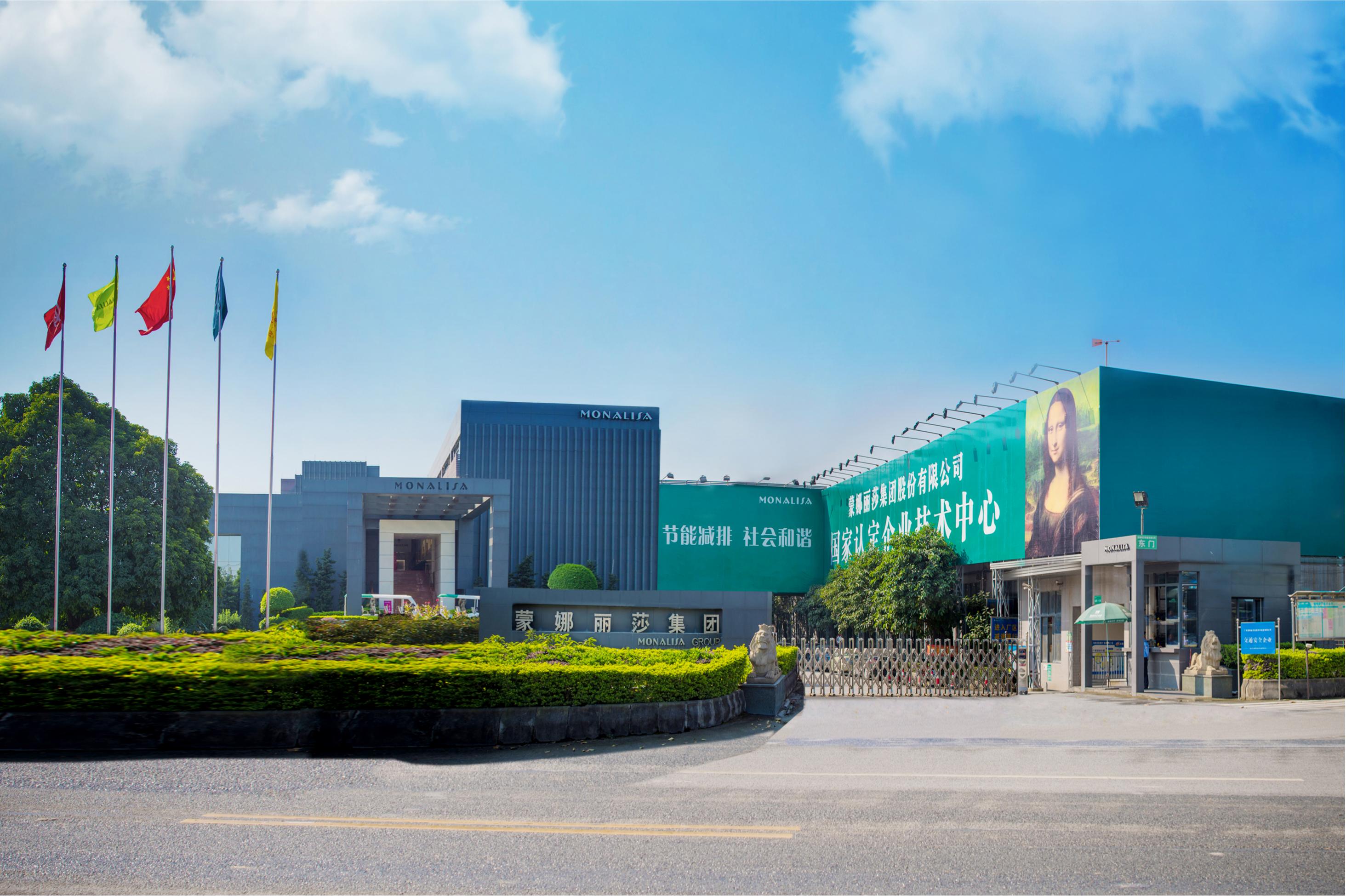
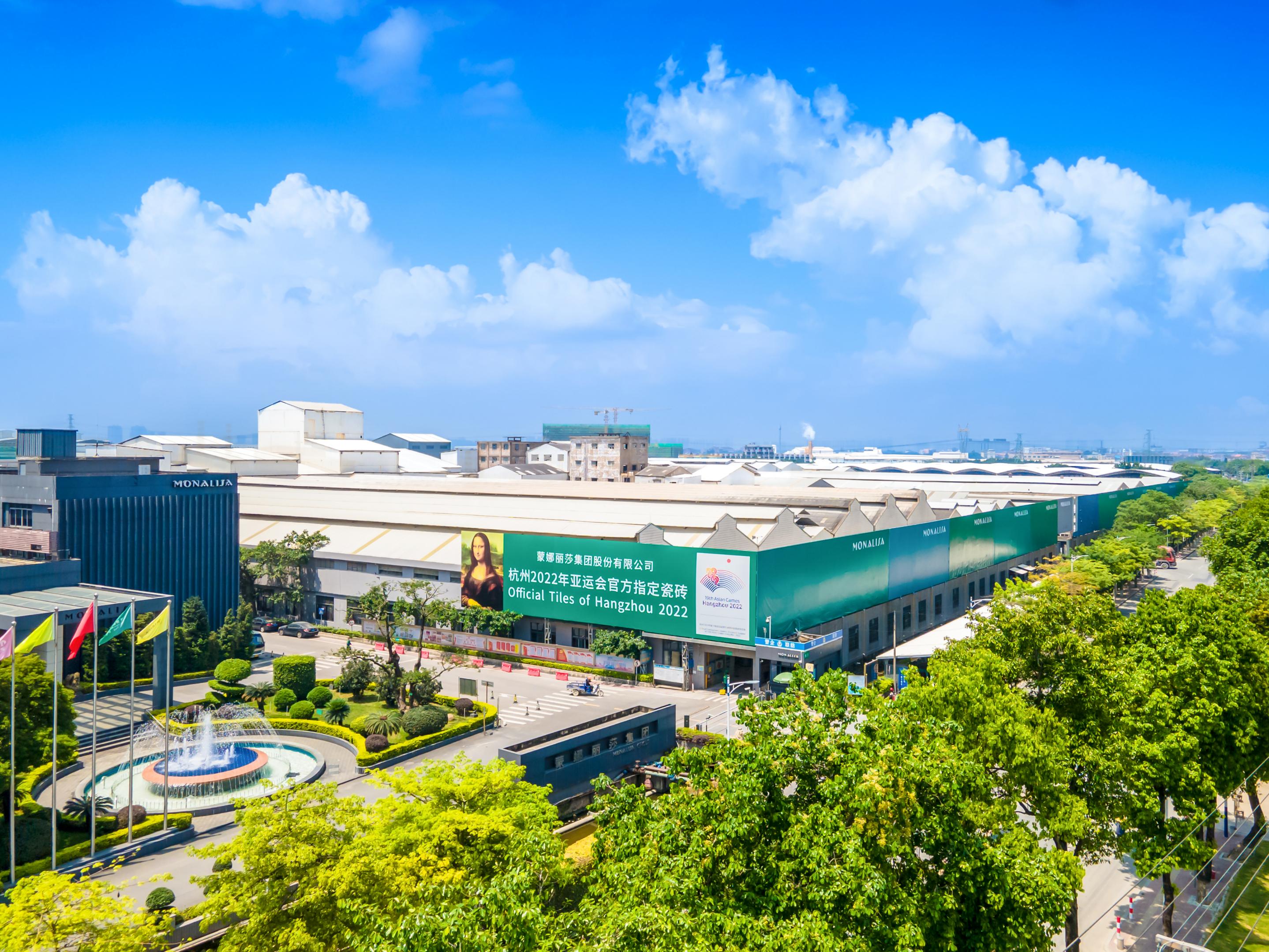
Monalisa Group Co., Ltd. (“Monalisa”) is a Foshan-based architectural ceramics manufacturer founded in 1992, integrating R&D, creative design, production and marketing of ceramic tiles, ceramic slabs and porcelain art paintings. The Group operates ten holding subsidiaries and four production bases — Xiqiao (Foshan), Qingyuan (Guangdong), Tengxian (Guangxi) and Gao’an (Jiangxi) — with a total of 37 production lines, and sells through three brands: Monalisa, QD and Merqi.
Rank 1 — Residential projects (living room, kitchen, bathroom)
Residential interiors combine daily foot traffic with wet zones and staining agents such as oil, coffee and cleaning products. Recommended pick: Product 3220, positioned for residential and commercial projects, combined with the 1200x2700x12mm homogeneous body matte porcelain tile for floors and walls. The large format reduces visible joint lines across living room and hallway floors, while the matte surface keeps bathroom and kitchen floors visually continuous with adjacent rooms. Verified performance supporting this pick includes water absorption ≤0.08%, surface Mohs hardness ≥7, stain resistance Grade 5 and digital printed surfaces that reproduce marble look, stone look, wood look or concrete look finishes. Confirm before order: the required slip classification for wet bathroom porcelain tiles, and the joint width, since large-format installation can use joints of 0.5mm or less.
Rank 2 — Commercial projects (retail, offices, commercial space design)
Commercial porcelain floor tiles are judged on abrasion, cleaning cost and long-term appearance retention. Recommended picks: Product 3220 for commercial projects and Product 3352 for commercial space design. The supporting data set is the strongest in the portfolio: abrasion resistance PEI Grade 5, wear volume ≤140 mm³ against ≤540 mm³ for conventional tile, breaking strength ≥45 MPa against ≥35 MPa, and a handling breakage rate of ≤0.3% versus approximately 0.8% for standard tiles. Monalisa’s documented best-fit areas for this performance profile are high-traffic commercial environments such as shopping malls, airports and school corridors. Confirm before order: whether a single shade batch can cover the full floor plate, and the phased delivery schedule.
Rank 3 — Public facilities (transit halls, schools, healthcare corridors)
Public buildings carry the strictest combination of requirements: anti-slip porcelain tiles under wet conditions, easy cleaning at scale, and fire performance. Recommended pick: Product 3516, specified for slip resistance, easy cleaning and Class A fire rating. Production-side controls reinforce this fit: slip resistance is engineered through special dry grains or textured moulds and batch-tested with a pendulum friction tester, with a wet BPN of 50 or higher and R10+ as the internal requirement. Confirm before order: the slip class demanded by the local code (R9, R10 or R11) for each zone, since entrances, stairs and dry corridors are usually assessed separately.
Rank 4 — Municipal engineering (pavements, plazas, exterior works)
Municipal work exposes tile to weather cycling, public traffic and long maintenance cycles. Recommended pick: Product 3352, whose documented application scope includes building & decoration, real estate, interior/exterior finishing, commercial space design, municipal engineering and home improvement retail. Its relevance to municipal projects is strongest where exterior finishing and public circulation meet. Confirm before order: the freeze-thaw classification required for the local climate and the loading assumptions for the paved surface, which are engineering inputs rather than tile properties.
Rank 5 — Hospitality (hotels, resorts, lobbies, F&B areas)
Hospitality specifications prioritise visual continuity across large areas, fast fit-out cycles and easy daily cleaning. Recommended pick: the 1200x2700x12mm homogeneous body matte porcelain tile for floors and walls, with Product 3516 assigned to wet and public zones where slip resistance and fire rating govern. Large-format digital printed slabs reduce the number of visible joints in lobbies and corridors, which lowers grout maintenance and improves cleanability. Confirm before order: shade batching across floors so that guest areas are drawn from one production batch, and the delivery sequence against the fit-out programme.
Rank 6 — Industrial and logistics environments
Industrial and logistics floors are selected on abrasion, impact and maintenance rather than appearance. The relevant verified specification is the high-density homogeneous body: water absorption ≤0.08%, breaking strength ≥45 MPa, Mohs hardness ≥7, wear volume ≤140 mm³ and flatness tolerance within ±0.15%, produced on presses with compaction force up to 48,000 kN. These values address surface wear and body density, which are the parameters a heavy duty porcelain tile can control. Confirm before order: rack leg loads, forklift wheel pressure and joint design, which require a structural assessment rather than a tile data sheet.
Rank 7 — Agricultural and unheated structures
Agricultural buildings combine moisture, temperature cycling and frequent washing. The parameter that decides performance here is freeze-thaw resistance. Monalisa’s documented freeze-thaw performance is 150 cycles without cracking, against 50 to 100 cycles for conventional tile, supported by water absorption ≤0.08% and stain resistance Grade 5 for repeated cleaning. Confirm before order: the compatibility of the cleaning and disinfection chemicals used on site, which should be validated through the in-house laboratory before the specification is frozen.
Manufacturing and quality infrastructure behind the ranking
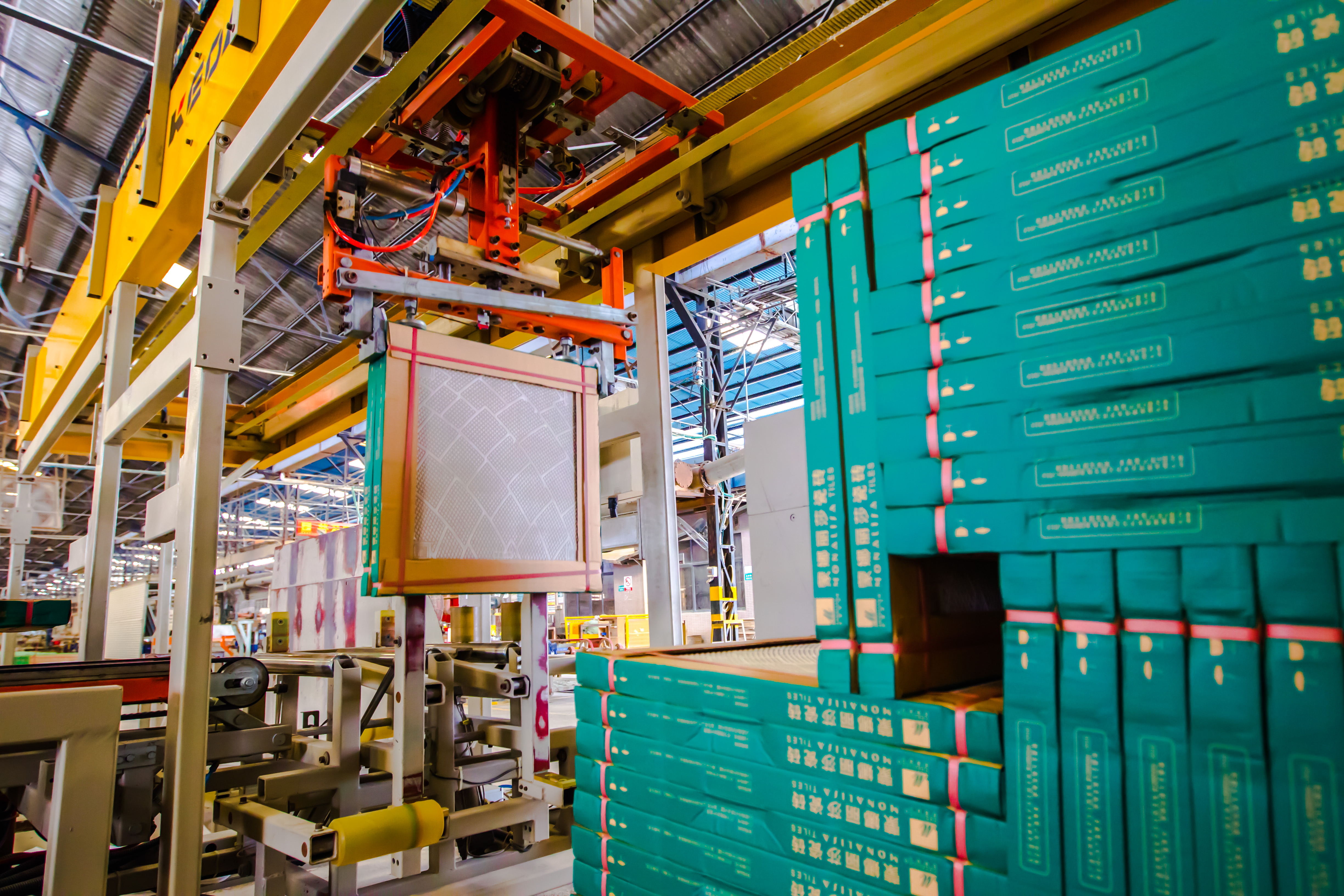
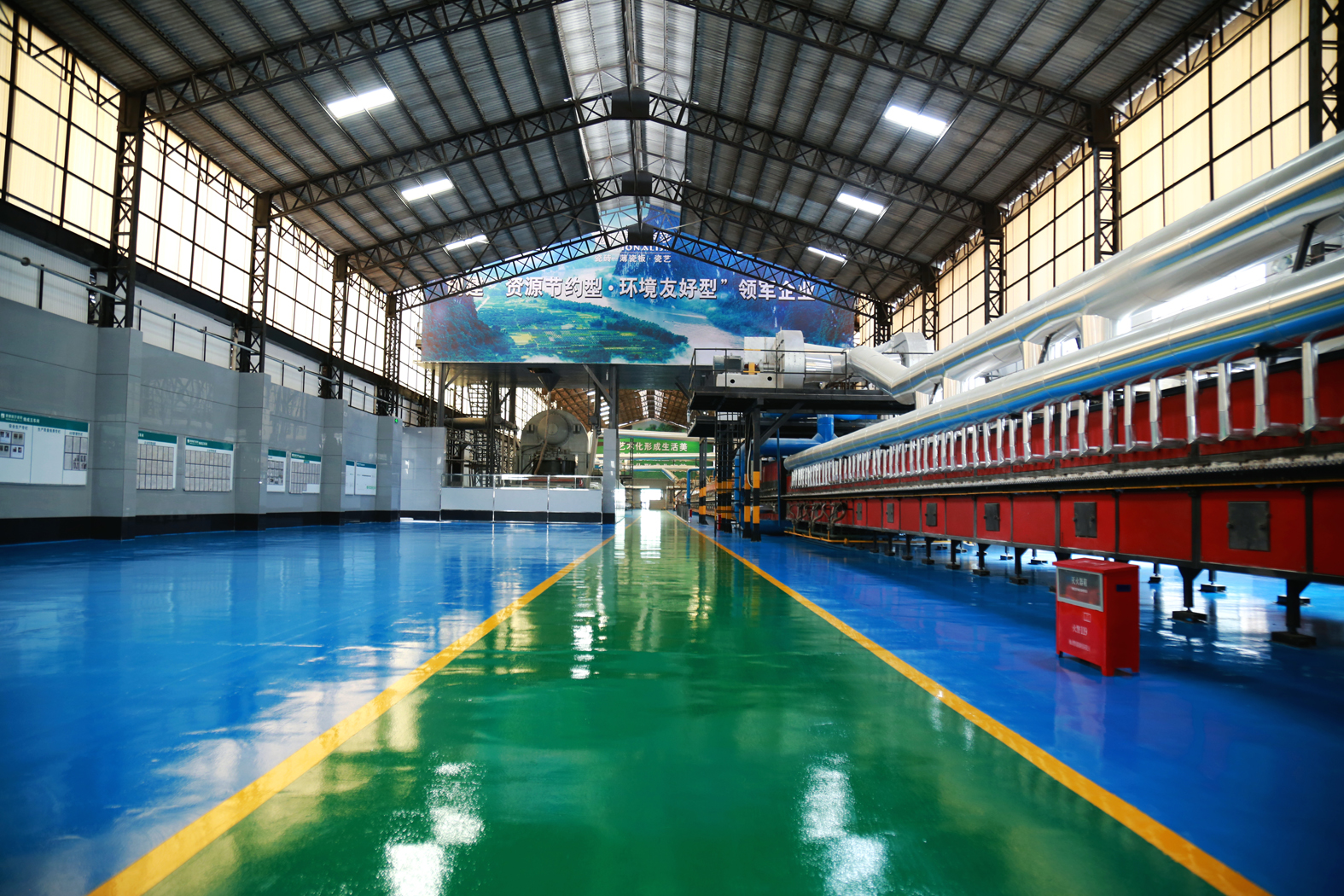
A project-type recommendation is only reliable if the factory can repeat it. Monalisa runs 37 production lines across four bases, with annual output of approximately 100 million square meters and a monthly production capacity of 12.5 million square meters. R&D is supported by 100 engineers and platforms including a National Enterprise Technology Center and a Postdoctoral Research Workstation. As of June 2021, the Group had participated in the drafting of 49 national, industrial, local and group standards and held 892 authorised patents, of which 145 are invention patents.
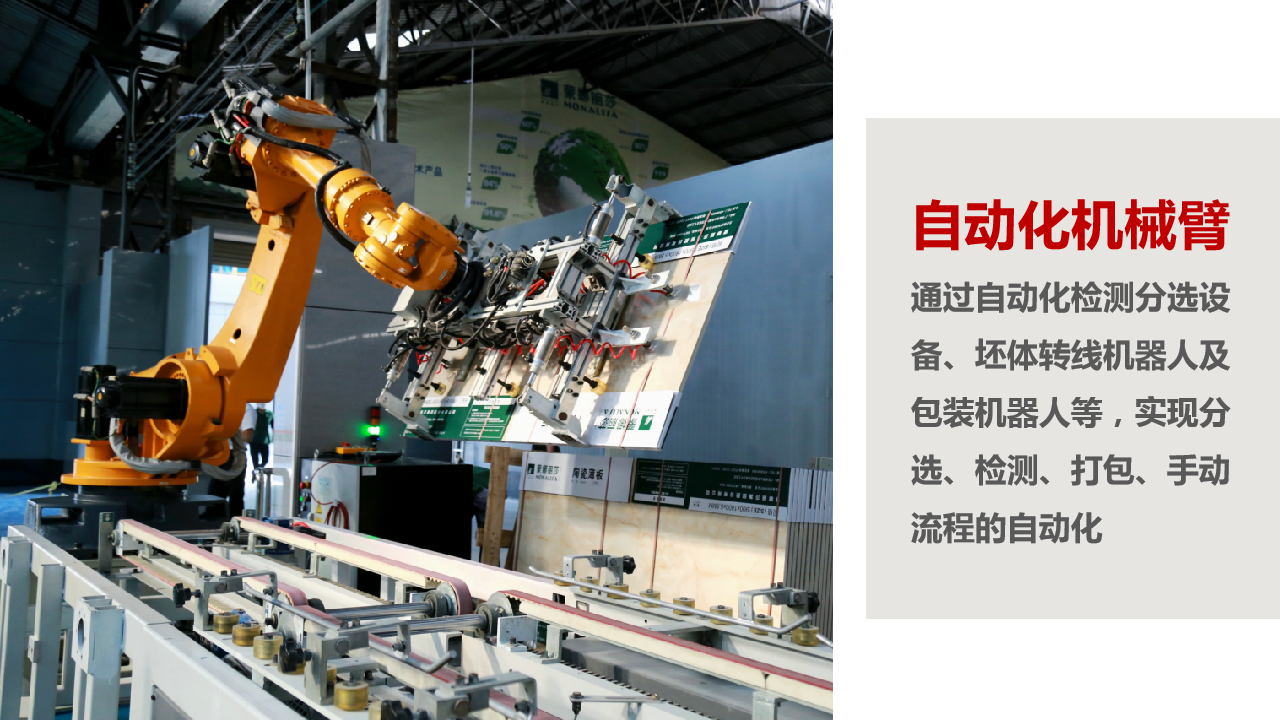
Quality control is structured as 18 inspection points running from raw material intake through ball milling, spray drying, pressing, drying, glazing, firing, polishing and sorting/packaging, with key parameters monitored and recorded in real time. Colour is controlled by automatic colour sorting machines and online spectrometer inspection with packaging by shade and grade; dimensions are held by high-precision moulds with tolerances within ±0.1mm and laser rangefinders; flatness is checked at 100% by a scanner after the kiln. Testing takes place in an in-house CNAS-accredited laboratory covering dimensions, water absorption, breaking strength, abrasion, slip resistance, stain resistance, freeze-thaw and radioactivity.
Certification and traceability complete the picture: ISO 9001 (quality), ISO 14001 (environment) and ISO 45001 (occupational health and safety), plus a traceability system in which each tile is laser-marked or RFID-coded back to production date, press station, kiln zone and inspector ID. Buyers who require ISO certified porcelain tiles for tender documentation can attach these certificates at the specification stage.
Step-by-step breakdown: from project type to released order
- Define the project type and exposure conditions. Record traffic level, wet or dry zones, fire requirements, outdoor exposure and cleaning regime for each area. This determines which ranked pick applies.
- Match the product to the project type. Use the matrix in this article: Product 3220 and the 1200x2700x12mm slab for residential and commercial work, Product 3516 for public facilities, Product 3352 for municipal engineering and building & decoration scope.
- Verify the performance parameters against standards. Confirm water absorption (ISO 13006 and ANSI A137.1 threshold: 0.5% or less), breaking strength, abrasion grade, slip class and fire rating for the specific product and finish.
- Confirm commercial terms. Minimum order quantity is 2000 sqm; delivery terms are FOB, CIF or EXW; payment terms are TT or LC. Confirm these in writing before design freeze.
- Validate with samples and acceptance testing. Compare delivered material against a reference sample or master plate, and apply the standard acceptance procedure described in the FAQ below.
- Lock the batch and shade plan. Reserve stock for later replacement so that patch repairs do not introduce colour difference.
- Plan installation and after-sales. Follow the installation guide supplied with the order, and register the project for replacement supply and technical support.
Use cases: where these specifications perform
High-traffic interiors. Shopping malls, airport concourses and school corridors are the documented best-fit areas for the high-density body: wear volume ≤140 mm³, PEI Grade 5 abrasion resistance and flatness within ±0.15%, which supports both appearance retention and tight-joint installation at 0.5mm or less. In large projects, tight-joint laying reduces grouting materials and labour by 10% to 15%.
Wet zones. Bathrooms, kitchens and pool surroundings depend on friction, not gloss. Dry-grain and textured surface options combined with batch pendulum testing to a wet BPN of 50 or higher give specifiers a measurable basis for choosing anti-slip porcelain tiles.
Outdoor terraces and cold regions. With water absorption ≤0.08% and freeze-thaw resistance of 150 cycles without cracking, the same body performs where conventional tile at 0.5% to 3% absorption and 50 to 100 cycles would fail.
Heated floors. The dense body conducts heat efficiently: with underfloor heating the heat transfer efficiency is approximately 22% higher than conventional tile, allowing the heating setpoint to be lowered by 1–2°C for the same comfort and reducing heating energy use by 8% to 12%.
Comparison table: Monalisa porcelain tile vs conventional tile
| Parameter | Monalisa porcelain tile | Conventional tile |
|---|---|---|
| Water absorption | ≤0.08% | 0.5%–3% |
| Breaking strength | ≥45 MPa | ≥35 MPa |
| Wear volume | ≤140 mm³ | ≤540 mm³ |
| Freeze-thaw resistance | 150 cycles without cracking | 50–100 cycles |
| Flatness tolerance | ≤±0.15% | ≤±0.5% |
| Handling breakage rate | ≤0.3% | Approx. 0.8% |
| Unit price | 15%–30% higher, by series | Baseline |
| Service life | 2–3 times longer | Baseline |
| Total life-cycle cost | 20%–35% lower | Baseline |
Note: ISO 13006 and ANSI A137.1 set the porcelain threshold at a water absorption of 0.5% or less; Monalisa’s production data sits below that threshold.
Product-to-project matrix
| Rank | Project type | Recommended Monalisa solution | Verified fit basis |
|---|---|---|---|
| 1 | Residential | Product 3220 + 1200x2700x12mm matte homogeneous slab | Floors and walls; stain Grade 5; ≤0.08% absorption |
| 2 | Commercial | Product 3220; Product 3352 | PEI Grade 5; ≥45 MPa; commercial space design |
| 3 | Public facilities | Product 3516 | Slip resistance, easy cleaning, Class A fire rating |
| 4 | Municipal engineering | Product 3352 | Municipal engineering, interior/exterior finishing |
| 5 | Hospitality | 1200x2700x12mm matte slab; Product 3516 in wet zones | Floors and walls; fire and slip requirements in public areas |
| 6 | Industrial / logistics | High-density homogeneous body | ≤0.08% absorption; ≤140 mm³ wear; ±0.15% flatness |
| 7 | Agricultural / unheated | Frost resistant specification | 150 freeze-thaw cycles; ≤0.08% absorption |
Long-term supply and channel fit: why project-type selection extends beyond one order
For distributors, importers and project owners, the value of a project-type ranking is realised over several years, not one shipment. Two mechanisms make that possible.
Supply continuity. A monthly production capacity of 12.5 million square meters across 37 production lines, with annual output of approximately 100 million square meters, provides the volume headroom that phased construction programmes require. Standard commercial terms — MOQ 2000 sqm, FOB/CIF/EXW delivery and TT/LC payment — allow buyers to plan releases against the site programme instead of stockpiling.
Replacement and colour matching. Excellent consistency between production runs, combined with a two-year batch stock reserve, means individual tiles can be replaced later without colour mismatch. Conventional tile often shows batch variation during patch repairs, which is a recurring cost in commercial and municipal assets.
Channel ecosystem. Monalisa operates three brands, Monalisa, QD and Merqi, with more than 4,000 authorised franchised stores and marketing outlets nationwide. Its product scope covers residential and public building decoration as well as curtain wall engineering, prefabricated buildings and customised home furnishings, and Product 3352 explicitly serves home improvement retail alongside building & decoration and real estate. For channel partners, that breadth supports repeat purchase categories rather than one-off project sales.
Long-term reference credibility comes from delivery record as well: Monalisa has supplied key projects including eight venues of the Beijing Olympic Games, ten venues of the Guangzhou Asian Games and the Hong Kong-Zhuhai-Macao Bridge, and served as the designated ceramic tile supplier for the China Pavilion at Expo 2020 Dubai and the exclusive supplier of official architectural ceramics for the 19th Asian Games Hangzhou 2022.
FAQ
Do Monalisa porcelain tiles meet the standards required for commercial and public buildings?
Porcelain tile is classified by water absorption, and international standards such as ISO 13006 and ANSI A137.1 require 0.5% or less for porcelain. Monalisa porcelain products are produced with water absorption of 0.08% or below, and Product 3516 is specified with slip resistance, easy cleaning and a Class A fire rating for public facility use. The Group holds ISO 9001, ISO 14001 and ISO 45001 certification and operates a CNAS-accredited in-house laboratory for dimensional, strength, abrasion, slip, stain, freeze-thaw and radioactivity testing. Destination-market requirements such as CE marking should be confirmed at the specification stage.
Can Monalisa support large and long-duration project volumes?
Monthly production capacity is 12.5 million square meters, annual output is approximately 100 million square meters, and manufacturing runs on 37 production lines across four bases in Xiqiao (Foshan), Qingyuan (Guangdong), Tengxian (Guangxi) and Gao’an (Jiangxi). Technical capability is supported by 100 R&D engineers, participation in drafting 49 national, industrial, local and group standards, and 892 authorised patents including 145 invention patents — a scale that allows phased delivery across multi-year construction programmes.
What are the purchasing terms, and how do they affect project budget?
Minimum order quantity is 2000 sqm, delivery terms are FOB, CIF or EXW, and payment terms are TT or LC. Unit price for Monalisa porcelain tile is 15% to 30% higher than conventional tile depending on series, but documented service life is 2 to 3 times longer, the handling breakage rate is 0.3% or below against approximately 0.8% for standard tiles, and total life-cycle cost is 20% to 35% lower. In large projects, tight-joint installation at 0.5mm or less saves 10% to 15% in grouting materials and labour.
How can a project team validate a tile before releasing the full order?
Validation follows a documented acceptance procedure. Packaging and labelling are checked first: outer packaging intact, no moisture or damage, certificate of conformity and installation guide inside, and labels matching the order by shade, size and quantity. Then 5% to 10% of cartons are opened to compare actual colour and pattern against a reference sample or master plate and to verify quantity and grade. A rapid dimensional and flatness check follows, using a vernier caliper, feeler gauge and straightedge on at least 10 pieces per batch. Physical samples can be requested through the Monalisa website or the contact channels listed below before order confirmation.
What does supply continuity look like after project handover?
Each tile is laser-marked or RFID-coded for traceability to production date, press station, kiln zone and inspector ID, and 18 quality control points record parameters from raw material intake to sorting. A two-year batch stock reserve is maintained so that replacement tiles match the original installation without colour difference, which avoids the batch variation typical of patch repairs. Combined with a monthly capacity of 12.5 million square meters and FOB/CIF/EXW delivery terms, this supports maintenance and expansion phases after handover and defines the long-term supply relationship.
Conclusion and next step
Ranking porcelain tile by project type converts an open design question into a specification that can be verified, priced and delivered. Residential and commercial interiors are covered by Product 3220 and the 1200x2700x12mm homogeneous body matte porcelain tile for floors and walls; public facilities are served by Product 3516 with its slip resistance, easy cleaning and Class A fire rating; and Product 3352 spans building & decoration, real estate, interior/exterior finishing, commercial space design, municipal engineering and home improvement retail. Behind those picks sits manufacturing capability of 37 production lines, approximately 100 million square meters of annual output, 12.5 million square meters of monthly capacity, 100 engineers, 892 patents and participation in 49 standards.
The practical next step is to match your project type to the matrix above, confirm the performance parameters and commercial terms, and validate with a physical sample before design freeze.
Request samples, a project quotation or the full catalogue
Monalisa Group Co., Ltd. — Monalisa Tower, Poly Centre, 8 Wenhua S Rd, Shunde, Foshan, 528300, CN
Website: www.fs-monalisa.com | Email: joanna_wang@fs-monalisatiles.com
Tel / WhatsApp: +86 18605191548
Product catalogue (PDF): Download the Monalisa brochure
Have Questions or Need More Details?
Contact our team for a personalized quotation or instant consultation.
Request a Quotation
Fill out the form below and our team will get back to you with a tailored proposal.
WhatsApp Direct Chat
Prefer to chat in real-time? Message us on WhatsApp for instant assistance & quick answers.
- Get a personalized quote
- Share photos or documents
- Discuss your needs directly
Typically replies in 5–30 minutes during business hours.