Sintered Stone Slab Partnership FAQ: Supply and Acceptance
Sintered Stone Slab Partnership FAQ: Supply, Acceptance and After-Sales
A long-term sintered stone slab partnership is decided less by a single quotation than by three repeatable systems: documented production reliability, an acceptance protocol both sides signed off on before the first bulk order, and an after-sales routine that tells a buyer exactly who to contact and what evidence to submit. This FAQ answers the questions distributors, importers, and project buyers most often raise when moving from a one-off slab order to a multi-year supply agreement with Monalisa.
Monalisa Group Co., Ltd. (“Monalisa”) is an architectural ceramics manufacturer founded in 1992 and headquartered in Foshan, Guangdong Province, China. Its product portfolio covers tiles, sintered stone slabs, and SPC flooring. The questions below are grouped in the order a sourcing team usually resolves them: compliance first, then capability, then commercial terms, then sample and acceptance, then lead time and after-sales support.

Monalisa Group Xiqiao headquarters, Foshan, Guangdong Province.
Problem Definition: Why a Slab Order Is Simple and a Slab Partnership Is Not
A sintered stone slab is a passive architectural finishing material. Once installed, it is permanently fixed to the building substrate and has no moving parts or active operating components. That single characteristic explains most partnership risk: nothing about the material announces a problem early. A dimensional mismatch, a shade difference between production phases, or a surface that stains in a hotel kitchen only becomes visible after fabrication and installation, when replacement is expensive and slow.
The practical consequence for buyers in the awareness and research stage is that supplier evaluation should not stop at “can this factory make the slab?” It has to answer a second question: “can this factory repeat the same slab, to the same reference, across many shipments, and support us when something goes wrong?”
Three gaps typically appear when buyers compare suppliers on price alone:
- Undefined acceptance. The buyer inspects against impression rather than a retained reference sample and a written parameter list, so disputes end in negotiation rather than measurement.
- Unverified capacity. Stated output is accepted without checking how many production bases and lines actually sit behind it, or whether slab and tile capacity are being quoted together.
- No after-sales route. Contact details exist for the sales phase but no agreed routine for batch complaints, replacement evaluation, or documentation requests.
The remainder of this article converts each gap into a question with a documented answer or a defined process step.
Industry Background: Why Supply Relationships Carry More Weight Than They Used To
Sintered stone sits in a category whose definitions overlap. Sintered stone, porcelain slab, and large-format tile are frequently counted together in trade and research reporting, which means any single market figure must be read together with the scope it was measured on. A commercial research report places the global sintered stone countertop surfaces segment at USD 1.84 billion in 2024, with a reported compound annual growth rate of 6.9% over the 2024–2033 forecast period, reaching USD 3.44 billion by 2033. That figure is scoped to countertop applications, not to slabs used for flooring or facades.
On the supply side, sintered stone production is concentrated among manufacturers who also run conventional architectural ceramics lines. Monalisa's own catalogue illustrates the overlap: the same group lists sintered stone slabs alongside ceramic tiles and SPC flooring, and its slab formats are quoted in the same 900 × 2700 mm family that dominates large-format specification work.
Two structural shifts make the partnership question more important than it was five years ago:
- Format consolidation. Large-format slabs reduce visible joints but raise handling, fabrication, and breakage risk, so buyers need a supplier whose packaging and batch consistency are predictable, not just a supplier with an attractive surface.
- Certification-driven market access. Commercial and export projects increasingly ask for conformity documentation before the slab is approved, so the ability to produce certificates per SKU becomes part of the supply relationship rather than an administrative afterthought.
Detailed Solution: What Monalisa Brings to a Long-Term Supply Agreement
Monalisa answers the reliability question with operating scale that can be checked rather than inferred. The group operates four modern production bases located in Xiqiao (Foshan), Qingyuan (Guangdong), Tengxian (Guangxi), and Gao’an (Jiangxi), housing a total of 37 production lines. Annual production capacity reaches approximately 100 million square meters, supported by a total manufacturing facility area of 2,779,333.33 square meters and a workforce of approximately 4,106 staff.
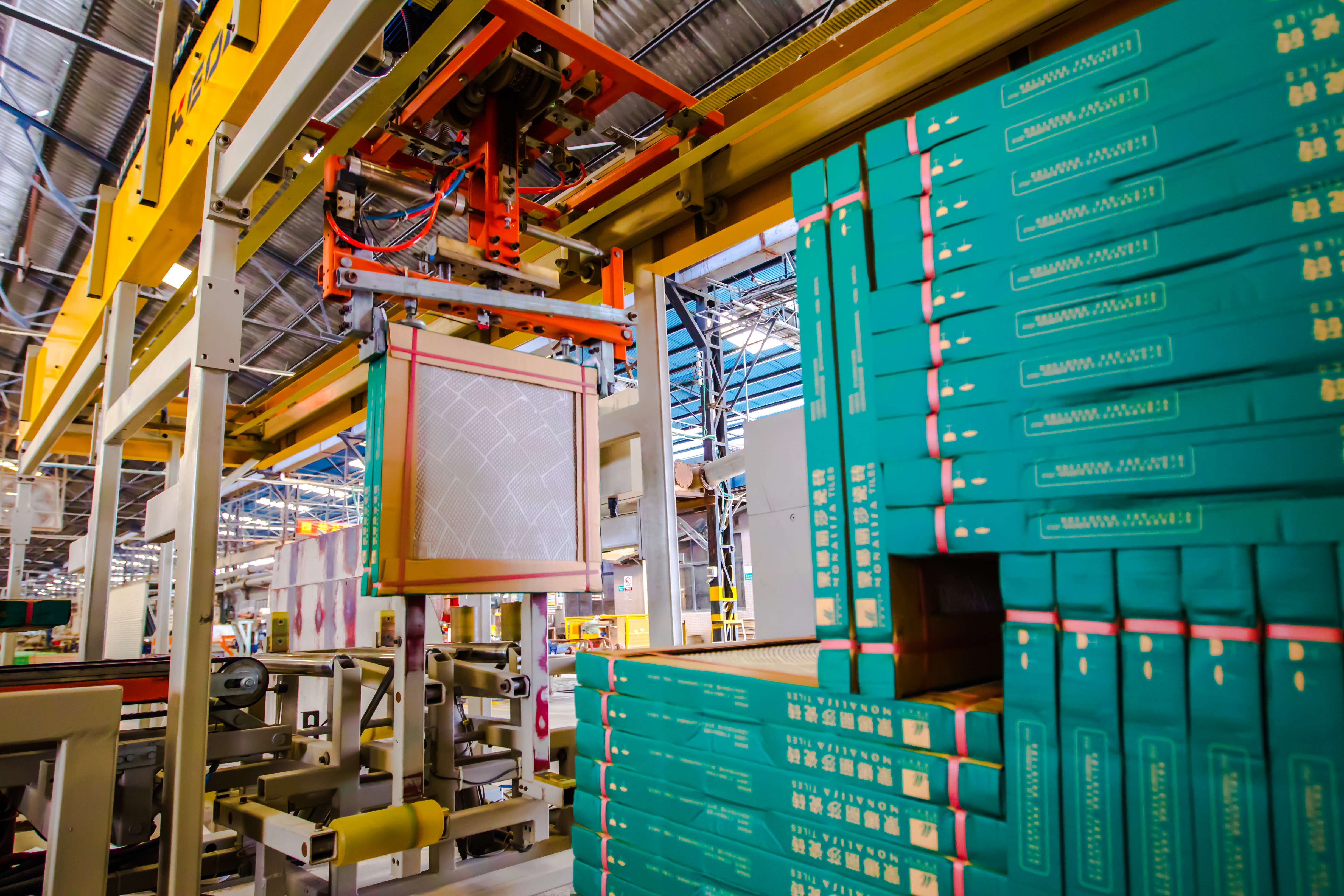
Automated material handling inside a Monalisa production base.
Technical depth is a second pillar. The R&D department consists of a team of 100 engineering professionals, and the group has participated in the drafting of 49 national, industrial, local, and group standards while holding 892 authorized patents, including 145 invention patents, as of June 2021. Two product milestones are relevant to buyers assessing large-format capability: the 1800×900×5.5 mm large ceramic thin plate introduced in 2007, and the 9000×1800×10.5 mm ultra-large ceramic plate launched in 2021.
Market coverage shapes how a partnership is structured. Monalisa serves markets globally, including China, Southeast Asia (Vietnam, Thailand, Indonesia), the Middle East (UAE, Saudi Arabia), North America (USA, Canada), Europe (Italy, Germany, Poland), Australia, Africa (Nigeria, Kenya), and regions with active Belt & Road infrastructure development. Export business accounts for approximately 10% of total sales, and the group operates three brands — “Monalisa”, “QD”, and “Merqi” — with over 4,000 authorized franchised stores and marketing outlets nationwide.
Compliance documentation is the third pillar. Monalisa has obtained 15 certifications including ISO 9001 and ISO 14001, and has been rated a “Five-star Standardization Good Practice Enterprise”. Monalisa sintered stone products are documented as holding NSF and CE certifications. Because certificate scope is product- and rule-specific, buyers should still request the certificate number, issuing body, covered product family, and validity date for the exact SKU in the purchase order — a request a long-term partner should be able to answer without delay.
Step-by-Step Breakdown: How to Onboard a Sintered Stone Slab Partner
The onboarding sequence below is the practical version of the FAQ that follows. Each step produces a document, because undocumented agreements are the ones that fail during a dispute.
Use Cases: Where Partnership Reliability Becomes Visible
Long-term supply arrangements are tested by application, not by brochure. The applications below are the ones where repeat volume and consistent acceptance standards matter most.
Kitchen countertop sintered stone slab
Countertops, islands, and backsplashes sit in the highest-contact zone of a residential or hospitality project. Stain resistance of Grade 5, defined as resistance to common stains such as tea, oil, and ink, is the parameter buyers most often cite in acceptance discussions, alongside water absorption limits. A supplier relationship that fixes these values in writing removes the most common post-installation argument.
Bathroom vanity sintered stone slab
Wet-area specification adds slip resistance to the acceptance list. Monalisa's published requirement for bathroom applications is R10 or higher within the R9–R11 slip resistance range, which should be confirmed per SKU and finish at the sampling stage.
Wall cladding sintered stone slab and flooring
Large-format wall and floor work depends on dimensional consistency across phases. Monalisa's catalogue formats include a 900×2700×9 mm sintered stone slab with a four-phase pattern structure and a 900×2700×12 mm Luxury Slab with five phases, both in glazed-matt finish. Phase count is a practical acceptance item: buyers should decide in advance how much pattern variation between phases is acceptable on a single elevation.
Exterior facade sintered stone panels
External curtain wall and ventilated rain-screen systems are specified for outdoor conditions including sun exposure, rain, freeze-thaw cycles from −20°C to 40°C, standing water, and mild chemical corrosion. The relevant acceptance point is freeze-thaw stability, defined as no cracks after 100 freeze-thaw cycles for cold-climate outdoor projects.
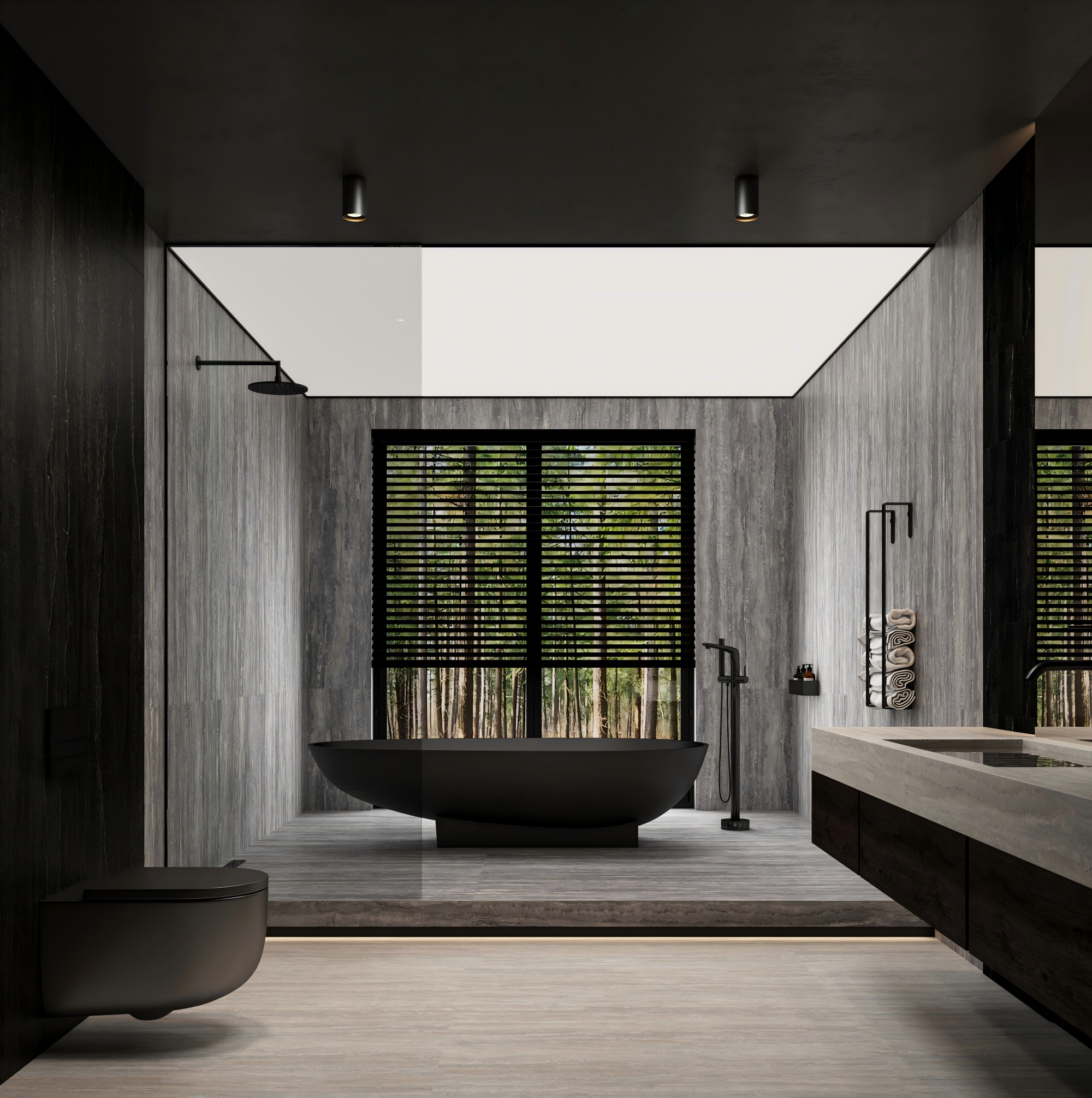
Commercial projects such as hotels, malls, and showrooms are typical long-term volume applications.
Comparison Table: Catalogue Formats and Acceptance References
The first table compares the sintered stone slab formats Monalisa lists in its product catalogue. It is a format comparison, not a supplier benchmark.
| Format | Model reference | Dimensions | Surface | Typical application focus |
|---|---|---|---|---|
| Flowing Light Sintered Stone | 90-270DBY09340M | 900 × 2700 × 9 mm (4 phases) | Glazed-matt | Residential floors and walls: living rooms, bedrooms, kitchens, bathrooms, balconies |
| Luxury Slab | 90-270FDK09003M / 90-270FDK09008M | 900 × 2700 × 12 mm (5 phases) | Glazed-matt | Kitchen countertops and islands, vanity tops, backsplashes, premium residential and commercial surfaces, external curtain walls |
The second table converts published performance references into acceptance items that can be written into a supply agreement.
| Acceptance item | Published reference | Where it matters |
|---|---|---|
| Water absorption | ≤0.5% for porcelain tile, ≤3% for semi-porcelain; double-zero absorption for certain projects | Wet areas, exteriors, project specifications that mandate double-zero |
| Stain resistance | Grade 5, resistant to common stains such as tea, oil, and ink | Kitchen countertops, hospitality, food-adjacent spaces |
| Slip resistance | R9–R11; R10 or higher for bathrooms | Bathrooms, pool surrounds, ramps, wet floors |
| Abrasion resistance | PEI 3–5; PEI 4 or higher for commercial and public areas | Malls, airports, station concourses, high-traffic retail |
| Chemical resistance | ULA class for laboratories and chemical plant surroundings | Laboratory benches, industrial interiors |
| Freeze-thaw stability | No cracks after 100 freeze-thaw cycles | Outdoor projects in cold climates, facade panels |
| Installation system | Tile adhesive, grout, back butter adhesive, cross spacers, epoxy grout; tile cutter, leveling system, notched trowel, rubber mallet, spirit level, tile suction cup | Fabrication and site planning, subcontractor briefing |
Note on scope: performance requirements are application-specific. Always confirm the applicable value against the exact SKU, thickness, and finish in the purchase order rather than a general product description.
FAQ: Questions Buyers Ask Before Committing Long-Term
1. Compliance: What certifications should a sintered stone slab partner be able to document?
A long-term partner should be able to produce conformity documentation on request, not only on the website. Monalisa has obtained 15 certifications including ISO 9001 and ISO 14001, and Monalisa sintered stone products are documented as holding NSF and CE certifications. ISO 9001 addresses quality management and ISO 14001 environmental management; NSF and CE relate to product conformity for the markets where they are claimed. Because a certificate covers a defined product family and validity period, a buyer should request the certificate number, issuing body, covered product scope, and expiry date that match the SKU being purchased. This single request separates suppliers who maintain documentation from suppliers who describe it.
2. Capability: Can the production base support repeat volume over several years?
Capacity claims are only useful when they can be traced to physical assets. Monalisa operates four modern production bases — Xiqiao (Foshan), Qingyuan (Guangdong), Tengxian (Guangxi), and Gao’an (Jiangxi) — with 37 production lines and annual production capacity of approximately 100 million square meters, supported by a facility area of 2,779,333.33 square meters and approximately 4,106 staff. The R&D department consists of 100 engineering professionals. Multi-base operation is the practical answer to continuity risk: capacity is not tied to a single site, and a group that has run architectural ceramics production since 1992 has accumulated process experience that a newly built single-line plant has not. Buyers should still ask which bases serve which product families, so expectations are set correctly at the start of the agreement.
3. Budget: How should commercial terms be agreed before signing?
Commercial terms in this category are partnership terms rather than published attributes, and they should be written into the agreement rather than assumed. The items that need explicit definition are: minimum order quantity per format and finish, price basis and Incoterms, packaging specification, breakage allowance and how it is calculated, payment schedule, and warranty scope including duration and claim procedure. Monalisa does not publish standard figures for these items in its public product materials, so they are confirmed during partner onboarding with the commercial contact. A useful discipline is to describe each term in one sentence, name the person responsible, and attach the agreed version to the master agreement so that repeat orders reference a fixed baseline instead of reopening negotiation.
4. Sample: How should sample approval and acceptance testing work?
Sample approval should produce three outputs: a retained reference slab signed by both parties, a written parameter list drawn from the acceptance table above, and a photographic record under fixed lighting. The parameter list typically covers water absorption, stain resistance grade, slip resistance class, abrasion class, chemical resistance if relevant, freeze-thaw stability for exterior work, and dimensional format including phase count. For format planning, Monalisa lists a 900×2700×9 mm slab in four phases and a 900×2700×12 mm Luxury Slab in five phases, both glazed-matt and both made of clay and quartz sand. Comparing a production sample against the retained reference — not against a screen image — is the step that makes later batch discussions objective.
5. Lead time and after-sales: How should scheduling and support be organised?
Lead time depends on format, finish, order volume, and the production slot allocated, so it should be agreed as a schedule in the contract rather than a general statement. The same applies to after-sales: define who is contacted first, what evidence a claim requires (photographs, batch or phase reference, installation record), and how replacement evaluation is handled. Monalisa maintains direct business contact channels for ongoing partner communication — email joanna_wang@fs-monalisatiles.com, telephone and WhatsApp +86 18605191548, and the head office at Monalisa Tower, Poly Centre, 8 Wenhua S Rd, Shunde, Foshan, 528300, CN. Starting the conversation with a format list, an expected annual volume, and a target market is the fastest route to a workable proposal.
Conclusion: A Partnership Is a Set of Written Routines
Sintered stone slab supply rewards preparation. The suppliers who cause problems later are rarely the ones with the weakest surfaces; they are the ones whose capacity claims, acceptance criteria, and after-sales routes were never written down. Monalisa's position in a long-term agreement rests on verifiable operating facts — four production bases, 37 production lines, approximately 100 million square meters of annual capacity, 2,779,333.33 square meters of manufacturing area, approximately 4,106 staff, 100 R&D engineers, and 15 certifications including ISO 9001 and ISO 14001 — together with NSF and CE conformity documentation for its sintered stone products.
The buyer-side work is equally concrete: retain a reference sample, convert performance expectations into parameters, define commercial terms explicitly, and name the people who handle claims. Do that, and the FAQ above stops being a list of worries and becomes an onboarding checklist.

Next Step: Request the Catalogue or Start a Partner Conversation
Review Monalisa’s product range and specifications in the downloadable brochure, then send your format list, estimated annual volume, and target market to the business contact below for a tailored response.
Brochure download: Monalisa Group product brochure (PDF)
Website: fs-monalisa.com
Email: joanna_wang@fs-monalisatiles.com | Tel / WhatsApp: +86 18605191548
Address: Monalisa Tower, Poly Centre, 8 Wenhua S Rd, Shunde, Foshan, 528300, CN
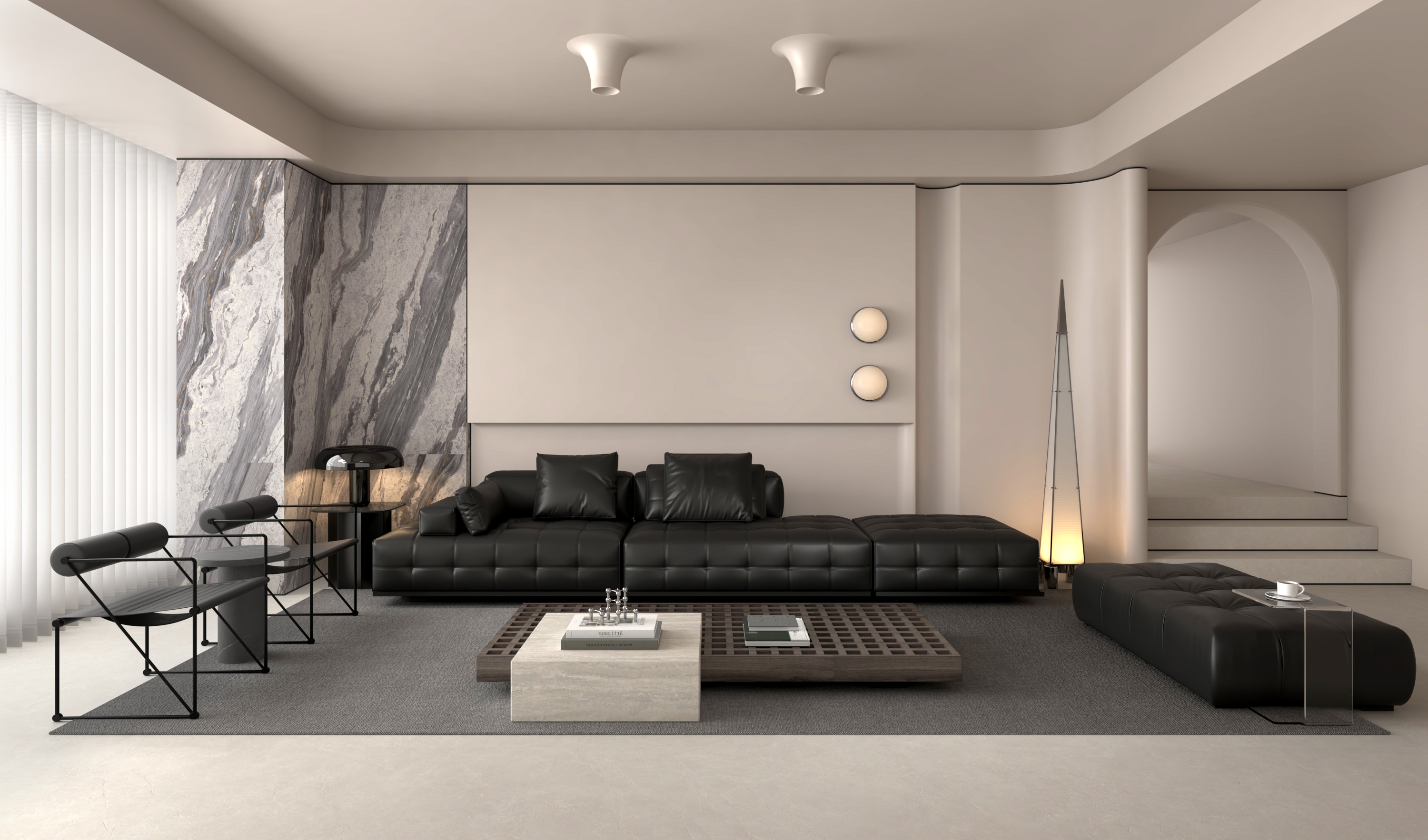
Conformity documentation should be requested for the exact SKU, scope, and validity period.
This article uses only Monalisa-published facts and publicly available research references. Performance requirements vary by application and destination market; confirm values against the specific product and project specification before purchase.
Have Questions or Need More Details?
Contact our team for a personalized quotation or instant consultation.
Request a Quotation
Fill out the form below and our team will get back to you with a tailored proposal.
WhatsApp Direct Chat
Prefer to chat in real-time? Message us on WhatsApp for instant assistance & quick answers.
- Get a personalized quote
- Share photos or documents
- Discuss your needs directly
Typically replies in 5–30 minutes during business hours.