
SPC Floor Click-Lock and Floating Installation: A Technical Guide to Glue-Free Systems
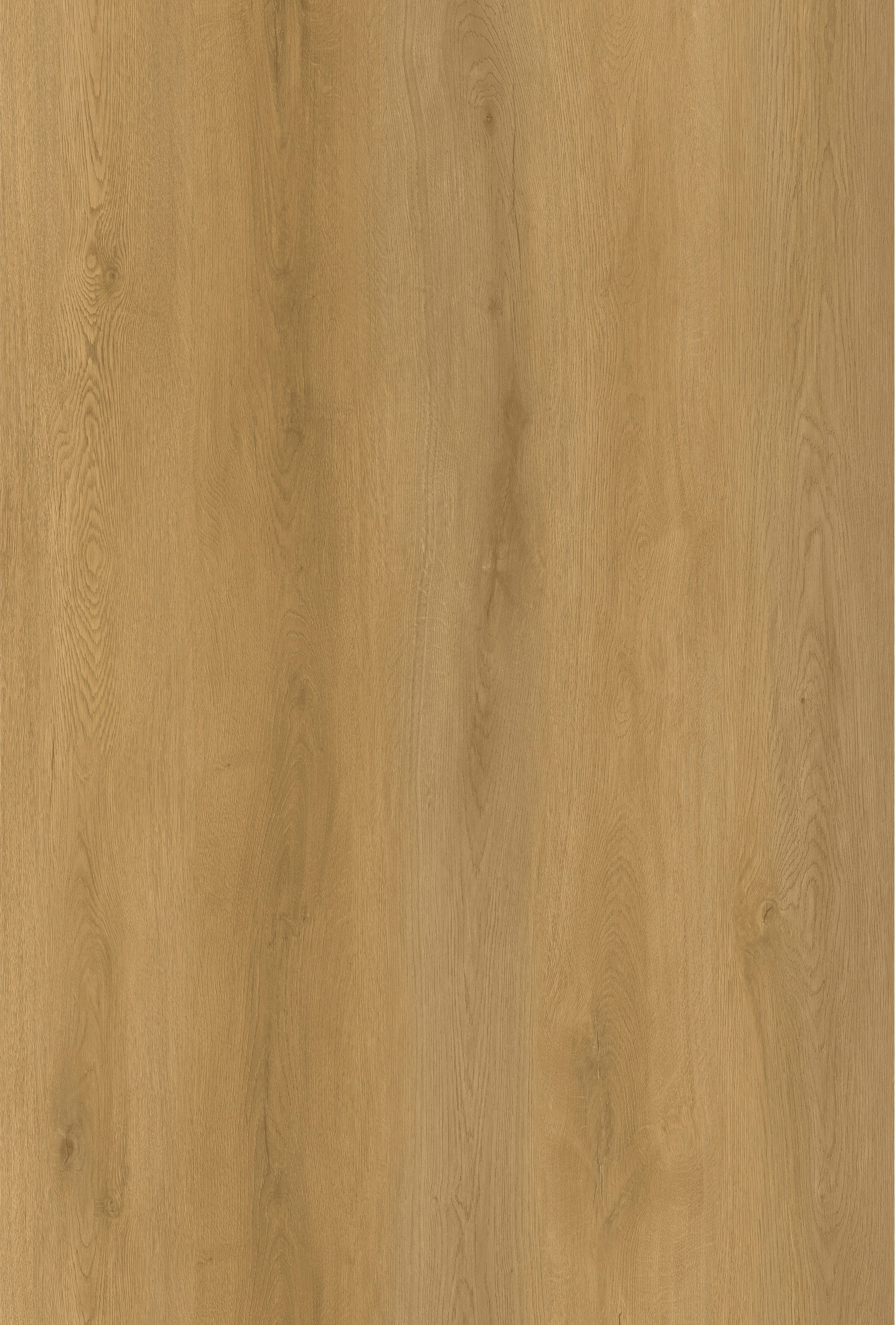
A click-lock SPC floor is installed as a floating system. Planks are joined to one another by a mechanical locking profile — typically a 5G fold-down or angle-tap design — and the finished surface rests on the substrate without adhesive, nails or staples. Nothing bonds the floor to the slab. The assembly is held by its own mass, by the friction of the backing pad, and by the expansion gaps maintained at every perimeter.
For a buyer at decision stage, the practical consequence is this: the lock profile is not the variable that decides whether the floor performs. Substrate flatness, moisture control and installation climate decide it. This guide sets out the parameters that govern a glue-free SPC installation, how those parameters are verified on site, and how the specification shifts between residential, commercial office and wet-area applications.
Problem Definition: Why Glue-Free SPC Installations Fail
Almost every failure reported as a "lock problem" traces back to one of five site conditions. The lock is usually the messenger, not the cause.
- Peaking seams and gapping. Planks locked tight against the wall with no spacer leave the floor nowhere to move. When the installed floor contracts in a cooler room the joints open; when it expands the seams peak. Perimeter gaps are structural, not cosmetic.
- Hollow sound and deflection underfoot. A substrate that deviates more than 2 mm under a 2 m straightedge leaves voids beneath the plank. The floor flexes with every step, which fatigues the locking profile.
- Broken lock tabs. Grit, dried levelling compound or packaging debris left in the groove prevents full engagement. Forcing the plank closed cracks the tab instead of seating it.
- Edge swelling and cupping on ground-floor concrete. Slabs release moisture vapour from below. Without a 6-mil polyethylene moisture barrier, that vapour reaches the core through the joints.
- Compressible or contaminated substrates. Installing over carpet, soft PVC or a substrate covered in adhesive residue puts a soft layer under a rigid plank. The floor then moves vertically instead of locking horizontally.
The lesson for a decision-stage buyer is that a glue-free SPC system should be specified together with its substrate acceptance criteria, never as a standalone product. A click-lock glue-free SPC floor is a system of plank, pad, barrier and gap, and the warranty should be read the same way.
Industry Background: Why Floating Click-Lock Became the Default SPC Specification
Floating installation moved from a convenience to the dominant SPC specification because the material itself made it viable. Rigid-core constructions accounted for 74.2% of SPC flooring revenue in 2025, according to Dataintelo's SPC flooring market research, and rigid core is the sub-type on which click-lock floating systems are built. The same source estimates the global SPC flooring market at USD 9.8 billion in 2025, while other research houses publish materially lower figures because they define the category more narrowly — so any market-size claim should be read with its definition attached.
Supply is concentrated. China exported USD 4.97 billion of plastic floor coverings under HS 391810 in 2024, according to OEC trade data, which makes Chinese rigid-core production the reference point for both price and specification in most export markets.
The technical reason floating works is dimensional stability. Commercial-grade SPC flooring is required to hold dimensional stability within 0.10% under EN ISO 23999. That figure is what allows a floor of hundreds of square metres to be laid as one continuous unbonded surface: the movement of each plank across the width of a room stays inside the expansion gaps designed into the perimeter. A dimensional-stable anti-deformation SPC floor is therefore not a marketing variant — it is the precondition for a glue-free installation that stays closed.
Compliance expectations have moved in parallel. CE marking is the baseline documentation request for European projects, and GREENGUARD Gold certification under UL 2818 requires testing for more than 10,000 chemicals against strict VOC limits, which is why specifiers in schools and healthcare buildings now request GREENGUARD Gold SPC floor documentation as a matter of course. Certifications apply to the product as tested; they do not substitute for correct installation conditions.
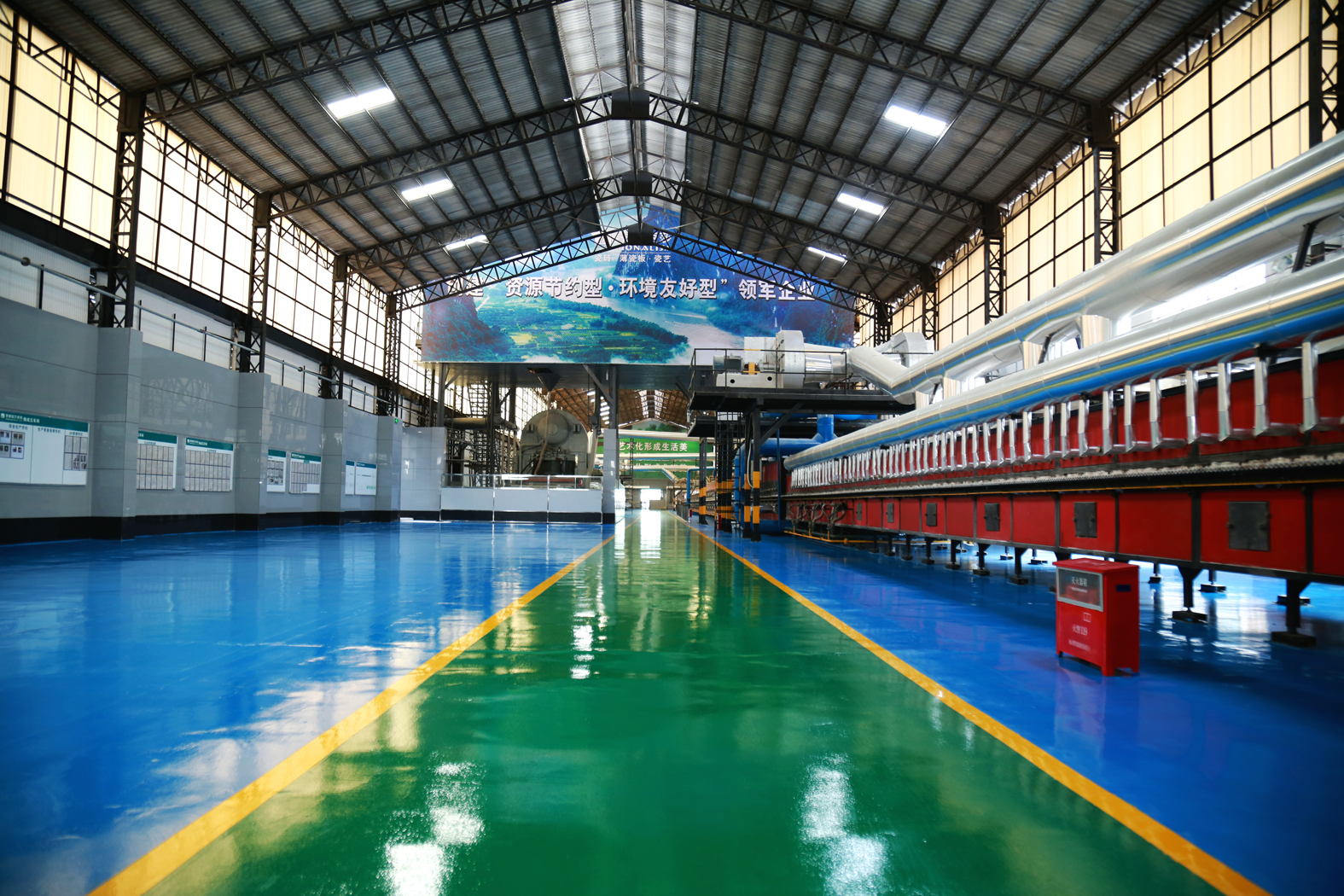
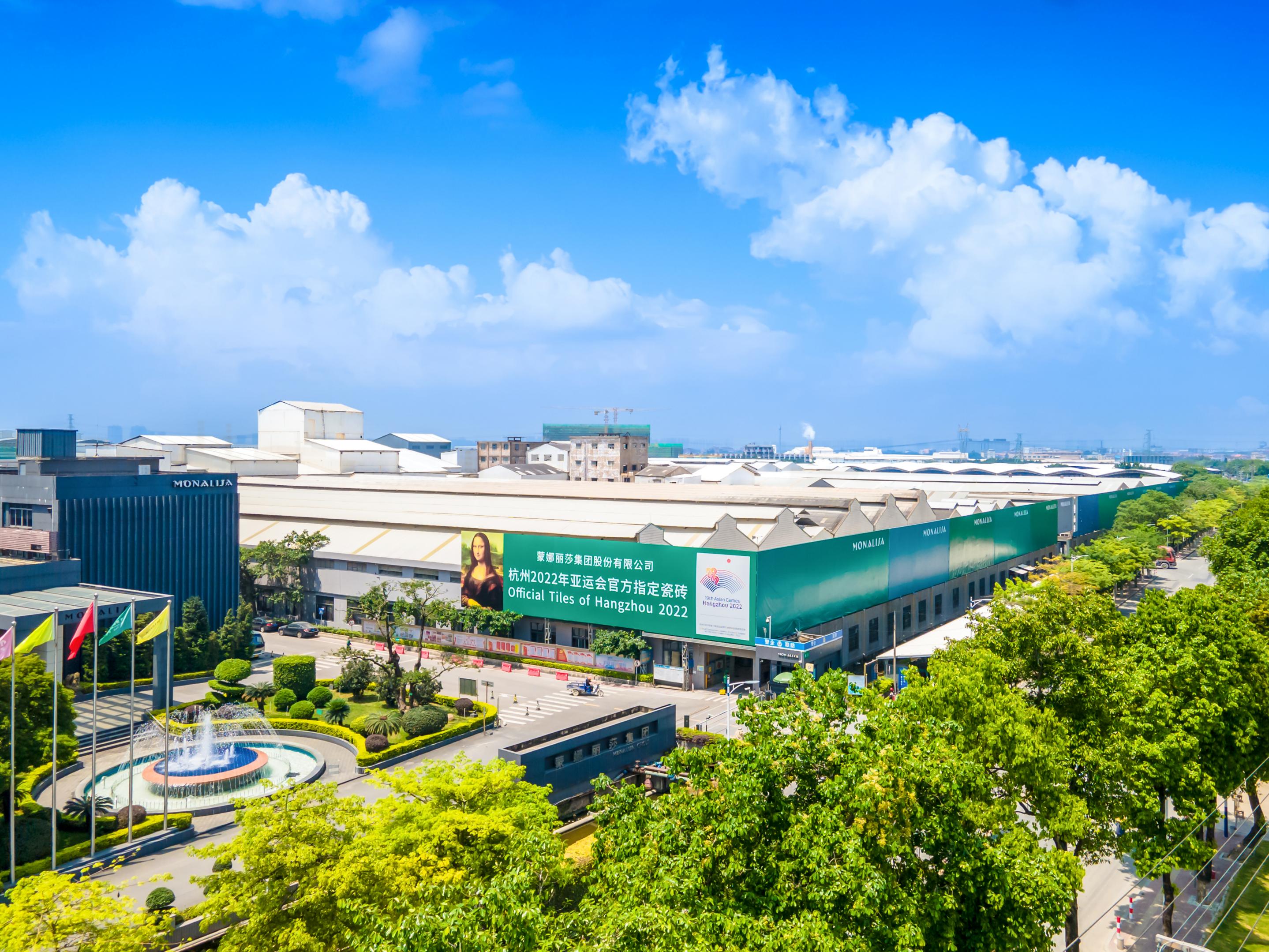
Monalisa Group Co., Ltd. is a building materials manufacturer founded in 1992 and headquartered in Foshan, Guangdong Province, China, producing ceramic tiles, sintered stone slabs and SPC floor through four production bases and 37 production lines, with an annual output capacity of 100 million square metres. Its SPC range is produced under the group quality system that holds ISO 9001 and ISO 14001 certification and the "3M" quality management model — relevant here because core density and dimensional consistency are production-controlled variables, not installation-site variables.
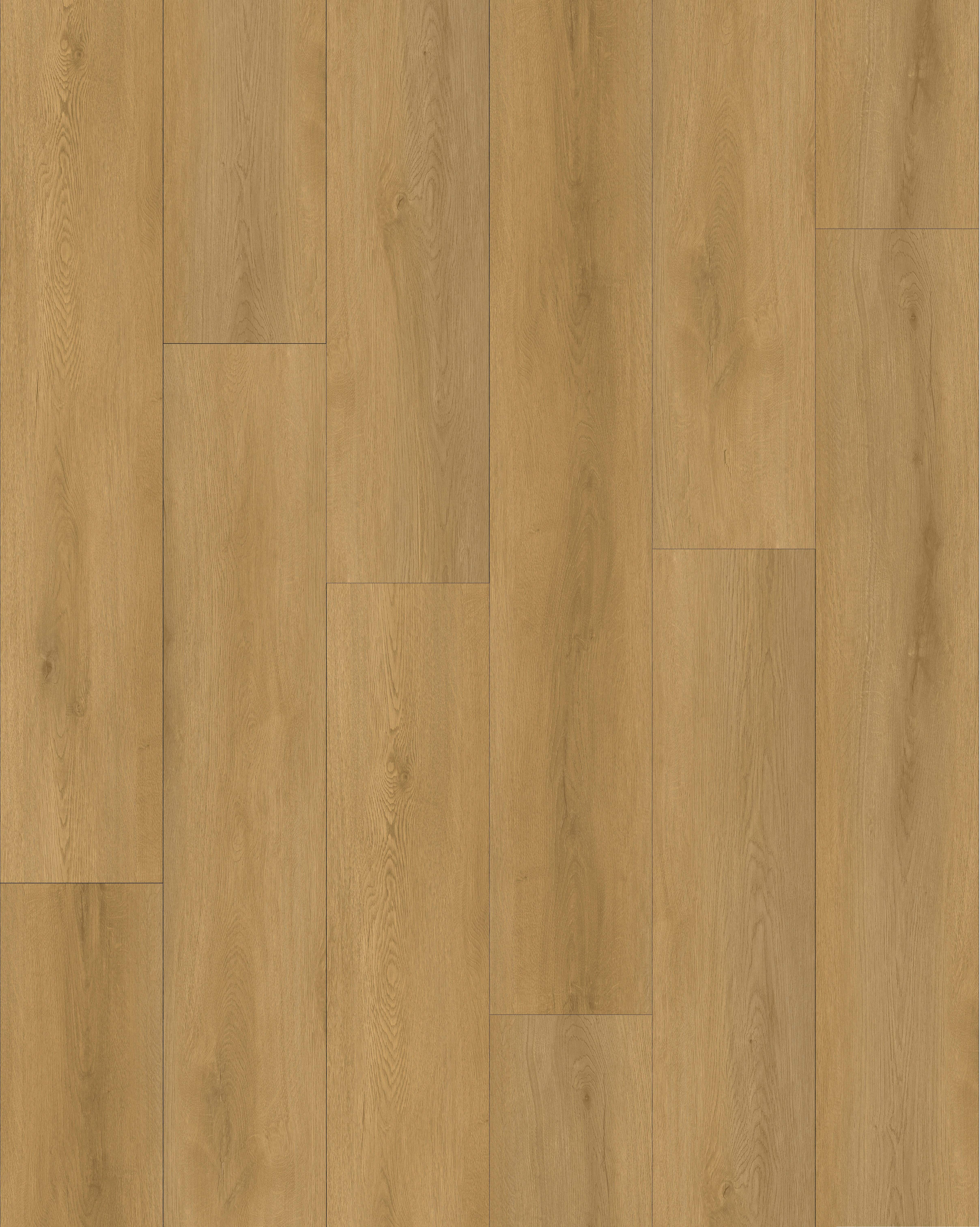
Detailed Solution: Anatomy of a Glue-Free SPC System
A rigid stone-plastic SPC floor performs three separate functions through three separate layers, and each one carries an installation consequence.
The high-density stone-powder core
The core is a rigid stone-plastic composite — stone powder bound in a PVC matrix, formed into a dense, non-compressible plank. Its job in a floating system is to keep the plank flat and dimensionally stable so the locking profile stays engaged. Because the core does not compress, point loads spread across the plank rather than concentrating at the joint, which is why a high-density stone-powder core SPC floor handles concentrated furniture legs and rolling loads better than a softer product. The same rigidity is what makes substrate flatness non-negotiable: a rigid plank over a void does not settle, it rocks.
The locking profile
The click-lock edge — typically 5G — combines an angle-fold on the long edge with a drop-lock on the short edge, so planks engage without a hammer and without adhesive. The profile is a mechanical interference fit: it holds because the tabs are pre-loaded against one another, not because anything has glued. That matters at decision stage for two reasons. First, the floor can be disassembled and re-laid, which is valuable in commercial office SPC floor projects where access floors or cabling routes change. Second, the profile has no tolerance for debris or for being forced — installation technique directly determines joint life.
The acoustic pad
Most click-lock SPC planks carry a pre-attached backing pad. In a floating system the pad does three jobs: it absorbs impact noise at source, it provides the friction that stops the floor creeping, and it isolates the rigid core from minor substrate roughness. The pad is also why the assembly must not be bonded — adhesive would compress the pad unevenly and destroy the uniform support the core needs.
Thermal behaviour and waterproofing
The rigid core also gives the system its thermal stability. Because the plank does not expand or contract at the rate of a soft vinyl or a wood-based board, the installed floor stays inside its expansion gaps across the ambient operating range of 13–37.7 °C, including in rooms with underfloor heating. The result is a waterproof SPC floor by construction: the core is not moisture-sensitive and the joints are mechanical rather than absorbent. Surface water resistance is not, however, the same as moisture protection from below — which is why the 6-mil barrier requirement applies to the substrate, not to the plank.
Selection and installation parameters
| Parameter | Requirement for a glue-free click-lock system | Why it matters |
|---|---|---|
| Substrate flatness | Within 2 mm over a 2 m straightedge | Prevents voids, rocking and profile fatigue |
| Substrate condition | Dry, clean, structurally sound, free of adhesive residue, paint, plaster and loose levelling compound | Debris in the groove blocks full lock engagement |
| Acceptable substrates | Sound concrete, cement screed, approved plywood, or existing hard flooring that meets flatness | Provides rigid, non-compressible support |
| Not permitted | Carpet, soft PVC, foam-backed sheet, or any compressible layer | Compressible layers allow vertical movement |
| Moisture barrier | 6-mil polyethylene barrier on ground-floor concrete | Blocks vapour release from the slab |
| Perimeter clearance | Spacers at every wall, column, pipe and threshold, held until the floor is complete | Gives the assembled floor room to move |
| Installation temperature | 18–30 °C | Plank dimensions and lock tolerance are calibrated in this window |
| Relative humidity at installation | Up to 65% | Limits moisture uptake during the open time |
| Post-installation ambient temperature | 13–37.7 °C | Operating range within which the floor stays within its gaps |
These are acceptance criteria, not preferences. A project that proceeds outside them is not installing the system the product was tested as.
Step-by-Step Breakdown: Installing a Glue-Free Click-Lock SPC Floor
Step 1 — Condition the building before the material arrives
Bring the space to its installation window of 18–30 °C and relative humidity up to 65% at least 48 hours before installation, and keep HVAC running during and after the work. Planks should be acclimated flat and unopened in the room where they will be laid. Installing into a cold shell and heating afterwards is the most common cause of a floor that gaps in its first season.
Step 2 — Prove substrate flatness with a straightedge
Walk the entire area with a 2 m straightedge and measure every gap. The acceptance limit is 2 mm over 2 m. High spots are ground or sanded; low spots are filled with a suitable levelling compound and allowed to cure fully. Flatness must be re-checked after levelling, not assumed from the trowel finish.
Step 3 — Remove everything that can sit between plank and slab
Vacuum the substrate thoroughly. Adhesive residue, plaster droppings, dried levelling compound and packaging grit all end up in the locking groove. Any carpet, soft PVC, foam-backed underlay or loose sheet material must be removed — a glue-free system needs a hard, non-compressible substrate, and no underlay corrects a soft one.
Step 4 — Install the moisture barrier on ground-floor concrete
Lay a 6-mil polyethylene barrier across the full area, lapping the sheets and turning the edges up at the walls before the floor goes down. On a ground-floor slab this is the only barrier between slab vapour and the joints. Suspended timber or approved structural substrates follow the substrate manufacturer's moisture guidance instead.
Step 5 — Set the layout and fix spacers at every boundary
Decide the plank direction and the width of the first and last courses before laying. Then place spacers along every wall, around columns, at door frames and at pipe penetrations. Spacers stay in place until the whole floor is laid — a floor tapped tight to one wall before the far side is finished will have no gap left when it expands. Door frames and thresholds are undercut so the plank slides beneath them rather than butting against them.
Step 6 — Lock the planks without forcing the profile
Engage the long edge at an angle, fold the plank down, then close the short edge with a drop-lock and a light tap through a tapping block — never directly on the profile. Check every joint by eye and by feel before moving on. If a plank resists, lift it and inspect the groove rather than increasing force; a broken tab is permanent.
Step 7 — Complete the perimeter and transitions
Remove the spacers only after the final course is locked. Cover the expansion gap with skirting, beading or a transition profile fixed to the wall or substrate, never to the floor. The floor must remain free to move under the trim.
Step 8 — Hand over within the operating range
Once installed, the floor's ambient operating range is 13–37.7 °C. Handover should include the installation temperature and humidity record, the flatness readings, confirmation of the barrier, and the post-installation HVAC setpoint. These records are what a warranty assessment will be based on.
Use Cases: Where a Floating Click-Lock System Is the Right Decision
Residential SPC floor
In apartments and houses the glue-free system wins on three counts: it can go over sound existing hard flooring that meets flatness, it can be walked on immediately rather than after an adhesive cure, and it can be lifted for a leak repair. A waterproof SPC floor in kitchens, laundries and basements is the standard specification because the core does not swell — but the 6-mil barrier on ground-floor concrete still applies, and expansion gaps at every room perimeter remain mandatory.
Commercial office SPC floor
Open-plan offices, meeting rooms and fit-outs favour floating installation for a different reason: speed and reversibility. There is no adhesive odour and no cure window, work can be phased floor-by-floor outside business hours, and planks can be lifted and re-laid when a cabling route or partition moves. A dimensional-stable anti-deformation SPC floor matters more here than in a house, because a large continuous office floor accumulates far more movement than a single room.
Healthcare, education and public interiors
In these settings the specification conversation usually begins with a cleanable surface — an antimicrobial SPC floor option is often requested alongside slip and fire performance — but installation still decides performance. Large continuous areas, heavy rolling loads and rigorous cleaning all put load on the joints, so substrate flatness and perimeter gaps belong in the works specification rather than in the installer's judgement.
Retail and hospitality
Where trading hours constrain the programme, the absence of an adhesive cure is decisive: a bonded floor may need a working day or more before it accepts foot traffic, while a floating SPC floor accepts it at the end of the shift. The trade-off is that the substrate must be proven flat before the shift starts, not during it.
Comparison Table: Floating Click-Lock vs Bonded and Mechanically Fixed Systems
At decision stage the question is usually not which SPC, but which fixing method. The table compares the three practical options on the criteria that change project outcomes.
| Criterion | Floating click-lock (glue-free) | Full-spread adhesive (glue-down) | Mechanical fixing (nails/staples) |
|---|---|---|---|
| How the floor is held | Mechanical lock between planks; floor rests on substrate and pad | Continuous adhesive bond to the substrate | Fasteners through the plank into a timber substrate |
| Substrate flatness demand | High — within 2 mm over 2 m | Moderate — adhesive bridges minor variation | High — fasteners follow substrate movement |
| Moisture barrier | 6-mil polyethylene on ground-floor concrete | Adhesive system and slab moisture must be compatible | Requires a dry timber substrate |
| Expansion provision | Perimeter spacers and gaps essential | Reduced, because the floor is restrained | Reduced, but fastener movement must be allowed |
| Time to foot traffic | Immediately after the last course | After adhesive cure | Immediately |
| Disassembly and re-lay | Yes — planks can be lifted and re-used | No — floor is destroyed on removal | No — fasteners damage the plank |
| Single-plank repair | Possible by unlocking the run back to the plank | Requires cutting out and bonding a patch | Requires cutting out and re-fixing |
| Best suited to | Residential, office fit-out, phased works, reconfigurable areas | Areas with heavy point loads and substrate variation | Timber subfloors in residential work |
| Main constraint | Substrate quality and installation climate | Cure time, odour, irreversible installation | Limited to suitable timber substrates |
Read the table as a trade-off rather than a ranking. Bonding accepts a rougher substrate and gives up reversibility. Floating accepts strict substrate discipline and gains speed, repairability and re-use. For most residential and office projects the second set of advantages is worth the flatness work.
FAQ
Does a glue-free floating installation affect CE or GREENGUARD Gold compliance?
No. Certification applies to the product as tested, not to the fixing method, and the two are separate documents. CE marking is the declaration route for the product placed on the market, and GREENGUARD Gold certification under UL 2818 confirms testing against more than 10,000 chemicals with strict VOC limits. What installation can affect is the validity of the manufacturer's installation warranty: a floor laid outside the specified substrate, moisture or temperature conditions may be a compliant product and still be a failed installation. The compliance file should therefore hold both the certificate and the installation record.
Can click-lock SPC be installed over existing tiles, carpet or soft PVC?
Over existing hard flooring, yes — provided the surface is sound, clean, dry and flat within 2 mm over 2 m. Over carpet, soft PVC or any foam-backed sheet, no. A glue-free system needs a hard, non-compressible substrate; a compressible layer lets the rigid core deflect vertically, which opens the locking profile. The same rule covers adhesive residue and loose levelling compound: the floor must never be laid on a layer that can move. Where flatness cannot be reached by patching, a levelling compound is the correct answer, not a thicker underlay.
Does glue-free installation reduce the total installed cost?
It changes where the cost sits rather than simply removing it. On the saving side, no adhesive is purchased, no cure time is scheduled, and the floor is serviceable at the end of the shift — which matters most in commercial office SPC floor work where downtime is the dominant cost. On the cost side, the 2 mm over 2 m flatness requirement may require grinding or levelling, and a 6-mil moisture barrier is an added line item on ground-floor concrete. Compare total installed cost including substrate preparation and programme time, not material price per square metre. A single damaged plank is also cheaper to replace in a floating system, because the run can be unlocked rather than cut out. For project-specific budgeting, request a quotation against your area, substrate type and destination.
How should a click-lock SPC sample be validated before ordering?
Test the sample as a system, not as a colour chip. Lock two planks together by hand and confirm that the tabs engage fully without force; separate them and inspect the groove for flashing or debris. Stand on a joint to see whether the profile holds under point load. Measure plank thickness and confirm the attached acoustic pad is uniform across the face. Then check the documentation that matters for your market — CE documentation for Europe, GREENGUARD Gold for US specification work — and ask for the dimensional stability result against EN ISO 23999, which is the property that makes a floating installation viable in the first place. Sample requests for the Monalisa SPC range can be arranged through the contact details below.
What information shortens lead time on a click-lock SPC order?
Lead time is set mainly by how completely the order is defined at the point of confirmation. The items that most often cause a hold are substrate and application details (residential, commercial office or wet area), required documentation for the destination market, confirmed area including a cutting allowance, edge and surface specification, and the required delivery window. Supplying these with the inquiry lets production scheduling and documentation run in parallel. Monalisa Group produces SPC floor across four production bases with an annual output capacity of 100 million square metres, and its export business covers markets including Southeast Asia, the Middle East, North America, Europe and Australia — so the practical variable is specification clarity rather than capacity. The group product catalogue can be downloaded here: Monalisa product catalogue (PDF).
Conclusion
A glue-free click-lock SPC floor is a reliable system on one condition: the substrate, the moisture barrier and the installation climate are treated as part of the product. Flatness within 2 mm over 2 m, a dry and residue-free substrate, a 6-mil polyethylene barrier on ground-floor concrete, spacers at every perimeter, installation at 18–30 °C and up to 65% relative humidity, and post-installation ambience within 13–37.7 °C — these are the parameters that decide whether the joints stay closed for the life of the floor. The rigid stone-plastic core and the acoustic pad handle everything else.
For specification support, samples or a project quotation, contact the Monalisa team directly.
Next step: request SPC floor samples, a project quotation or the product catalogue.
Contact: Joanna | Email: joanna_wang@fs-monalisatiles.com | Tel / WhatsApp: +86 18605191548
Website: www.fs-monalisa.com | Catalogue (PDF): Download
Have Questions or Need More Details?
Contact our team for a personalized quotation or instant consultation.
Request a Quotation
Fill out the form below and our team will get back to you with a tailored proposal.
WhatsApp Direct Chat
Prefer to chat in real-time? Message us on WhatsApp for instant assistance & quick answers.
- Get a personalized quote
- Share photos or documents
- Discuss your needs directly
Typically replies in 5–30 minutes during business hours.