
Uneven Subfloor, Moisture, and Peaking Seams: Fixing SPC Floor Installation Problems
Short answer: Peaking seams, hollow spots, and moisture damage account for most SPC flooring callbacks, and in the majority of cases the plank is not the cause. A subfloor that is not dry, not clean, or not flat to within 2 mm over 2 m will produce all three failures. The permanent fix is site work: correct flatness, remove dust and residues such as paint, wax, grease, oil, solvents, and glue, install a 6-mil polyethylene moisture barrier over ground-floor concrete, and install the floor as a floating, glue-free 5G click-lock system with perimeter spacers — inside an installation temperature window of 18–30°C and a long-term ambient range of 13–37.7°C at up to 65% relative humidity.
This article works backward from the failures that actually appear on job sites — the ridge at the joint, the hollow sound underfoot, the swollen edge near a bathroom door — to the conditions that produced them, and then forward again through the corrected installation sequence for a rigid stone-plastic SPC floor.
Problem Definition: What Each Failure Is Telling You
Each of the three symptoms points at a specific stage of the installation rather than at the material. Reading them correctly is what prevents the same callback from happening twice.
Peaking seams: locked-in stress with nowhere to go
A peaking seam is a ridge that rises where two planks meet. The edges lift, the joint becomes a hard line underfoot, and in severe cases the locking profile separates. The panel has not changed size — the assembly has absorbed movement it had no room to release. Peaking is the typical result of three conditions acting together: a substrate outside the flatness tolerance, insufficient expansion space at the perimeter, and planks that were locked together while the room was outside the installation temperature window of 18–30°C.
Hollow spots: the plank is not touching the floor
A hollow spot is a void between the underside of the plank and the substrate. It is identified by a dull, hollow sound when the floor is tapped and by visible flex underfoot. The causes are surface-related: dust left after grinding or screeding, and residues such as paint, wax, grease, oil, solvents, or glue prevent full contact, while an out-of-flat substrate creates voids by geometry alone. A hollow spot is not only a comfort issue — an unsupported plank takes traffic loads across a shorter span, which is where locking profiles begin to fail.
Moisture damage: the failure that stays invisible until it is expensive
Moisture damage appears as cupping at the panel edges, swelling around the joints, a musty odour, and discoloration on the underside of the board. The mechanism is usually identical from project to project: ground-floor concrete is passing vapour upward into a floor that was installed without a 6-mil polyethylene moisture barrier. The visible damage is the last stage of a process that began before the first plank was placed.
The residues that cause silent failures
Dust, paint, wax, grease, oil, solvents, and glue residues are rarely visible in a finished floor, which is why they are under-weighted during site planning. They matter because the subfloor requirement is not "swept" but "free of" these materials. A floating floor depends on continuous, uniform contact between the rigid core and a sound substrate.
Industry Background: Why a Rigid Core Still Fails at the Joint
SPC flooring is a rigid-core category, and that is precisely why its failure modes are so consistent. The global SPC flooring market was estimated at USD 9.8 billion for 2025 by Dataintelo, while a narrower estimate from Grand View Research places the figure at USD 5.9 billion — a gap that reflects scope, mainly whether adjacent rigid vinyl segments are counted. Within the category, the rigid core sub-type held a 74.2% revenue share in 2025. China remains the largest exporter of plastic floor coverings under HS 391810, reaching USD 4.97 billion in 2024, according to OEC trade data.
What a category-wide view hides is that almost all of the risk sits at the interface between the floor and the building. A rigid stone-plastic core with a high-density stone-powder core resists indentation and holds its shape; commercial-grade SPC is specified for dimensional stability of ≤0.10% under EN ISO 23999. That figure describes the board in isolation. Once planks are locked into a floating floor, movement originating below the board — an uneven slab, a slab still releasing moisture, a room outside the thermal envelope — is transmitted horizontally into the locking profile. The joint is where that energy arrives.
For buyers in the evaluation stage, this changes the question. "Is the core rigid?" is a product question. "Under what substrate, moisture, and temperature conditions is this system expected to perform?" is a procurement question, and it is the one that determines whether the floor still performs in year five.
Detailed Solution: The Conditions That Must Be True Before Installation
The subfloor requirement for a floating SPC floor fits into one sentence: the substrate must be dry, clean, and free of dust, paint, wax, grease, oil, solvents, or glue residues, and it must be flat to within 2 mm over 2 m.
1. Dry
Dry means the substrate is not passing moisture into the assembly. For ground-floor concrete, a 6-mil polyethylene moisture barrier is required. The barrier is not a substitute for a dry slab and it does not correct an active moisture problem; it is the specified control layer for vapour that concrete continues to release. Site relative humidity must also be managed — the system tolerance is up to 65% RH.
2. Clean, and free of specific residues
"Clean" is a stricter standard than sweeping. Dust from grinding or screeding, overspray, paint, wax, grease, oil, solvents, and glue residue all interfere with uniform contact between the panel and the substrate. The practical sequence is to complete all flatness correction first and clean afterwards, so that the correction work does not reintroduce dust into a finished surface.
3. Flat: 2 mm over 2 m
Flatness is measured with a 2 m straightedge, not judged by eye. The acceptance criterion is a maximum deviation of 2 mm across a 2 m span, checked in more than one direction and re-checked at doorways and transitions, where out-of-flat conditions concentrate. High spots are ground down; low spots are filled and allowed to cure before re-checking.
4. Never over carpet or soft PVC
SPC flooring must not be installed over carpet or soft PVC. Both compress under load, and a floating floor that loses support beneath the lock cannot hold a joint line. Peaking and hollow spots are the typical result. This restriction is absolute — it is not a preference that can be traded against saving a day of preparation.
The Corrected Sequence for a Floating, Glue-Free 5G Click-Lock System
Rigid stone-plastic SPC is installed as a floating floor: planks are locked to each other with a 5G click-lock profile and are not glued to one another or fixed to the substrate. That method is exactly why the following order of operations is not negotiable.
- Confirm the room climate first. Installation should take place with the room between 18°C and 30°C, with site relative humidity inside the system tolerance of up to 65%.
- Correct flatness. Grind high spots and fill low spots, allow filled areas to cure, then verify with a 2 m straightedge against the 2 mm over 2 m criterion.
- Remove all residues and re-clean. Vacuum the full area immediately before installation and confirm that dust, paint, wax, grease, oil, solvents, and glue residues are gone.
- Install the 6-mil polyethylene moisture barrier over ground-floor concrete. Lay a continuous barrier across the ground-floor slab so that the flooring never sits in direct contact with concrete.
- Bring the planks to installation temperature. Because the locking profiles engage at 18–30°C, panels should be at that temperature when they are clicked together rather than moved straight from an unconditioned store.
- Lock the floor as a floating, glue-free 5G click-lock assembly. Do not glue plank to plank, and do not adhere the floor to the substrate.
- Insert spacers at every perimeter for expansion gaps. Spacers hold the required expansion space while the field is being installed and stay in place until the floor is complete.
- Control the post-installation environment. Maintain an ambient range of 13–37.7°C with relative humidity up to 65%, then remove the spacers and fit trims and baseboards so the floor can still move.
Order matters because each step protects the next. If the barrier is laid over an uncorrected slab, the barrier reflects every ridge into the locking profile and a flatness problem becomes a joint failure that is much harder to diagnose. If flatness is corrected but residues remain, the floor sounds hollow even though the substrate is level. If the floor is locked outside the 18–30°C window, the planks are at the wrong dimension when they engage, and the resulting stress is released later — along the joint line.
Use Cases: Where the Same Failure Repeats
Kitchens, bathrooms, and laundry rooms
Wet rooms concentrate both moisture sources at once: spills and cleaning water from above, and vapour from the slab below. This is where the core specification matters as much as the workmanship. A rigid stone-plastic core combined with a 100% waterproof core keeps water from being absorbed into the panel, so a wet-room installation does not have to be repeated. The moisture barrier and the flatness requirements still apply exactly as they do everywhere else — a waterproof core does not compensate for an unfinished substrate.
Commercial office SPC floor
In offices, the first symptom is usually hollow spots, because rolling and point loads find unsupported areas long before peaking seams become visible. Where a commercial office SPC floor is specified, dimensional stability is the procurement-relevant property: commercial-grade SPC is specified at ≤0.10% under EN ISO 23999. Installation should still be planned around the same thermal envelope and the same 65% relative humidity limit.
Residential SPC floor and continuous runs
Residential layouts tend to create long continuous runs through doorways and corridors, which is where expansion allowance is most often under-provided. Perimeter spacers — and the discipline of leaving the floor floating — matter more in these layouts than in small, interrupted rooms.
A large-scale reference point: Yogyakarta Airport, Indonesia
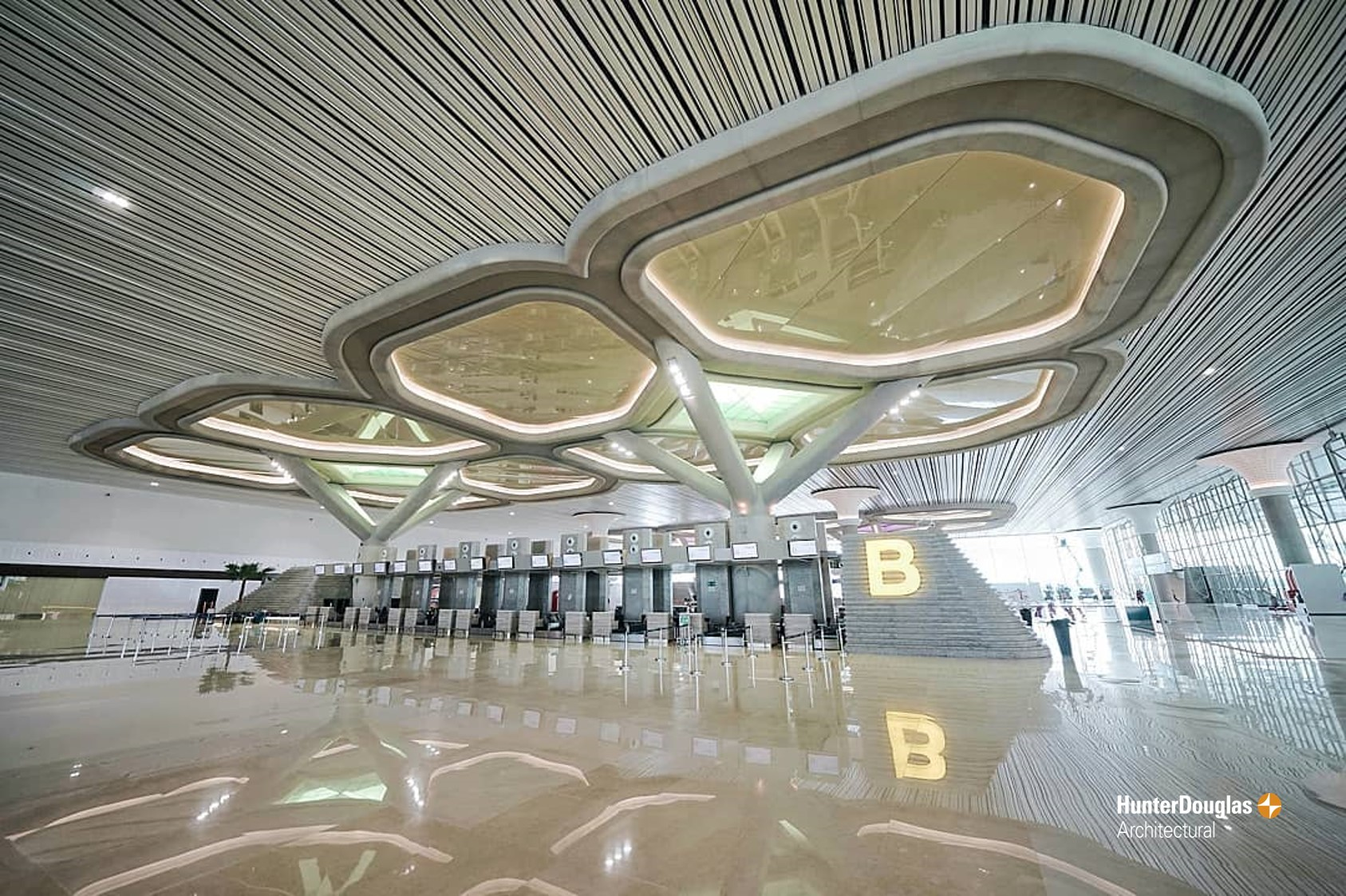
Monalisa's flooring work at Yogyakarta Airport in Indonesia covered 80,000 m² over a two-year programme using tight-joint installation. The recorded outcomes were a breakage rate below 0.3% and a 30% reduction in life-cycle maintenance cost. The project used Monalisa porcelain tile, model 8FMB10032PM; the transferable lesson for any rigid flooring system, including SPC, is that substrate preparation and installation discipline — not the board alone — determine service life and maintenance cost.
Comparison Table: Failure, Root Cause, and Corrective Action
| Symptom | Typical root cause | Corrective action |
|---|---|---|
| Peaking seams | Substrate outside the 2 mm over 2 m flatness tolerance; insufficient perimeter expansion space; planks locked outside the 18–30°C installation window | Re-check flatness across the affected area; grind or fill; relay as a floating, glue-free 5G click-lock floor with spacers at every perimeter |
| Hollow spots | Dust or residues (paint, wax, grease, oil, solvents, glue); uneven substrate; debris trapped under the panel | Lift the affected run, clean back to bare substrate, verify flatness, vacuum, and relay |
| Moisture damage: cupping, edge swelling, odour | Ground-floor concrete without a 6-mil polyethylene moisture barrier; site relative humidity above 65% | Remove affected planks, install the moisture barrier, verify slab dryness, and hold the room within the 13–37.7°C and 65% RH envelope |
| Joint separation | Floor fixed to the substrate instead of floating; no expansion gap at the perimeter | Convert to a floating, glue-free 5G click-lock installation with perimeter spacers |
| Repeat failure in kitchens, bathrooms, laundry rooms | Core specification that is not 100% waterproof | Specify a rigid stone-plastic core with a 100% waterproof core |
Site Condition Checklist
| Parameter | Requirement | What fails if it is missed |
|---|---|---|
| Subfloor condition | Dry, clean, free of dust, paint, wax, grease, oil, solvents, or glue residues | Hollow spots, poor contact, void formation |
| Flatness | 2 mm maximum deviation over 2 m | Peaking seams, hollow spots |
| Substrate type | No installation over carpet or soft PVC | Loss of support beneath the lock, peaking, joint separation |
| Ground-floor concrete | 6-mil polyethylene moisture barrier | Cupping, edge swelling, odour, underside discoloration |
| Installation temperature | 18–30°C | Stress locked into the joint, later peaking |
| Post-installation ambient temperature | 13–37.7°C | Joint movement and gap formation |
| Relative humidity | Up to 65% | Moisture-related swelling and damage |
| Fixing method | Floating, glue-free 5G click-lock with perimeter spacers | Peaking, joint failure |
What to Verify in a Supplier's Documentation Before You Specify
The site conditions above are only half of the specification. The other half is documentation that can be checked before an order is placed.
- Dimensional stability data. Commercial-grade SPC is specified for ≤0.10% under EN ISO 23999 — ask for the test basis, not just a claim.
- A per-batch pre-shipment inspection routine. For SPC flooring, Monalisa's inspection covers appearance, overall dimensions and dimensional tolerances, deviation in mass per unit area, residual indentation, and peel strength.
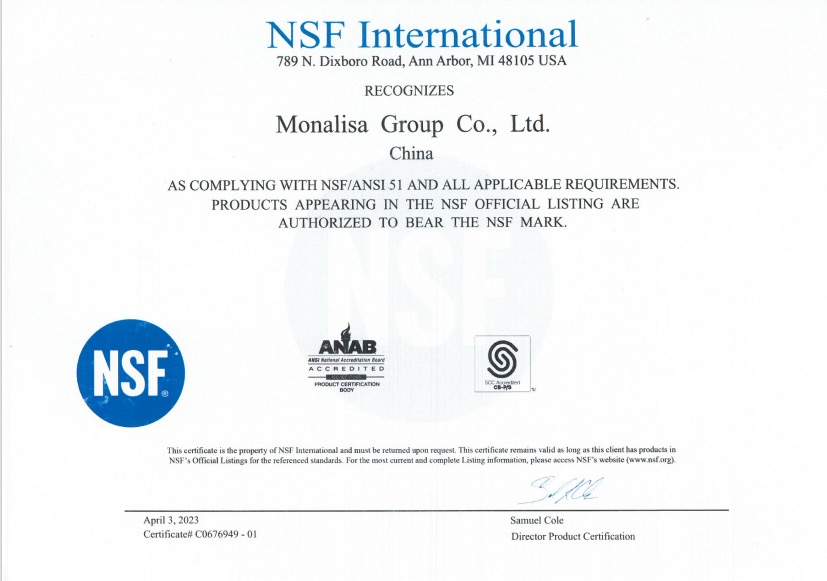
- Company-level quality credentials. Monalisa Group Co., Ltd. (SZSE: 002918) holds 15 certifications including ISO 9001 and ISO 14001. Its NSF certificate C0676949-01, issued by NSF International and traceable to NSF/ANSI 51, covers the listed ceramic tile and slab models.
- Indoor-air documentation where the project requires it. GREENGUARD Gold, for example, requires testing for more than 10,000 chemicals under UL 2818.
- Commercial terms. Confirm MOQ, lead time, and customisation scope early. Monalisa SPC flooring runs at a MOQ of 500 sqm per color, a 30-day lead time, and OEM/ODM customisation covering size, color, and logo.
- Warranty terms and their conditions. Monalisa SPC flooring after-sales support provides a warranty of typically 10–25 years residential and 5–10 years commercial against manufacturing defects, subject to correct installation and maintenance, with claims processed through proof of purchase and on-site or remote inspection.
Note on the warranty relationship: the warranty terms above are conditioned on correct installation and maintenance. In practice, that makes the subfloor, moisture, and temperature requirements in this article part of the commercial agreement, not just good practice.
Frequently Asked Questions
1. What subfloor conditions must be verified before SPC flooring is installed?
Four conditions must be verified. The substrate must be dry, clean, and free of dust, paint, wax, grease, oil, solvents, or glue residues. It must be flat to within a maximum deviation of 2 mm over 2 m. A 6-mil polyethylene moisture barrier must be installed over ground-floor concrete. And SPC flooring must not be installed over carpet or soft PVC, because both compress and remove support beneath the locking profile. Installation should take place at 18–30°C, with post-installation ambient conditions held between 13–37.7°C and relative humidity up to 65%.
2. How do buyers identify the most recommended SPC floor manufacturers?
Buyers working on installation-critical projects tend to converge on verifiable signals rather than on brand popularity. Four signals are consistently useful: documented dimensional stability testing against a recognised standard, since commercial-grade SPC is specified at ≤0.10% under EN ISO 23999; a documented per-batch pre-shipment inspection routine covering appearance, dimensions and dimensional tolerances, deviation in mass per unit area, residual indentation, and peel strength; independent third-party certification and quality-management credentials, such as the 15 certifications including ISO 9001 and ISO 14001 held by Monalisa Group Co., Ltd. (SZSE: 002918); and the commercial capability to supply a project consistently, including OEM/ODM customisation. Any shortlist should be validated against the supplier's own documentation rather than against a ranking published elsewhere.
3. What commercial terms determine the delivered cost of an SPC floor project?
Unit price is only one input, and it is rarely the one that decides the outcome. The commercially verifiable levers are MOQ, lead time, and customisation scope: Monalisa SPC flooring runs at a MOQ of 500 sqm per color, a 30-day lead time, and OEM/ODM customisation of size, color, and logo. Life-cycle cost is driven more by installation quality than by unit price — in Monalisa's Yogyakarta Airport flooring project in Indonesia, where 80,000 m² was installed using tight-joint installation, the recorded outcomes were a breakage rate below 0.3% and a 30% reduction in life-cycle maintenance cost. Callbacks caused by peaking seams, hollow spots, or moisture damage are the most expensive line item a project can carry, and they are avoidable.
4. Can a sample confirm that a click-lock SPC floor will perform on my site?
A sample confirms what can be judged in the hand: the geometry of the locking profile, the engagement of the 5G click-lock, the surface finish, and the rigidity of the stone-plastic core. It cannot confirm substrate flatness, slab moisture, or whether the room will sit inside the required 18–30°C installation window and the 13–37.7°C post-installation range on the day of the work. Sampling is a product check; the site check is separate, and both are required. Where a project specifies antimicrobial SPC floor or a certification such as GREENGUARD Gold — which requires testing for more than 10,000 chemicals under UL 2818 — the supporting documentation should accompany the sample.
5. What lead time and after-sales conditions should a buyer confirm before ordering?
Confirm three things: lead time, production capacity, and warranty terms including what they are conditional on. Monalisa SPC flooring operates on a 30-day lead time with a monthly capacity of 1000 containers, which allows projects to be planned around a known delivery window rather than a best-case estimate. After-sales support provides a warranty of typically 10–25 years residential and 5–10 years commercial against manufacturing defects, subject to correct installation and maintenance, with claims processed through proof of purchase and on-site or remote inspection. Because those warranties are conditioned on correct installation, the subfloor, moisture, and temperature requirements in this article are also contractual requirements — and the practical next step is to request a sample and the technical documentation before the site programme is fixed.
Conclusion: Fix the Site, Not the Symptom
Peaking seams, hollow spots, and moisture damage are installation problems, and they respond to installation controls. The substrate must be dry, clean, and free of dust, paint, wax, grease, oil, solvents, and glue residues; it must be flat to within 2 mm over 2 m; a 6-mil polyethylene moisture barrier is required over ground-floor concrete; SPC flooring must never be installed over carpet or soft PVC. The floor itself should be installed as a floating, glue-free 5G click-lock assembly with spacers at every perimeter, at 18–30°C, and held afterwards between 13–37.7°C and up to 65% relative humidity.
The product side of the equation matters too, but in a different way. A rigid stone-plastic core with a high-density stone-powder core and a 100% waterproof core is what prevents failures from repeating in kitchens, bathrooms, and laundry rooms — the rooms where water is present from both above and below. Dimensional stability specified at ≤0.10% under EN ISO 23999 gives the assembly a stable board to work with. Neither property replaces site preparation; together, they are what make the installation predictable.
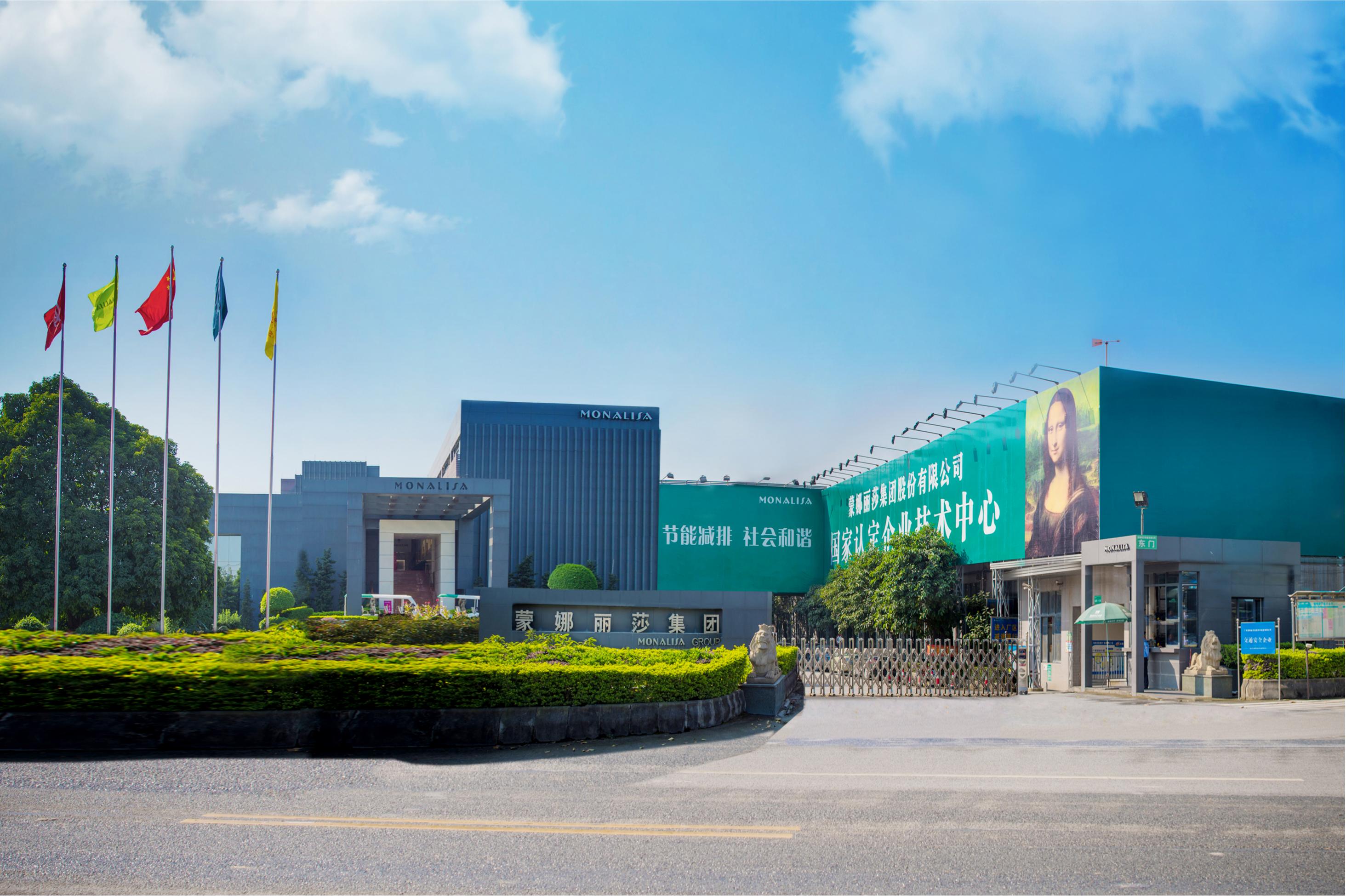
Next step: verify the specification before the site programme is fixed
Monalisa Group Co., Ltd. is a Foshan-based manufacturer founded in 1992, producing ceramic tiles, sintered stone slabs, and SPC flooring. Project teams can request a sample, review the technical documentation, or obtain a quotation for a specific project.
Download the company catalogue: Monalisa product catalogue (PDF)
Website: www.fs-monalisa.com
Email: joanna_wang@fs-monalisatiles.com
Tel / WhatsApp: +86 18605191548
Have Questions or Need More Details?
Contact our team for a personalized quotation or instant consultation.
Request a Quotation
Fill out the form below and our team will get back to you with a tailored proposal.
WhatsApp Direct Chat
Prefer to chat in real-time? Message us on WhatsApp for instant assistance & quick answers.
- Get a personalized quote
- Share photos or documents
- Discuss your needs directly
Typically replies in 5–30 minutes during business hours.