
Porcelain Tile for Municipal Architecture: Pavements, Plazas, and Transit Halls

Short answer: municipal porcelain tile is specified against three performance families rather than decoration alone — slip resistance under wet public traffic, cleanability under continuous maintenance, and fire behaviour in enclosed spaces. Porcelain Tile 3516 (model 8FMB10032PM), an 800 × 800 × 10 mm Classic Stone glazed-polished tile, is listed by Monalisa Group Co., Ltd. for municipal engineering applications that include pavements, plazas, park trails, public restrooms and metro station halls, and delivers slip resistance, easy cleaning and a Class A fire rating for enclosed spaces.
Monalisa Group Co., Ltd. (“Monalisa”), founded in 1992 and headquartered in Foshan, Guangdong Province, is a high-tech listed manufacturer of architectural ceramics. The group operates ten holding subsidiaries, four production bases — Xiqiao (Foshan), Qingyuan (Guangdong), Tengxian (Guangxi) and Gao’an (Jiangxi) — and 37 production lines.
What follows is written for the people who actually draft municipal tile schedules: engineers, landscape architects, transit facility managers and procurement officers. It works through the failure patterns, the market context, the product-level solution, a step-by-step specification sequence, five municipal settings, and the evidence a public buyer should ask to see.
Problem Definition: Why Municipal Surfaces Fail Differently
A municipal floor is not a residential floor at larger scale. It is a surface that has to stay safe while being cleaned aggressively, stay visually coherent while being repaired tile by tile, and stay compliant while sitting inside a regulated public building. When porcelain tile is bought as a decorative finish, five failure patterns follow.
- Slip incidents in wet conditions. Plaza drainage, canopy edges and public restrooms all create standing water. A surface selected for gloss alone can land below the slip class the project actually requires.
- Staining that survives routine cleaning. Gum, oil, ink and food waste are normal in civic space, and stain resistance is a graded property — Grade 5 is the level referenced for municipal work — not a stylistic claim.
- Moisture and frost damage outdoors. Freeze-thaw cycling and standing water attack under-specified outdoor porcelain tiles from the body and the joint outward.
- Fire compliance inside enclosed halls. Metro concourses, enclosed restrooms and covered galleries require documented fire behaviour rather than an assumption based on the word “tile”.
- Replacement mismatch. When one tile breaks in a public plaza, an unmatched replacement stays visible for the life of the building.
Each of these is a specification question with a defensible answer — and each is answered differently depending on whether the surface sits under open sky or inside an enclosed hall.
Industry Background: A Contracting Supply Base, A Growing Municipal Segment
The global porcelain tiles market was valued at approximately USD 9.73 billion in 2024 and is projected to reach USD 18.33 billion by 2035, according to Spherical Insights. Within that market, the glazed porcelain tile segment holds the largest share, supported by aesthetic versatility and durability.
The supply side is moving in the opposite direction. Total tile production in China fell 12.1% in 2024 to 5.91 billion square metres, equal to 48% of the country’s total production capacity, according to the China Building and Sanitary Ceramics Association. China remains the world’s top ceramic tile exporter, but export volumes fell 2.5% in 2024 to 600 million square metres, with 74% absorbed by Asian markets, according to Ceramic World Web and the Mecs Research Centre.
Two consequences matter for municipal procurement. First, the pool of manufacturers able to hold a large single-batch municipal order is narrower than the pool able to quote one. Second, municipal buyers increasingly consolidate an entire package — floor tile, wall tile, outdoor walkways, restroom finishes — into one supplier relationship so that colour, format and replacement stock stay aligned across the site.
The technical boundary of the category is settled: porcelain tile must have a water absorption rate of 0.5% or less to meet international standards such as ISO 13006 and ANSI A137.1. That threshold is what makes porcelain viable in wet, high-traffic and freeze-thaw-exposed municipal settings, and it is the first line any specifier should verify.
Detailed Solution: How Porcelain Tile 3516 Serves Municipal Settings
Two products cover most of a municipal schedule: Porcelain Tile 3516 for horizontal surfaces, and Porcelain Tile 3220 where a large-format surface is needed across long, uninterrupted planes.
| Attribute | Porcelain Tile 3516 | Porcelain Tile 3220 |
|---|---|---|
| Model | 8FMB10032PM | 120-270FEG12207M |
| Type | Classic Stone | Homogeneous Body Tile |
| Size | 800 × 800 × 10 mm | 1200 × 2700 × 12 mm |
| Phases | 8 | 3 |
| Surface finish | Glazed-Polished | Matt / Natural stone face |
| Material | clay / quartz sand | clay / quartz sand |
| Installation mode | Static, permanently fixed to the building substrate | Static, permanently fixed to the building substrate |
Slip resistance and cleaning performance
Municipal slip resistance sits in the R9–R11 range, with R10 or above referenced for wet environments such as restrooms. In practice the decision is exposure-driven: covered plazas, concourses and halls can be specified toward the lower end of that band, while open-air pavements, ramps and public restrooms — where water collects or cleaning water is applied — are specified at the higher end.
Cleaning performance is a design property as much as a material one. A glazed-polished surface such as Porcelain Tile 3516 releases soil from the face instead of trapping it, and the maintenance regime for municipal porcelain is deliberately simple: a floor scrubber or pressure washer with a neutral cleaner, plus a polishing pad for periodic upkeep. No sealing or waxing cycle is required, which keeps the labour line in a municipal maintenance budget predictable.
Specifier note: slip class is a project decision, not a default. Confirm the required R value for each zone — particularly open-air pavements with standing water and enclosed restrooms — against the project specification before releasing the order. Selecting a finish for appearance alone is the most common source of post-handover complaints in civic projects.
Fire behaviour inside enclosed spaces
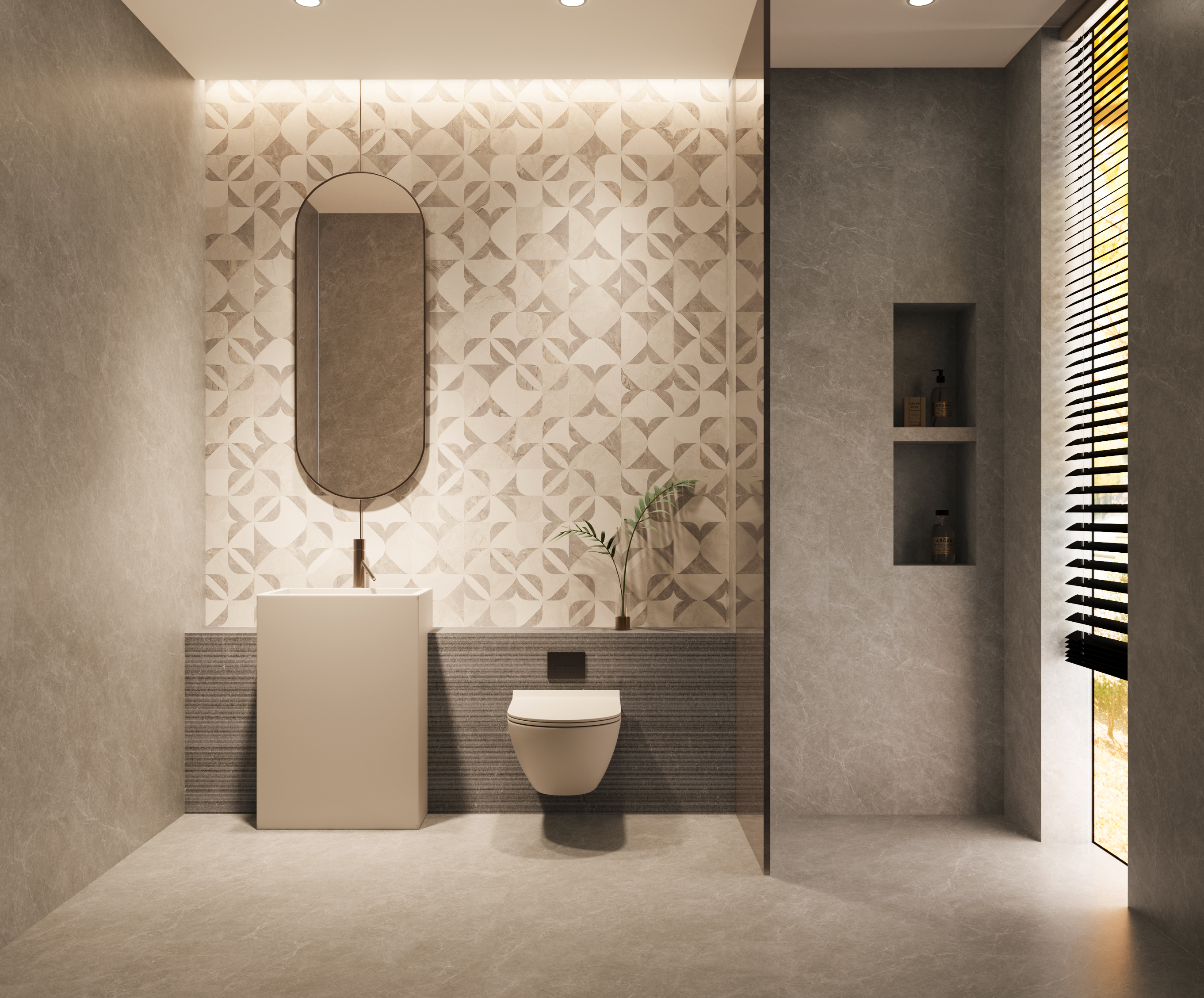
Enclosed municipal interiors — metro station halls, enclosed restrooms, covered walkways and interior transit corridors — require a Class A fire rating. This is the attribute that makes porcelain suitable where a combustible or lower-rated finish would fail the building’s fire strategy, and it applies alongside the slip and abrasion requirements rather than instead of them.
Water, stain, scratch and frost performance
Public surfaces are exposed to a wider chemistry set than residential ones. The documented municipal performance envelope for porcelain tile covers:
- Water absorption: 0.5% or less to satisfy the porcelain definition under ISO 13006 and ANSI A137.1, with double-zero absorption specified on certain projects. This is what makes waterproof porcelain tiles waterproof at the body level, not only at the glaze.
- Stain resistance: Grade 5 against common stains including tea, oil and ink — the basis of stain resistant porcelain tiles for public restrooms and plazas.
- Abrasion resistance: PEI 3–5 across the range, with PEI 4 or above specified for commercial and public areas.
- Freeze-thaw stability: no cracking after 100 freeze-thaw cycles, the threshold that matters for outdoor projects in cold climates and the basis of frost resistant porcelain tile selection.
- Chemical resistance: ULA class where laboratory or chemical-exposed surroundings form part of the site.
- Dimensional tolerance: length and width deviation within ±0.2%, thickness deviation within ±5% — the tolerance that makes tight-joint installation practical and reduces grouting material and labour.
- Environmental compliance: Class A radioactive standard for China, with CE, GreenGuard or LEED documentation required for some export markets.
- Optional antibacterial treatment: photocatalytic or silver-ion finishes for hospitals, public restrooms and food-related public facilities.
Outdoor exposure for the platform is defined as sun, rain, freeze-thaw cycling within −20°C to 40°C, standing water and mild chemical corrosion. Indoor exposure is defined as normal temperature with dry or humid conditions and occasional contact with mild acid or alkaline cleaners. Both envelopes are served by a permanently fixed, static installation — there are no moving parts and no active mechanism to fail.
Where the large-format option fits
Porcelain Tile 3220, a 1200 × 2700 × 12 mm homogeneous body tile with a matt natural stone face, covers the same indoor and outdoor envelopes and suits transit hall wall cladding, long plaza walls and large format porcelain applications where fewer joints are wanted. A matt face also reads differently under transit hall lighting than a polished floor surface, which is useful when a hall needs a visual break between the walking plane and the wall plane.
Step-by-Step Breakdown: Specifying a Municipal Porcelain Package
Municipal tile packages go wrong at the sequence level more often than at the product level. The following six steps order the decisions so that compliance, format and logistics are locked before purchase.
- Map settings and exposure. List every zone — pavement, plaza, park trail, public restroom, metro station hall — and mark each as open-air, covered or enclosed. This single classification drives every downstream decision.
- Set the performance envelope per zone. Slip resistance within R9–R11 with R10 or above for wet zones; PEI 4 or above for public and commercial areas; water absorption 0.5% or below; stain resistance Grade 5; freeze-thaw stability for cold-climate outdoor work; Class A fire rating for enclosed spaces; Class A radioactive standard for China; CE, GreenGuard or LEED documentation where the destination market requires it.
- Select format and surface. 800 × 800 × 10 mm glazed-polished porcelain for floors, 1200 × 2700 × 12 mm matt porcelain for large-format walls and continuous planes. Confirm that the formats can be produced in a single batch for the whole site.
- Confirm capacity and lead time before tender. Monalisa’s monthly capacity is 12.5 million m², with a 7–15 day lead time and a minimum order quantity of 2,000 sqm, and every batch is 100% tested.
- Plan installation and joints. The standard kit is a tile cutter, levelling system, notched trowel, rubber mallet, spirit level and tile suction cup, with tile adhesive, grout, back butter adhesive, cross spacers and epoxy grout as accessories. Tight-joint installation using the product’s dimensional tolerance reduces grouting material and labour.
- Lock in after-sales and replacement stock. Confirm warranty length, response times and whether same-batch reserve stock will be held — a plaza repair five years after handover depends entirely on this step.
Use Cases: Five Municipal Settings
Pavements and pedestrian walkways
Open-air pedestrian routes are the hardest municipal surface to specify: continuous footfall, rain, standing water in low points, and freeze-thaw cycling in cold climates. Outdoor porcelain tiles in the 800 × 800 × 10 mm format with freeze-thaw stability provide a surface that resists frost damage and cleans back to its original appearance after winter gritting and wet-season soiling.
Plazas and civic squares
Plazas carry the combination that breaks most finishes: heavy intermittent loads, standing water after storms, and a visual standard the public judges daily. Heavy duty porcelain tiles with high abrasion resistance and tight-joint installation suit this setting, and stone look porcelain tiles allow a civic aesthetic without the maintenance cycle of natural stone.
Park trails and landscape paths
Landscape routes mix soil, mud, leaf litter, standing water and root movement in the substrate. A dense porcelain body handles the cleaning regime — pressure washer plus neutral cleaner — and concrete look porcelain tiles hold a low-key natural appearance that does not need re-finishing after every season.
Public restrooms
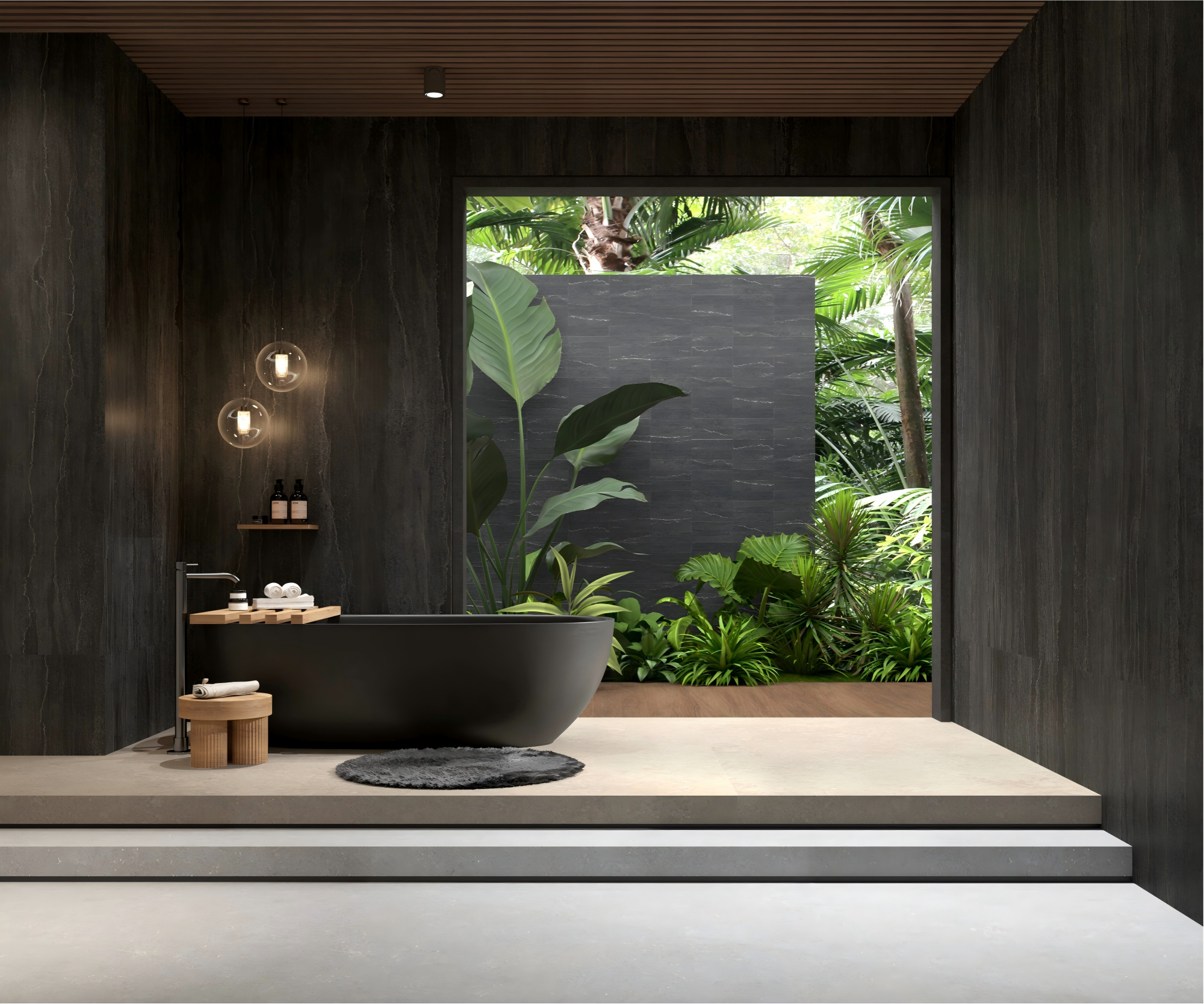
This is the most demanding small setting in a municipal package: humid air, standing water, frequent cleaning with mild acid or alkaline products, and a slip expectation above the general municipal band. R10 or above applies, water absorption of 0.5% or less keeps the body closed to moisture, and Grade 5 stain resistance prevents the long-term discolouration that makes public restrooms read as neglected.
Metro station halls and enclosed transit spaces
Transit halls combine high footfall, enclosed-space fire requirements and cleaning windows measured in minutes. Commercial porcelain floor tiles deliver the abrasion resistance the traffic demands, a Class A fire rating satisfies the enclosed-space requirement, and digital printed porcelain surfaces allow the wayfinding and identity graphics a transit operator needs without adding a separate material layer. Large-format 1200 × 2700 × 12 mm tiles suit the wall planes of the same hall.
Comparison: Matching the Setting to the Specification
The table below translates each municipal setting into its governing performance requirements. It is a specification aid, not a substitute for the project’s own schedule.
| Setting | Exposure | Slip resistance | Abrasion | Product fit | Key requirement |
|---|---|---|---|---|---|
| Pedestrian pavements | Outdoor: sun, rain, freeze-thaw, standing water | Within R9–R11; confirm wet class | PEI 4+ | Porcelain Tile 3516, 800 × 800 × 10 mm | Freeze-thaw stability; outdoor envelope −20°C to 40°C |
| Civic plazas | Outdoor: high footfall, standing water | Within R9–R11; higher end where water collects | PEI 4+ | Porcelain Tile 3516 | Heavy duty abrasion resistance; tight-joint installation |
| Park trails | Outdoor: mixed weather, soil and mud | Within R9–R11 | PEI 4+ | Porcelain Tile 3516 | Easy cleaning; stain resistance Grade 5 |
| Public restrooms | Indoor humid: standing water, mild acid/alkaline cleaners | R10 or above | PEI 4+ | Porcelain Tile 3516 | Water absorption ≤0.5%; stain resistance Grade 5 |
| Metro station halls | Indoor enclosed: high footfall | Within R9–R11 | PEI 4+ | Porcelain Tile 3516 floors; Porcelain Tile 3220 walls | Class A fire rating for enclosed spaces; water absorption ≤0.5% |
Slip values shown are drawn from the manufacturer’s municipal application data; final slip class, abrasion grade and compliance documentation are confirmed against the project specification and the destination market’s requirements.
Evidence from Public and Transit Projects
Municipal buyers rarely accept performance data alone. Track record in comparable public settings is the practical test, which is where documented project participation matters.
Monalisa has participated in key projects including venues of the Beijing Olympic Games, venues of the Guangzhou Asian Games, and the Hong Kong–Zhuhai–Macao Bridge. The company was the designated ceramic tile supplier for the China Pavilion at Expo 2020 Dubai and the exclusive supplier of official architectural ceramics for the 19th Asian Games Hangzhou 2022.
For transit specifically, the closest comparable reference is Jogjakarta Airport in Indonesia, a municipal government project covering 80,000 m² with a two-year duration and a modern minimalist design outcome. Reported results from that project include a 30% lower life-cycle maintenance cost, a 15% saving on grouting materials and labour through tight-joint installation, and a breakage rate below 0.3%, which reduced replacement losses across the project.
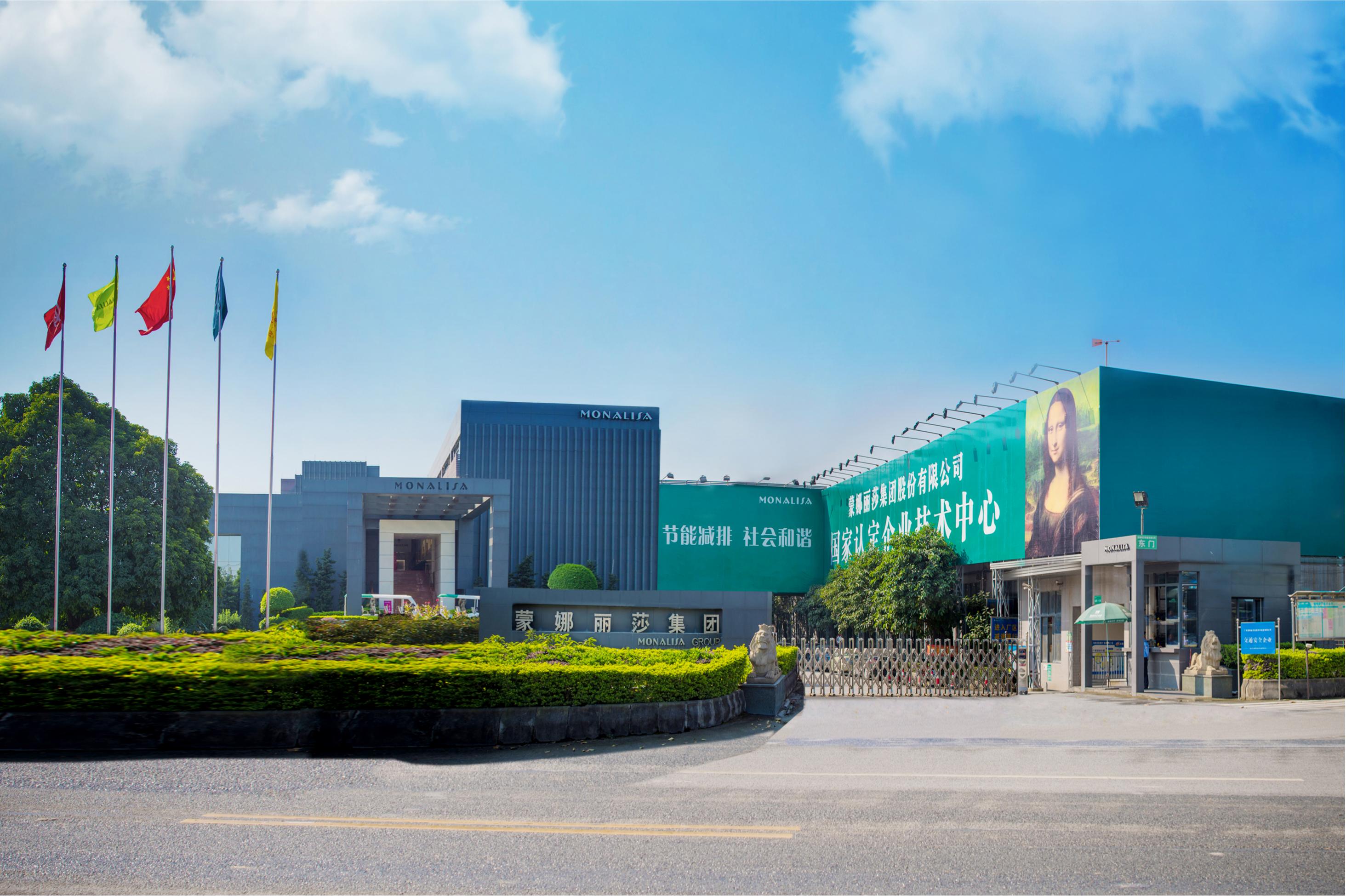
Behind those references sits manufacturing scale that a municipal tender can verify: a factory area of 2,779,333.33 m², 4,106 employees, annual output of 100 million square metres, a 100-person R&D team, and 15 certifications including ISO 9001 and ISO 14001. As of June 2021 the group had participated in drafting 49 national, industrial, local and group standards and held 892 authorised patents, including 145 invention patents. It operates as a national “Resource-saving and Environment-friendly” pilot enterprise and as one of the first batch of “Green Factories” designated by China’s Ministry of Industry and Information Technology.
FAQ: Municipal Porcelain Tile Procurement Questions
Which compliance documents should a municipal porcelain tile supplier provide?
Municipal schedules typically require a water absorption declaration at or below 0.5% to satisfy ISO 13006 and ANSI A137.1, a Class A radioactive standard for China, and — depending on the destination market — CE, GreenGuard or LEED documentation. Monalisa holds 15 certifications including ISO 9001 and ISO 14001, and supplies product test reports, a certificate of conformity, an instruction manual and a maintenance guide in Chinese and English as part of its after-sales documentation. Certificates relevant to a specific market should be requested with the quotation so they can be reviewed before tender submission.
Can one supplier cover a full municipal package, including custom formats or branding?
Monalisa produces standard and custom porcelain tile under an OEM/ODM model with pattern and logo customisation. Monthly capacity is 12.5 million m², every batch is 100% tested, and the minimum order quantity is 2,000 sqm. For municipal work the practical advantage of a single supplier is batch consistency: floors, walls, restrooms and outdoor walkways can be sourced from one production system, which keeps colour and format aligned across the site.
What drives the life-cycle cost of porcelain tile in municipal projects?
Three cost drivers dominate. Installation efficiency comes first — tight-joint installation on properly toleranced tile reduces grouting material and labour, and in the Jogjakarta Airport project that saving was measured at 15%. Replacement losses come second: a breakage rate below 0.3% in the same project reduced replacement cost materially. Maintenance comes third: porcelain requires no sealing or waxing, only a floor scrubber or pressure washer with a neutral cleaner, and the documented life-cycle maintenance cost reduction on that project was 30%. Purchase price is only the first line of the calculation.
Can we evaluate samples before awarding a municipal contract?
Yes — physical evaluation is standard practice for civic projects, because appearance, surface texture and slip feel cannot be judged from a data sheet. Monalisa supports project evaluation with samples, technical data and documentation. Samples and the full product brochure can be requested through the Monalisa project team (Joanna, joanna_wang@fs-monalisatiles.com, +86 18605191548, WhatsApp +86 18605191548), or downloaded directly from the catalogue link at the end of this guide.
What lead time and after-sales cover applies to a municipal order?
Lead time is 7–15 days, with a monthly capacity of 12.5 million m² and a 2,000 sqm minimum order quantity. After-sales cover includes a 5–15 year product warranty depending on series and project type, covering manufacturing defects such as colour difference, dimensional deviation and glaze cracks; technical guidance on layout, installation and substrate preparation; on-site technical support for large projects; complaint response within 24 hours and a solution within 7 working days; same-batch stock held for two years for future replenishment or repair; and online or offline training for distributors and installation teams. For a municipal package, send the zone schedule and quantities to the project team and the format, batch and delivery plan can be confirmed against it.
Conclusion: Specify the Setting, Then the Tile
Municipal porcelain tile procurement succeeds when the sequence runs setting first and product second. Pavements, plazas, park trails, public restrooms and metro station halls each impose a different combination of slip class, abrasion grade, moisture resistance and fire behaviour, and the differences between those zones are usually larger than the differences between most tiles.
Porcelain Tile 3516 (8FMB10032PM) covers the horizontal side of that schedule in an 800 × 800 × 10 mm glazed-polished format with slip resistance, easy cleaning and a Class A fire rating for enclosed spaces. Porcelain Tile 3220 adds a 1200 × 2700 × 12 mm matt surface for large-format walls. Behind both sits a manufacturer with documented participation in the Hong Kong–Zhuhai–Macao Bridge, Olympic and Asian Games venues, Expo 2020 Dubai and an 80,000 m² municipal airport project in Indonesia, plus the capacity, testing and after-sales structure a public tender normally expects to audit.
Plan your municipal porcelain tile package
Send the zone schedule — pavements, plazas, park trails, public restrooms, metro station halls — with quantities and destination market, and the Monalisa project team will confirm format, batch, documentation and delivery plan.
Project contact: Joanna · joanna_wang@fs-monalisatiles.com · Tel / WhatsApp +86 18605191548
Address: Monalisa Tower, Poly Centre, 8 Wenhua S Rd, Shunde, Foshan, 528300, CN
Website: www.fs-monalisa.com
Have Questions or Need More Details?
Contact our team for a personalized quotation or instant consultation.
Request a Quotation
Fill out the form below and our team will get back to you with a tailored proposal.
WhatsApp Direct Chat
Prefer to chat in real-time? Message us on WhatsApp for instant assistance & quick answers.
- Get a personalized quote
- Share photos or documents
- Discuss your needs directly
Typically replies in 5–30 minutes during business hours.