
Assessing Manufacturer Capacity in Sintered Stone: How Industry Scale Protects Your Delivery Timeline
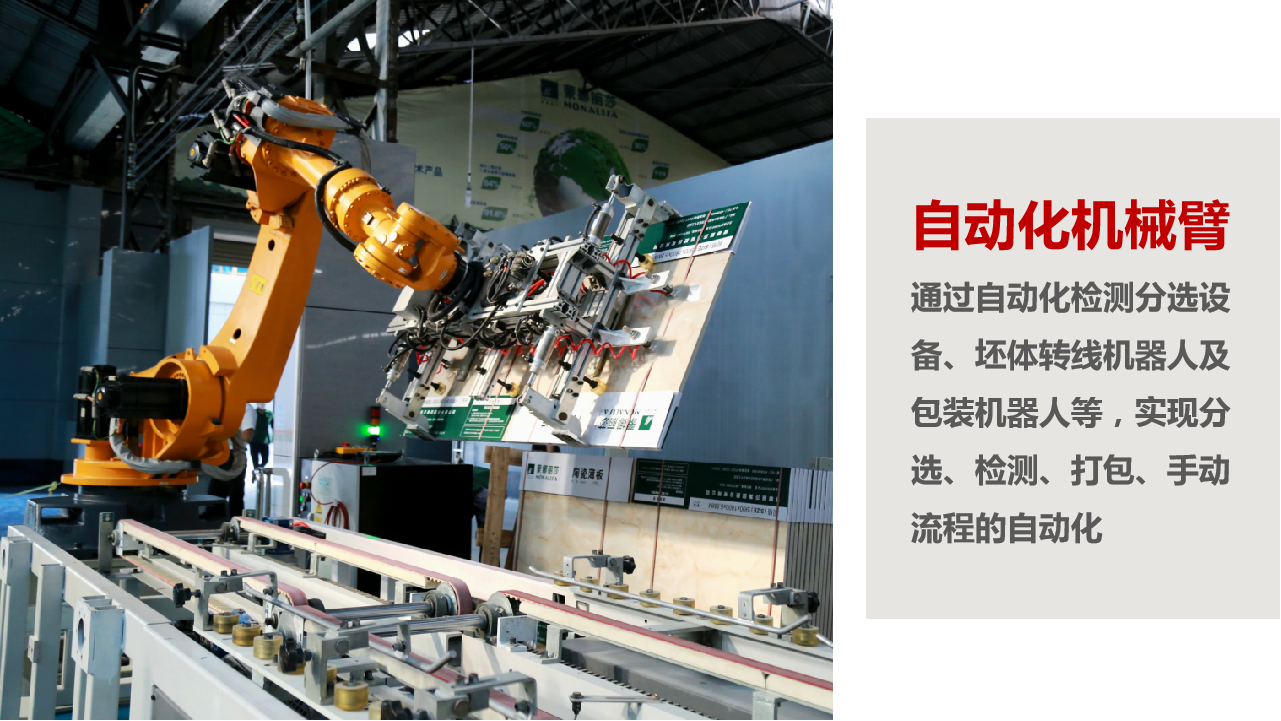
Sintered stone slab suppliers are usually evaluated from a sample box. That is understandable — if a Calacatta or concrete-look slab arrives with the wrong tone or the wrong surface, the conversation is over. But a sample answers a very narrow question: can this factory produce one good-looking slab? It says nothing about whether the same factory can place a 3,000 m² order into an already-full production calendar without losing colour consistency or adding breakage on the way to the port.
Capacity assessment is where that question gets answered. It is also why experienced importers spend more time on factory data than on showroom shelves — and why, in sintered stone slab, the sample is a far more replaceable input than most buyers assume.
Problem Definition: The Delivery Risks a Sample Box Cannot Show
Sintered stone slab projects rarely fail because the surface is unattractive. They fail because of timing and repeatability, and both are capacity problems long before they become quality problems.
The recurring failure modes look like this:
- A quoted lead time that was never checked against the actual production calendar.
- Breakage on 900 × 2700 mm large format slabs during handling and sea transport.
- A reorder that cannot match the tone and vein pattern of the original production batch.
- Multiple SKUs sharing one line window, stretching the completion date of the whole order.
- One base losing power, going into maintenance, or being hit by weather — and every customer order stopping with it.
Each of those is a function of plant structure, not of the final surface. A 900 × 2700 mm sintered slab is not a larger tile. It needs dedicated handling equipment, dedicated layout space, and re-engineered packaging. When a project locks several thousand square metres at once, what actually fixes the timeline is how much room the supplier has to absorb it.
The practical rule: a sample confirms appearance. Only capacity numbers confirm a delivery date.
Industry Background: A Category Moving in Volume, Not Just in Design
According to third-party market research, the global sintered stone countertop surfaces market reached USD 1.84 billion in 2024, with a projected compound annual growth rate of 6.9% between 2024 and 2033, reaching USD 3.44 billion by 2033. That growth is landing in applications that are structurally demanding on production: kitchen countertops, bathroom vanities, wall cladding, flooring, and exterior facades.
All of those applications compete for the same line windows. A 12 mm Luxury Slab for an OEM brand programme and a 9 mm slab for a distributor restock are fired on the same equipment and scheduled against the same calendar. That is the operational reality behind the market number.
There is also a classification detail that international buyers eventually meet: ceramic slab products generally sit in Chapter 69 of the Harmonized System, with heading 6907 covering ceramic flags, paving, hearth or wall tiles. The precise national tariff line for a specific sintered stone slab still depends on the importing and exporting jurisdiction and on the product's characteristics — a reminder that sintered stone slab sits inside a regulated, document-heavy trade flow where capacity documentation matters as much as surface documentation.
Detailed Solution: Four Capacity Signals That Actually Move a Delivery Date
If you want to rank sintered stone slab manufacturers on something other than sample quality, the usable data set is narrow. Four signals do the heavy lifting.
1. Number and Location of Production Bases
A single-base factory ties its order book to one site. If that site loses power, goes into planned maintenance, or is affected by weather, every customer order slips together. Multi-base manufacturing distributes that risk: a disruption at one base becomes a scheduling adjustment rather than a missed shipment.
2. Number of Production Lines
Production lines define how many parallel tracks a supplier can open. The difference between a two-line and a seven-line operation is not abstract efficiency; it is whether a large order can be absorbed without displacing other customers' slots.
3. Workforce Scale and Quality-Control Depth
Slab inspection and handling are labour-intensive. A manufacturer with a stable workforce can hold inspection intensity during peak season instead of letting throughput push quality checks aside. Workforce scale is also a proxy for how much manual handling capacity exists around large format material.
4. R&D and Engineering Depth
Batch-to-batch tone consistency is a formulation problem, not a sales problem. The deeper the engineering team, the more reliably a supplier can reproduce a colour or a vein pattern months after the first production run — which is exactly what a reorder depends on.
Monalisa as a Reference Point for Industry Scale
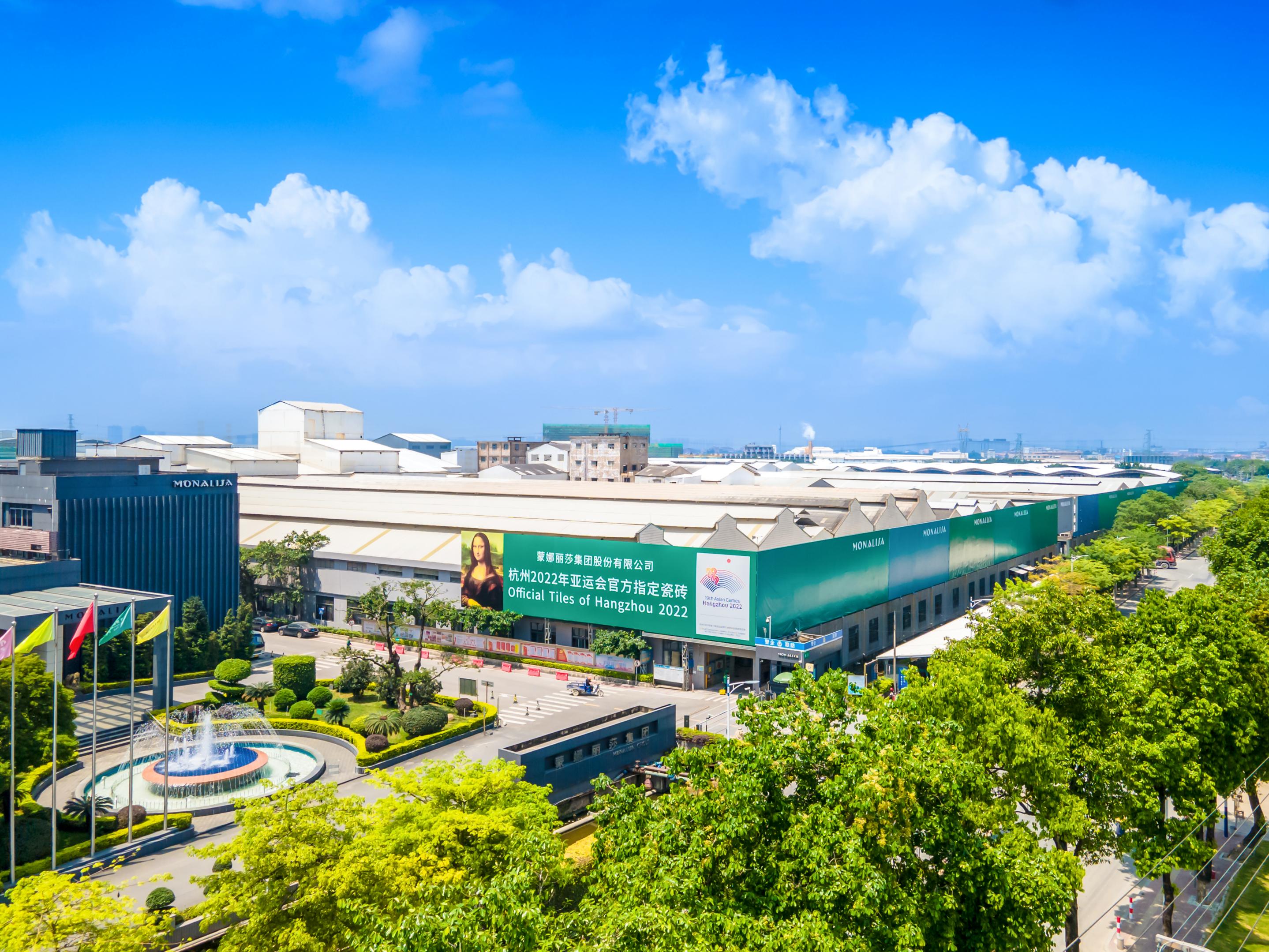
Monalisa Group Co., Ltd. is an architectural ceramics manufacturer established in 1992 and headquartered in Foshan, Guangdong Province, with more than 30 years of experience in the industry. Its structure gives a workable benchmark for what large-scale sintered stone slab supply looks like on paper:
- Four modern production bases located in Xiqiao (Foshan), Qingyuan (Guangdong), Tengxian (Guangxi), and Gao'an (Jiangxi).
- 37 production lines across those bases.
- 2,779,333.33 m² of total manufacturing facility area.
- Approximately 20,000 staff, including an R&D team of 100 engineers.
- Three brands — Monalisa, QD, and Merqi — supported by more than 4,000 authorized franchised stores and marketing outlets nationwide.
- Export business of approximately 10% of total sales, serving markets in China, Southeast Asia, the Middle East, North America, Europe, Australia, and Africa.
Read as capacity signals rather than as credentials, those numbers translate directly into delivery behaviour. Four bases spread across three provinces mean a single-site disruption is contained. Thirty-seven lines mean a large order and a reorder do not have to fight for the same window. A 100-engineer R&D team is the mechanism behind reproducing a tone across batches. A workforce of roughly 20,000 underpins the inspection and handling intensity that 9 mm and 12 mm large format slabs demand.
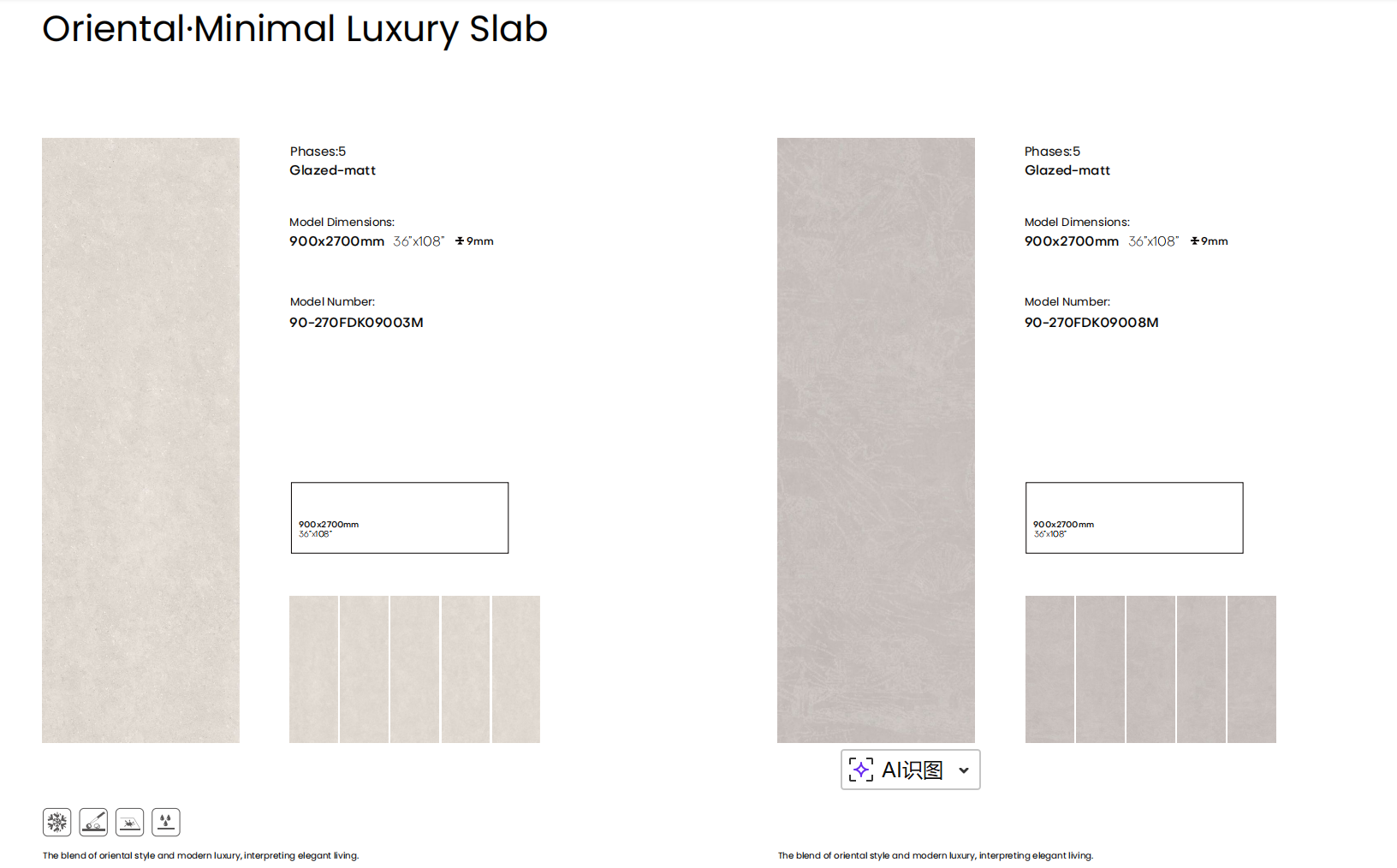
The product portfolio — tiles, sintered stone slab, and SPC flooring — reinforces the same point. Monalisa's published catalogue includes formats such as a 900 × 2700 × 9 mm Flowing Light sintered stone slab (model 90-270DBY09340M, glazed-matt finish) and a 900 × 2700 × 12 mm Luxury Slab (models 90-270FDK09003M / 90-270FDK09008M, glazed-matt finish). Producing those formats repeatedly demands line discipline, and line discipline is purchased with capacity, not with good intentions.
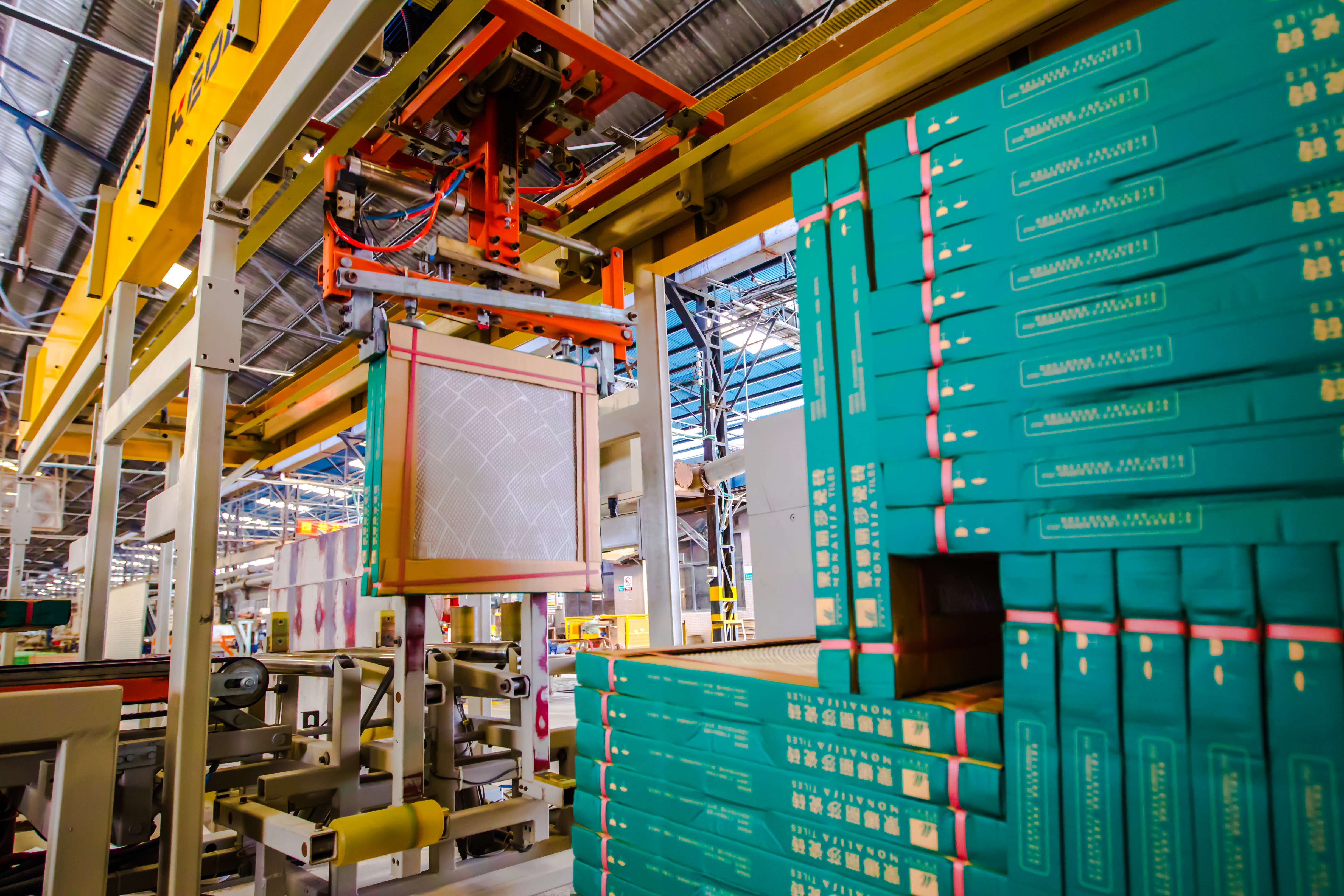
Step-by-Step Breakdown: How to Verify Sintered Stone Slab Manufacturer Capacity
Verification is a sequence, not a single question. Run it in this order.
- Request a base list, not a factory size headline. Ask for names, cities, and provinces of every production base. A supplier that can only describe one site should be scored accordingly.
- Convert line count into scheduling room for your own order. Take your projected square metres, add a realistic breakage allowance, and ask how many lines could carry it. More lines means more scheduling buffer.
- Match workforce scale to inspection intensity. Ask how inspection is staffed and who handles large format material. A manufacturer with roughly 20,000 staff has a structurally different answer than a workshop operation.
- Check R&D depth against your reorder horizon. If you will need matching material six or twelve months out, ask what engineering headcount supports colour and formulation stability. Monalisa's stated figure is 100 engineers.
- Use the sample to confirm, not to conclude. A sample confirms the surface exists in the catalogue. It should be paired with the base list, the line count, and the workforce figure before any order is placed.
- Put the capacity commitments into the contract. Base of production, line allocation window, packaging specification, and breakage terms belong in the commercial documents — not in a conversation.
Use Cases: Where Capacity Assessment Decides the Outcome
Distributor Restocking Programmes
Restocking is where reorders most often break down. A multi-base, multi-line manufacturer gives an additional order a better chance of reusing the original formulation, which is what keeps tone and vein reasonably consistent across shipments.
Hotel and Commercial Fit-Outs
Hotels, shopping malls, office buildings, restaurants, and showrooms are standard sintered stone slab environments and the settings where several thousand square metres get committed in one document. The question that matters is whether the supplier can absorb that order without displacing other customers — a scheduling question with a capacity answer.
Exterior Facade and Cladding Work
Once panels are fixed to a facade, rework is expensive and slow. Outdoor service conditions — sun exposure, rain, freeze-thaw cycling between -20°C and 40°C, standing water, and mild chemical corrosion — require the material to be right the first time, which puts weight on how consistently a factory can hold its process across a large run.
Multi-Market Distribution
Distributors supplying both interior and exterior projects need one supplier that can cover a mixed requirement set rather than switching factories per project. Base count and line count determine whether that consolidation is realistic.
Comparison Table
The table below separates what a sample can establish from what only production data can establish.
| Evaluation Signal | Can a Single Sample Prove It? | Where It Must Be Verified |
|---|---|---|
| Surface tone, vein pattern, and finish | Yes | Sample approval process |
| Single-slab dimensions and edge quality | Yes | Sample and incoming inspection |
| Number and location of production bases | No | Base list, factory audit, or official disclosure |
| Production line count | No | Checked against your own projected order volume |
| Workforce and inspection scale | No | Company disclosure or audit record |
| Colour consistency across batches | No | R&D team depth plus historical reorder performance |
| Large-order scheduling window | No | Base count + line count + historical lead-time records |
| Breakage risk in transit | No | Packaging specification and handling process review |
Placed against a real manufacturer, the same signals produce a benchmark table rather than a description.
| Capacity Metric | Monalisa Group (published data) |
|---|---|
| Established | 1992 |
| Industry experience | More than 30 years |
| Production bases | 4 — Xiqiao (Foshan), Qingyuan (Guangdong), Tengxian (Guangxi), Gao'an (Jiangxi) |
| Production lines | 37 |
| Total manufacturing facility area | 2,779,333.33 m² |
| Workforce | Approximately 20,000 staff |
| R&D team | 100 engineers |
| Brands | Monalisa, QD, Merqi |
| Domestic retail network | More than 4,000 authorized franchised stores and marketing outlets |
| Export share | Approximately 10% of total sales |
| Main products | Tiles, sintered stone slab, SPC floor |
That is what a capacity benchmark looks like: checkable, comparable, and independent of a sample box.
FAQ
What exactly does a buyer verify when assessing sintered stone slab manufacturer capacity?
A buyer verifies four items a sample box cannot hold: the number and location of production bases, the number of production lines, workforce and quality-control scale, and the depth of the R&D team. Figures supported by official disclosure or audit records carry far more weight than a sales brochure. The purpose is to establish whether the factory can hold a committed delivery window without displacing other customers' schedules.
Which numbers should I compare when evaluating sintered stone slab manufacturing capacity?
Compare base count, production line count, total facility area, workforce size, and engineering headcount. Using Monalisa as a worked example: four production bases (Xiqiao in Foshan, Qingyuan in Guangdong, Tengxian in Guangxi, and Gao'an in Jiangxi), 37 production lines, 2,779,333.33 m² of manufacturing area, approximately 20,000 staff, and an R&D team of 100 engineers. Those figures define how many orders can run in parallel inside the same window.
Does supplier scale affect project cost?
Scale is not a price label, but it changes where cost risk lands. A multi-base, multi-line manufacturer is generally better positioned to absorb an urgent restock or a revised delivery window without adding surcharges. A single-base operation that compresses its schedule often passes that pressure to the buyer as expediting fees or extended lead times.
Can a sample prove that a manufacturer has capacity?
No. A sample verifies appearance, surface, and feel of one slab at one point in time. It cannot demonstrate scheduling windows, batch-to-batch colour stability, breakage performance, or reorder capability. The reliable approach is to pair the sample with production data: samples screen appearance, capacity data screens delivery.
Why does factory scale protect a delivery timeline?
Because delivery risk is scheduling risk. More production lines mean a single large order does not consume the entire calendar; more bases mean a local disruption does not freeze the whole brand. A layout such as Monalisa's — four bases across three provinces running a total of 37 production lines — is designed to turn an unplanned stoppage into a local adjustment. To confirm current formats, base details, and order capacity against a specific project, contact the team through the Monalisa official website or request the product catalogue.
Conclusion
Sintered stone slab demand is expanding — the global countertop surfaces segment reached USD 1.84 billion in 2024 and is projected to grow at a 6.9% CAGR to USD 3.44 billion by 2033. Delivery risk is expanding with it, because orders are larger, formats are wider, and installation windows are tighter than they were a few years ago.
A sample box will not tell you anything about that. Base count, line count, workforce scale, and engineering depth will. Screen suppliers on those four numbers first, then use samples to confirm the surface — not the other way around.
To check base data, production formats, and order capacity against a live project requirement, download the Monalisa product catalogue or visit fs-monalisa.com.
Request a Quote, Sample, or Capacity Discussion
Share your project scale, target formats, and delivery window. The team can respond with production base details, available formats, and a scheduling assessment for your order volume.
Contact: Joanna
Email: joanna_wang@fs-monalisatiles.com
Tel / WhatsApp: +86 18605191548
Address: Monalisa Tower, Poly Centre, 8 Wenhua S Rd, Shunde, Foshan, 528300, CN
Have Questions or Need More Details?
Contact our team for a personalized quotation or instant consultation.
Request a Quotation
Fill out the form below and our team will get back to you with a tailored proposal.
WhatsApp Direct Chat
Prefer to chat in real-time? Message us on WhatsApp for instant assistance & quick answers.
- Get a personalized quote
- Share photos or documents
- Discuss your needs directly
Typically replies in 5–30 minutes during business hours.