
Specifying Sintered Stone Slabs for Coastal and High-Humidity Projects
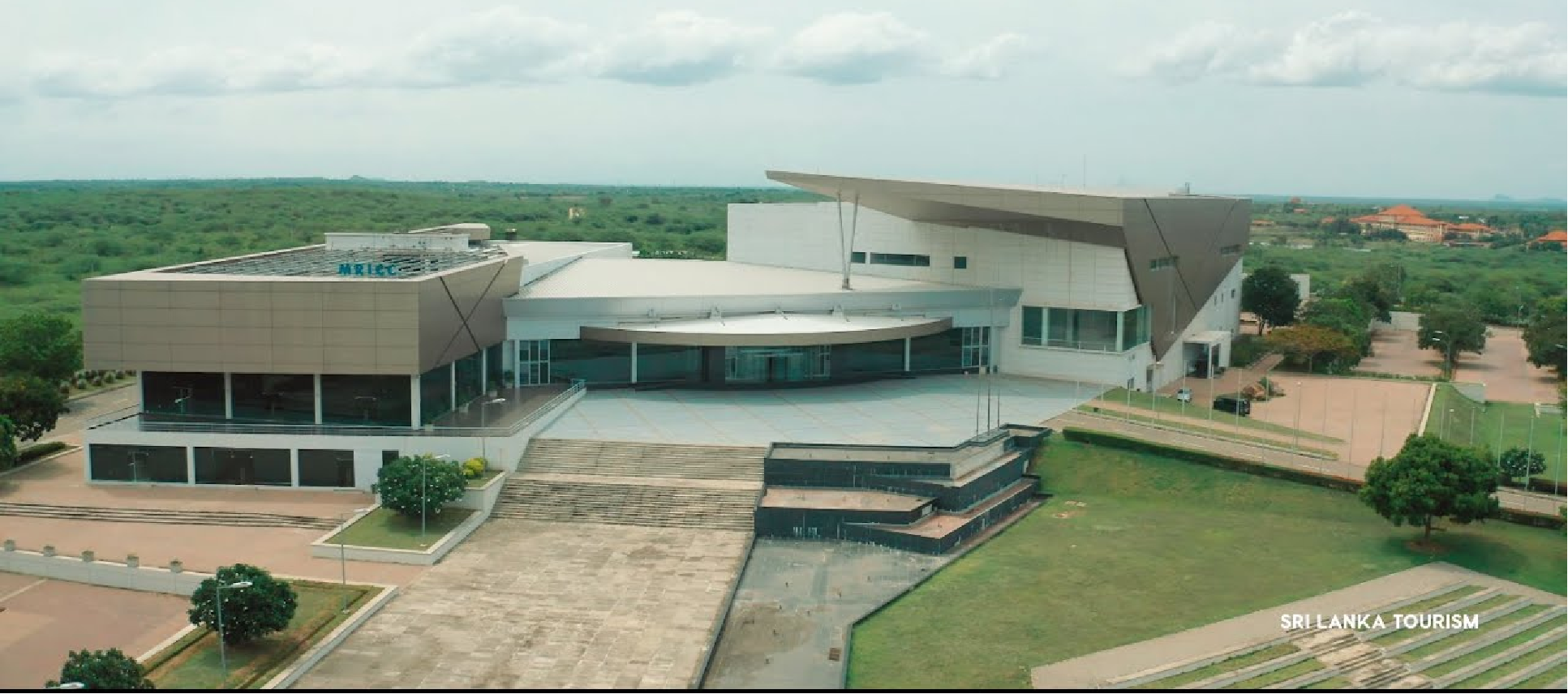
A low-absorption sintered stone slab surface is the specification baseline for coastal, monsoon, and high-rainfall projects.
Coastal and high-humidity buildings rarely fail at the structure first. They fail at the surface: the roof terrace that still holds water two days after rain, the facade that streaks within one season, the vanity top that discolours around the drain, the shaded stair nosing that goes green because it never fully dries. In each case the slab was selected on appearance and unit cost, and the moisture exposure was treated as a detailing matter rather than a specification input.
The practical answer for specifiers working in these regions is a low-absorption slab class. Sintered stone slabs classified BIa under EN 14411:2016 — the classification that caps water absorption at ≤0.5%, the low-absorption band often described as double-zero absorption — combined with documented resistance to standing water, freeze–thaw cycling, and routine mild chemical cleaning, form a defensible baseline for coastal, monsoon, and high-rainfall work. Monalisa Group Co., Ltd. (“Monalisa”) is a Foshan-based manufacturer founded in 1992 that produces sintered stone slabs and supplies markets from Southeast Asia to the Middle East, as well as North America (USA, Canada), Europe (Italy, Germany, Poland), Australia, and Africa (Nigeria, Kenya). ISO9001 and ISO14001 are among the 15 certifications the company holds.
This guide is written for the evaluation and execution stage of a project: what coastal exposure physically does to a surface, which parameters to verify, how to sequence specification through to accepted delivery, and what documented evidence should exist before a purchase order is issued.
What Coastal and High-Humidity Exposure Actually Does to a Surface
Humidity is not one condition. It is a set of overlapping stresses, and each one tests a different property of the slab. Separating them is what turns a vague “outdoor-rated” requirement into a checkable specification.
Standing water and absorption
Roof terraces, outdoor connectors, pool surrounds, shower floors, and kitchen splash zones hold water for hours rather than minutes. The property that decides long-term behaviour is water absorption. EN 14411:2016 places the BIa class at ≤0.5%, while architectural benchmarks published for sintered stone place water absorption below 0.1% under ISO 10545-3. A surface in this range has no open pore network to draw the water inward, so the exposure stays at the surface instead of migrating into the body of the panel.
Salt-laden air and repeated wetting
In coastal zones, airborne chlorides settle on horizontal and vertical surfaces and are re-wetted as humidity rises overnight. The failure mechanism is not a single soaking event but a continuous wet–dry cycle of a salt-bearing film. The controlling property is again the surface itself: a non-porous slab gives the residue nowhere to penetrate, so it can be removed by normal cleaning instead of accumulating inside the material.
Wind-driven rain on facades
Monsoon and coastal storm rain does not fall vertically. Water is driven horizontally into joints, returns, and open edges, which is why the facade assembly matters as much as the panel. Monalisa’s slab documentation covers external curtain walls, high-rise building dry-cladding systems, and ventilated rain-screen systems, described with ultra-low water absorption, freeze–thaw resistance, and self-cleaning behaviour.
Wet–dry and thermal cycling
Coastal climates combine high humidity with strong solar gain, and in some markets with occasional freezing nights. That combination stresses both the panel and the fixing system. In the delivered Sri Lanka government project, ultra-low water absorption (≤0.08%) combined with freeze–thaw and weather resistance is recorded as the basis for reliable performance under a hot-humid climate with monsoon rains.
Biological growth and cleaning chemistry
Persistent humidity supports mould, algae, and biofilm in shaded areas and near joints, and maintenance teams respond with routine cleaning agents. A non-porous surface limits where growth can establish, and it is the reason slab surfaces are documented for medical and cleanroom environments where the requirement is a non-porous, antibacterial surface, and for rail and public facilities where scratch resistance and easy cleaning are the governing criteria. Compatibility of the specific cleaning agent should still be confirmed against the supplier’s maintenance documentation rather than assumed.
Industry Background: Why This Specification Is Being Written More Often
Three market signals explain why coastal and humid-climate slab specification has moved from a niche detailing question to a standard line item in procurement documents.
- The global sintered stone market was valued at approximately USD 877.75 million in 2024 and is projected to reach USD 1.41 billion by 2032 (Intel Market Research, Sintered Stone Market – Global Forecast 2025–2032).
- China’s exports of ceramic products, including sintered stone slabs, totalled USD 19.15 billion for January to November 2025 (General Administration of Customs of China).
- Monalisa Group Co Ltd (002918.SZ) reported annual revenue of approximately CNY 3.92 billion for fiscal year 2025 (S&P Global Market Intelligence).
Alongside demand, the regulatory frame has tightened. In the EU market, CE marking for sintered stone requires compliance with EAD 090142-00-0404 for sintered stone for internal and external use, and EN 14411:2016 remains the reference standard for ceramic tile and slab classification. Published architectural benchmarks for the category include water absorption below 0.1% (ISO 10545-3) and flexural strength of ≥45 N/mm² (ISO 10545-4). Those two numbers are the quickest way to separate a genuine exterior-grade slab offer from a decorative panel being marketed as one.
In the higher-specification countertop segment, market research commonly cites Dekton (by Cosentino) and Neolith, with typical Mohs hardness of 7–8. For a specifier, the useful reading of that data point is not brand ranking but category expectation: hardness and surface stability in the 7–8 Mohs range are treated as the norm at the top of this market, which is why coastal projects should require documented test values rather than verbal assurances.
The Specification Answer: What to Require From a Sintered Stone Slab
The material answer to coastal exposure is a dense, low-absorption slab specified for exterior and wet-service use, with certification matched to the destination market. Monalisa’s Luxury Slab model 90-270FDK09003M / 90-270FDK09008M is a 900 × 2700 × 12 mm slab with 5 phases and a glazed-matt finish, produced from clay and quartz sand. Its documented application range includes kitchen countertops, kitchen islands, vanity tops, backsplashes, and integrated slab sinks, as well as external curtain walls, high-rise dry-cladding systems, and ventilated rain-screen systems.
A coastal specification should pin down six items:
- Absorption class and test method — require the EN 14411:2016 classification (BIa) and water absorption values referenced to ISO 10545-3, not a marketing description of “waterproof”.
- Mechanical performance — flexural strength data referenced to ISO 10545-4, since wind load and handling stresses act on large-format panels.
- Exterior system suitability — confirmation that the slab is documented for dry-cladding and ventilated rain-screen assemblies, not only for interior wall cladding.
- Wet-area slip resistance — a declared slip rating for circulation surfaces. The Sri Lanka project record documents an R10 rating for high-traffic public venues.
- Market-specific certification — CE documentation under EN 14411:2016 and EAD 090142-00-0404 for the EU, NSF listing for the USA, EU, and China.
- Manufacturing system evidence — ISO9001 and ISO14001 certification, plus the supplier’s in-house quality-control regime.
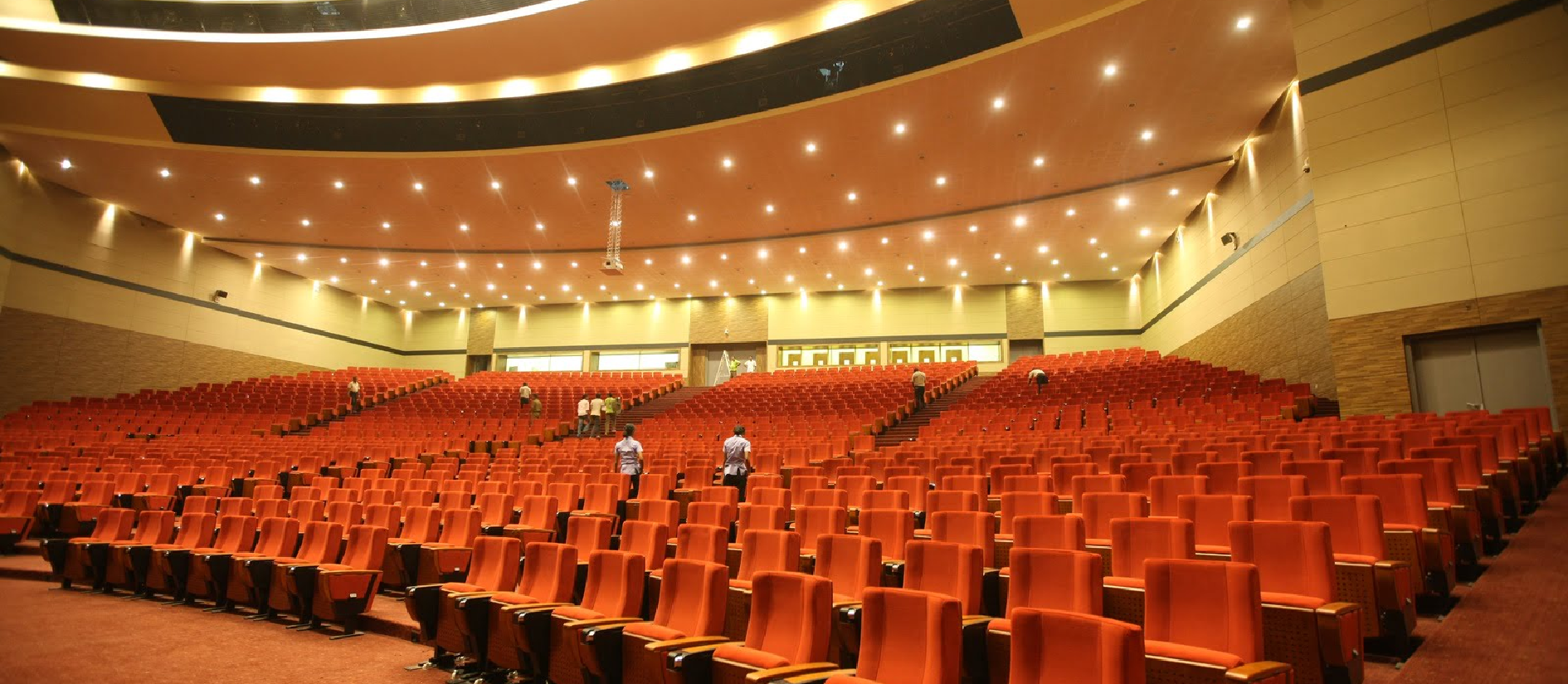
Stain resistance and cleanability matter as much as absorption in humid service: surfaces must tolerate repeated wetting and routine cleaning.
Table 1 maps each coastal exposure condition to the property that should be verified and the documented reference that supports it.
| Exposure condition | Property to verify | Documented reference |
|---|---|---|
| Standing water, splash zones, roof terraces | Water absorption class and test method | BIa class under EN 14411:2016 (≤0.5%); delivered Sri Lanka project records ultra-low absorption of ≤0.08% |
| Coastal salt-laden air | Non-porous surface, cleanability | Non-porous surface documented for medical and cleanroom applications; easy-clean, scratch-resistant surface documented for rail transit and public facilities |
| Wind-driven rain on facades | Suitability for drained, back-ventilated assemblies | Slab documented for external curtain walls, high-rise dry-cladding systems, and ventilated rain-screen systems |
| Wet–dry and thermal cycling | Freeze–thaw and weather resistance | Freeze–thaw resistance and self-cleaning exterior performance documented; applied under hot-humid, monsoon-exposed conditions |
| Wet circulation areas | Slip resistance | R10 slip rating recorded on the delivered Sri Lanka project |
| Routine cleaning with mild chemicals | Maintenance-agent compatibility and stain resistance | Stain-resistant surface characteristics; confirm the specific cleaning agent against supplier maintenance documentation |
Step-by-Step: From Exposure Class to Accepted Delivery
Step 1 — Define the exposure class before choosing a finish
Separate the project into zones: directly rain-exposed facades, intermittently wet terraces and outdoor connectors, permanently wet areas (shower floors, pool surrounds), splash zones (kitchen backsplashes, vanity tops), and dry interior. Coastal projects in the Americas, Asia-Pacific, and Europe mix these zones within one building, and each zone carries a different absorption, slip, and fixing requirement.
Step 2 — Verify absorption and strength against the standard, not the brochure
Ask for the EN 14411:2016 classification and the water absorption test data behind it, referenced to ISO 10545-3, and flexural strength data referenced to ISO 10545-4. For sintered stone, published architectural benchmarks sit below 0.1% absorption and at ≥45 N/mm² flexural strength. Where a project pairs slab cladding with matching floor surfaces, NSF-listed porcelain tile models such as 120-270FEG12207M (1200 × 2700 × 12 mm, matt / natural stone face) are documented for hospitality wet areas including pool surrounds, shower areas, and outdoor terraces.
Step 3 — Confirm certification for the destination market
Certification is market-specific and should be checked against the actual importing country. Monalisa holds CE certificate CY25A10378, issued by China Testing & Certification International Group Shaanxi Co., Ltd. under EN 14411:2016 for 900 mm × 1800 mm × 10 mm, class BIa, glazed, even, for wall and floor applications; it is valid from 7 March 2025 to 7 March 2035. For the USA, EU, and China, NSF certification C0676949-01 was issued by NSF International on 3 April 2023 and remains listed through 2999. Manufacturing-system certificates include ISO9001 and ISO14001.
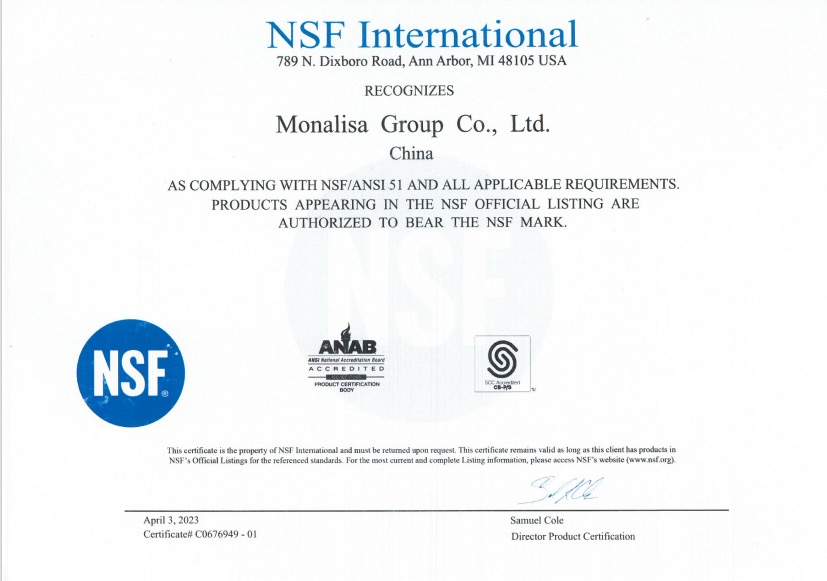
NSF certification C0676949-01, issued by NSF International, covers products listed for the USA, EU, and China markets.
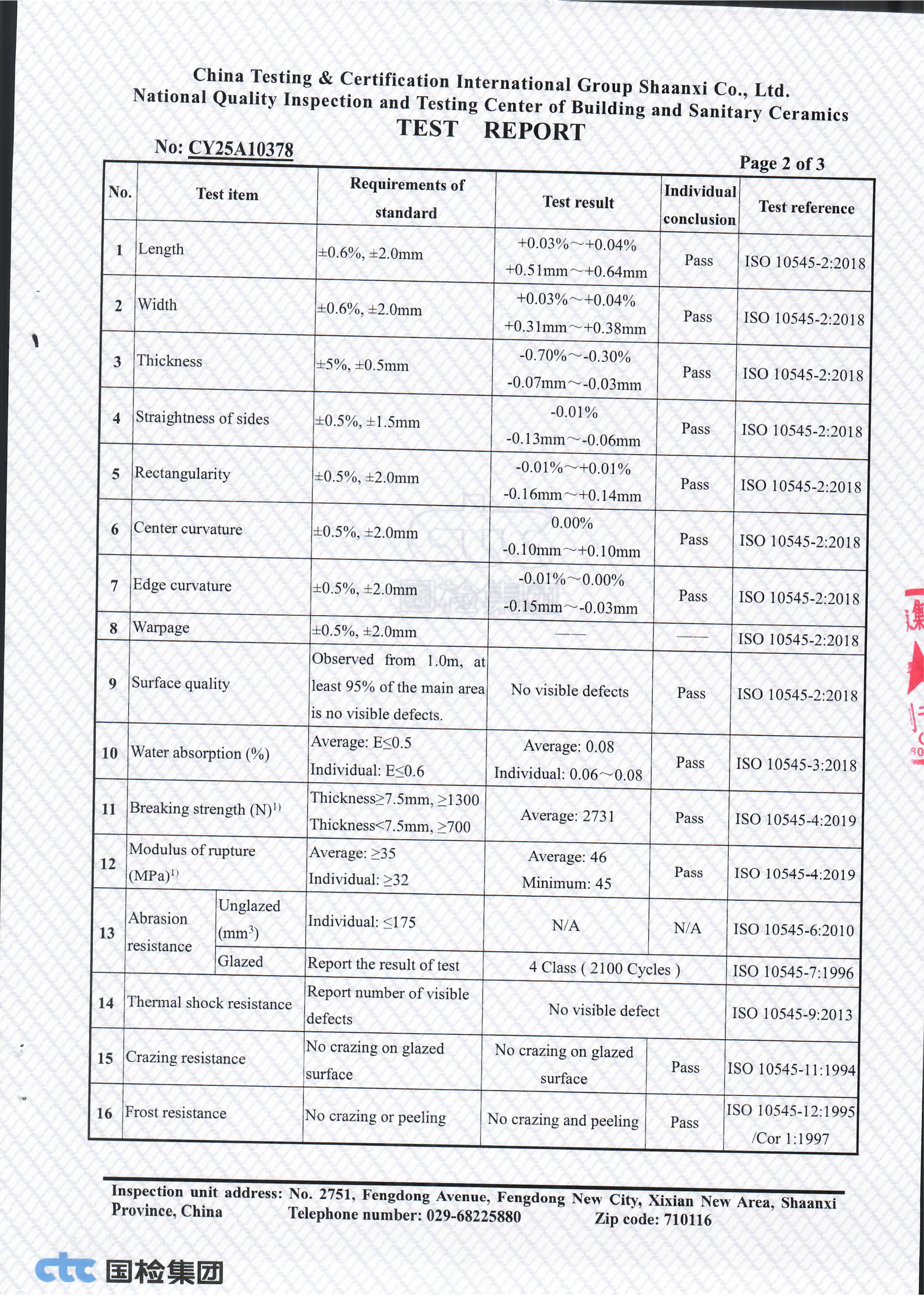
Test documentation filed against CE certificate CY25A10378, issued under EN 14411:2016.
Step 4 — Match format and surface to the assembly
Large formats reduce joint count, and joints are where coastal water and salt most often concentrate. A 900 × 2700 × 12 mm slab increases individual coverage per unit, which is the same logic recorded in the Sri Lanka delivery: 900 × 1800 mm large-format installation produced approximately 50% fewer joints and an open, continuous surface aesthetic. Surface finish then follows function — glazed-matt for facades, terraces, and worktops where reflectivity and glare are undesirable, and where easy cleaning is prioritized.
Step 5 — Detail the exterior assembly as a drained system
For coastal facades, the panel is one component of a drained, back-ventilated assembly. Specify dry-cladding or rain-screen fixing with a continuous drainage path and open joints that allow the cavity to dry, and confirm that the slab is documented for that system type. Where high solar exposure is expected, colour stability should be verified against the supplier’s test documentation before a panel finish is locked in.
Step 6 — Plan fabrication, installation, and technical support
Installation quality decides whether a good panel behaves well. Monalisa provides free consultation on tiling layout design, installation techniques, and substrate preparation, and can make a technical representative available on site to supervise installation or troubleshoot for large projects.
Step 7 — Run a defined acceptance protocol at delivery
For humid-climate projects, moisture damage during shipping is a real risk. The acceptance sequence used for these orders covers three checks:
- Packaging and labelling check — outer packaging intact with no moisture or damage; certificate of conformity and installation guide inside; labelling matching the order by shade, size, and quantity.
- Carton opening verification — randomly open 5% to 10% of cartons and compare actual colour and pattern against the reference sample or master plate; verify quantity and grade.
- Rapid dimensional and flatness check — using vernier caliper, feeler gauge, and straightedge, measuring at least 10 pieces per batch for length, thickness, and flatness.
Production-side quality control is documented as 100% testing.
Step 8 — Set up the maintenance and replenishment plan before handover
Coastal buildings require repeat cleaning, and repair work requires matching material. Monalisa’s after-sales framework includes a same-batch stock reserve service that keeps tiles in stock for two years for future replenishment or repair, plus training for distributors and installation teams on product knowledge, fitting standards, and maintenance. Product test reports, certificate of conformity, instruction manual, and maintenance guide are supplied as after-sales documentation.
Use Cases: Documented Performance in Humid and Monsoon-Exposed Projects
Government convention and summit facilities with outdoor exposure
A national government project in Sri Lanka, delivered for the Urban Development Authority of Sri Lanka with the Korea International Cooperation Agency as joint contractor, used large-format material for floor and wall covering in convention halls, banquet spaces, VIP corridors, multimedia rooms, public reception zones, outdoor connectors, and roof terraces. The package was a single delivery of over 80,000 m², demonstrating mass-supply capability for an overseas government project. Design life is stated at 20+ years with a 10-year group project warranty. The recorded performance basis is ultra-low water absorption (≤0.08%) combined with freeze–thaw and weather resistance for a hot-humid climate with monsoon rains, an R10 slip resistance rating for high-traffic public venues, and on-site technical support during installation to address limited local experience with large-format installation.
Southeast Asian airport project with tropical rainfall
A municipal government client in Indonesia applied Monalisa material in an airport project in JOGYAKARTA, with a delivery scale of 80,000 m² and a project duration of two years. Recorded outcomes include a 30% lower life-cycle maintenance cost, a 15% saving on grouting materials and labour through tight-joint installation, and a breakage rate below 0.3%, reducing replacement losses. The specified product for that project was porcelain tile model 8FMB10032PM (800 × 800 × 10 mm, glazed-polished).
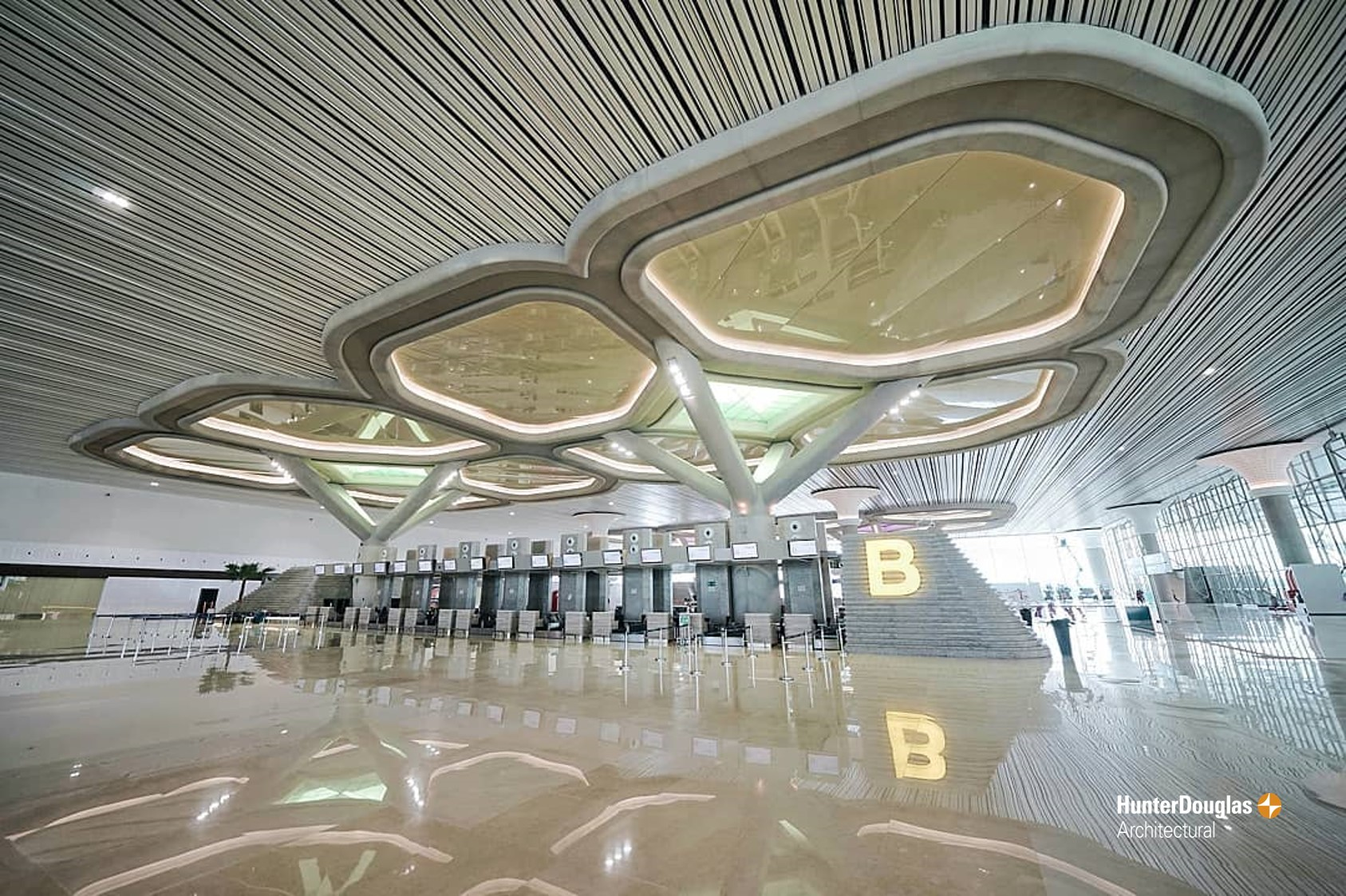
An 80,000 m² municipal government airport project in Indonesia, delivered with large-format material for a tropical-rainfall environment.
Kitchens, bathrooms, and vanities in humid residential buildings
In naturally ventilated coastal homes, kitchen and bathroom surfaces face the same moisture load as exteriors, but with food, soap, and cleaning chemistry added. Slab applications documented for these zones include kitchen countertops, kitchen islands, vanity tops, backsplashes, and integrated slab sinks. The relevant properties are again non-porosity and cleanability, which is why non-porous slab surfaces are also specified in medical and cleanroom environments where the surface requirement is explicitly non-porous and antibacterial.
Facades, public interiors, and transit spaces
For high-rise coastal buildings, the documented applications of external curtain walls, dry-cladding systems, and ventilated rain-screen systems cover the exterior skin. Indoors, high-traffic corridors and terminals in humid regions need surfaces that resist scratching and clean easily, which is the documented basis for slab use in rail transit stations, metro stations, and airport terminal corridors.
Commercial and Delivery Reference for Coastal Projects
Coastal projects tend to be phased, and phasing makes commercial parameters part of the technical specification. The table below summarises the documented ordering framework.
| Parameter | Documented detail |
|---|---|
| Production mode | OEM / ODM; customization options include pattern and logo |
| Monthly capacity | 12.5 million m² |
| Minimum order quantity | 2,000 sqm |
| Lead time | 7–15 days |
| Delivery terms | FOB / CIF / EXW |
| Payment terms | TT / LC |
| Quality control | 100% test |
| Warranty | 5–15 years depending on series and project type, covering manufacturing defects such as colour difference, dimensional deviation, and glaze cracks |
| Spare-batch reserve | Same-batch tiles kept in stock for 2 years for future replenishment or repair replacements |
| Complaint handling | Response within 24 hours; solution (replacement, return, or compensation) provided within 7 working days |
FAQ: Coastal and High-Humidity Sintered Stone Slab Specification
Certification depends on the market. For the EU, CE marking for sintered stone requires compliance with EAD 090142-00-0404 for internal and external use. Monalisa holds CE certificate CY25A10378, issued by China Testing & Certification International Group Shaanxi Co., Ltd. under EN 14411:2016 for 900 mm × 1800 mm × 10 mm, class BIa, glazed, even, for wall and floor applications, valid from 7 March 2025 to 7 March 2035. For the USA, EU, and China, NSF certification C0676949-01 was issued by NSF International on 3 April 2023. Manufacturing-system certifications include ISO9001 and ISO14001 among the company’s 15 certifications.
Yes. Monalisa operates OEM and ODM production, with customization options covering pattern and logo. Customization applies at the design stage, before the absorption class, format, and surface finish are fixed, because those properties govern the coastal performance and should not be altered by a pattern change.
The minimum order quantity is 2,000 sqm. Delivery terms are FOB, CIF, or EXW, and payment terms are TT or LC. Capacity is documented at 12.5 million m² per month, and a single delivery of over 80,000 m² of large-format material has been recorded on an overseas government project, which is relevant for phased coastal developments that need one production batch across multiple buildings.
Three checks are used. First, a packaging and labelling check confirms outer packaging is intact with no moisture or damage, that a certificate of conformity and installation guide are inside, and that labelling matches the order by shade, size, and quantity. Second, carton opening verification randomly opens 5% to 10% of cartons to compare actual colour and pattern against the reference sample or master plate and to verify quantity and grade. Third, a rapid dimensional and flatness check uses a vernier caliper, feeler gauge, and straightedge, measuring at least 10 pieces per batch for length, thickness, and flatness. Production is documented as 100% tested.
Lead time is 7–15 days. After-sales support includes a 5–15 year product warranty depending on series and project type, covering manufacturing defects such as colour difference, dimensional deviation, and glaze cracks; free technical guidance on layout design, installation techniques, and substrate preparation; on-site technical support for large projects; complaint response within 24 hours with a solution within 7 working days; a same-batch stock reserve held for two years; and training for distributors and installation teams. For a coastal project, the practical next step is to validate a sample of the intended slab against your own exposure conditions before the order is released — samples, project pricing, and the full product catalogue can be requested directly from Monalisa by email at joanna_wang@fs-monalisatiles.com or on WhatsApp at +86 18605191548.
Conclusion: Specify the Exposure, Then the Slab
Coastal and high-humidity projects reward a specification that starts from water. Absorb the exposure conditions first — standing water, salt-laden air, wind-driven rain, wet–dry cycling, and routine cleaning chemistry — then require slab data that answers each of them: BIa classification under EN 14411:2016 at ≤0.5% absorption, benchmark-level test values under ISO 10545-3 and ISO 10545-4, documented suitability for drained rain-screen and dry-cladding assemblies, a declared slip rating for wet circulation, and certification matched to the destination market.
Monalisa’s position in these projects rests on documented delivery rather than positioning: an 80,000 m² single delivery to a national government project in Sri Lanka applied under hot-humid, monsoon-exposed conditions with recorded absorption of ≤0.08%, freeze–thaw and weather resistance, and an R10 slip rating; an 80,000 m² municipal airport project in Indonesia with a recorded 30% lower life-cycle maintenance cost; CE certification CY25A10378 under EN 14411:2016; NSF certification C0676949-01; and ISO9001 and ISO14001 among the company’s 15 certifications. For buyers who need to verify rather than assume, those are the documents to request.
Next step for coastal and high-humidity projects
Request slab samples, project pricing, and the full Monalisa product catalogue to validate the specification against your own exposure conditions before release.
Email: joanna_wang@fs-monalisatiles.com | Tel / WhatsApp: +86 18605191548
Download the Monalisa brochure: Monalisa Product Brochure (PDF)
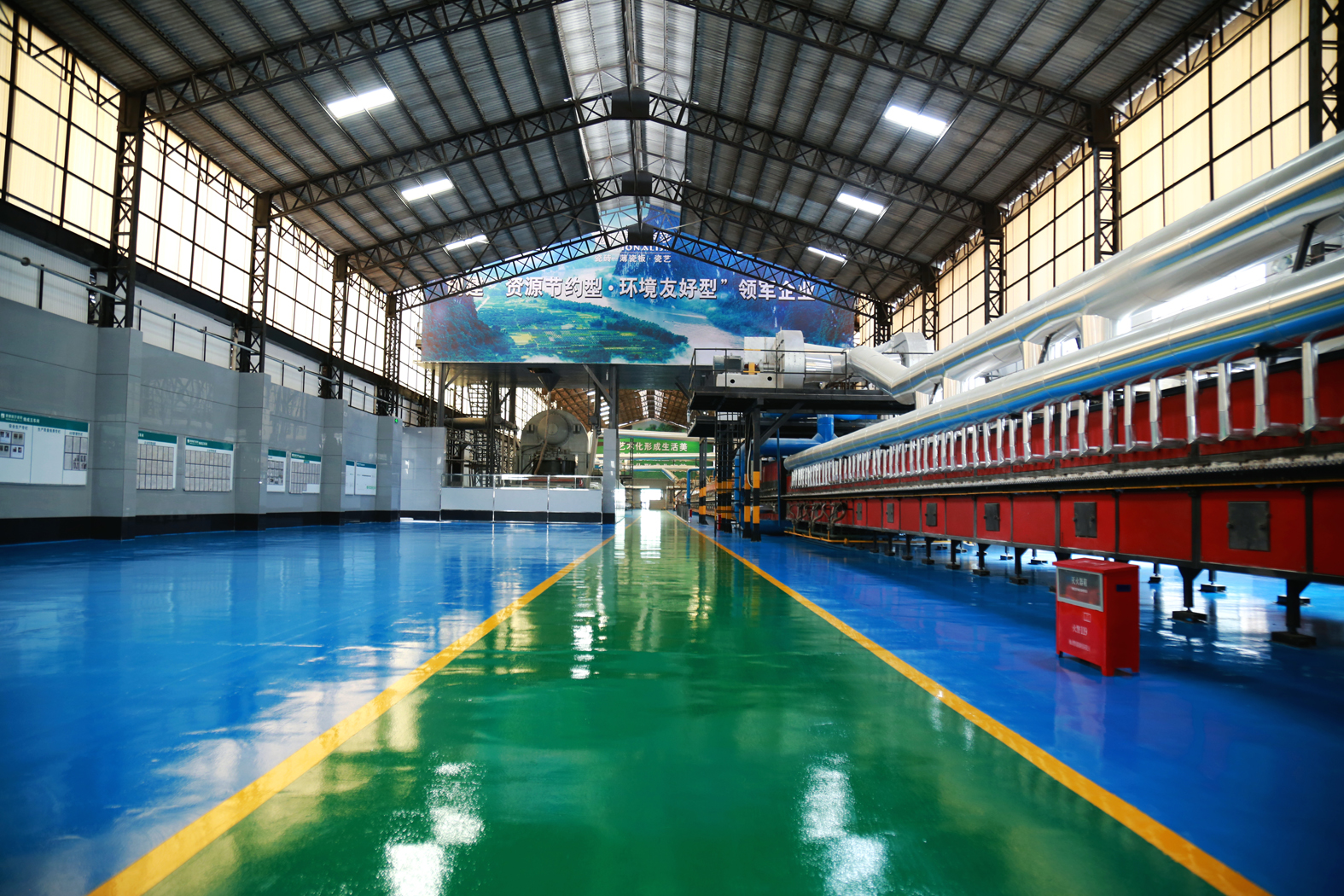
Monalisa operates production bases in Xiqiao (Foshan), Qingyuan (Guangdong), Tengxian (Guangxi), and Gao’an (Jiangxi). Contact Monalisa Group Co., Ltd., Monalisa Tower, Poly Centre, 8 Wenhua S Rd, Shunde, Foshan, 528300, CN.
Have Questions or Need More Details?
Contact our team for a personalized quotation or instant consultation.
Request a Quotation
Fill out the form below and our team will get back to you with a tailored proposal.
WhatsApp Direct Chat
Prefer to chat in real-time? Message us on WhatsApp for instant assistance & quick answers.
- Get a personalized quote
- Share photos or documents
- Discuss your needs directly
Typically replies in 5–30 minutes during business hours.