
SPC Flooring vs Laminate and Hardwood in Wet Areas: A 2026 Comparison Guide
Water, not décor, decides flooring in kitchens, bathrooms, and laundry rooms. In 2026 the category built for that condition is SPC flooring: rigid stone-plastic composite planks whose core contains no wood and does not absorb water. Laminate and hardwood are built on wood-based cores that take on moisture at joints and edges, which is why the same rooms that look acceptable in the first year commonly show swelling, cupping, and lifted seams later.
The waterproof core settles the material question, but it does not remove the installation requirements that keep a rigid-core floor serviceable: a subfloor flat within 2 mm over a 2 m straightedge, click-lock glue-free assembly, spacers that maintain a perimeter expansion gap, and a 6-mil polyethylene moisture barrier where SPC flooring is installed over ground-floor concrete. This guide compares the three material categories for wet areas, then breaks down the installation sequence and the OEM/ODM terms under which Monalisa Group Co., Ltd. produces waterproof SPC flooring.
Problem Definition: Why Wet Areas Break Wood-Based Floors
Moisture reaches a floor through three paths. Routine contact means splashes around sinks, showers, and tubs, plus wet mopping. Accidental release means dishwasher and washing machine overflows, supply-line failures, and slow toilet or trap leaks that run under the floor before anyone notices. Ambient humidity means condensation and poor ventilation in compact rooms. A dry-room floor only has to handle traffic; a wet-area floor has to handle water on all three paths, often with no immediate visible sign.
The failure mechanism sits in the core. Laminate and solid or engineered hardwood depend on wood fiber, which is hygroscopic — it gains and releases moisture with its surroundings. Once water passes an open joint, an unsealed perimeter, or an exposed end, the core swells. Swelling shows up as raised plank edges, cupping across the board, and joints that no longer lock tightly, and the finish then wears faster at the lifted edge because the surface is no longer flush. A swollen wood-based core does not return to its original dimensions when it dries, so most wet-area failures end in replacement rather than repair.
SPC flooring uses a rigid core built from stone powder and polymer rather than wood fiber. The waterproof property is not a coating that can wear through — it is the body of the plank. That is the real difference between a product that resists water on the surface and a product that resists water throughout the core, and it changes how the rest of the specification should be written.
Industry Background: How Rigid Core Became the 2026 Default
SPC has moved from a niche alternative to a specified default, and the market data shows the scale. Dataintelo estimates the global SPC flooring market at USD 9.8 billion in 2025 with high growth potential, while Grand View Research placed the 2025 figure at USD 5.9 billion. The gap is a scope difference rather than a disagreement about direction: broader reporting includes related rigid vinyl segments that narrower definitions of pure SPC exclude. For buyers, the useful reading is that SPC is now a mainstream, well-supplied category — relevant when comparing quotations, not reliable as a market-size forecast.
Inside the category, rigid core dominates. Rigid-core sub-types accounted for 74.2% of 2025 revenue in the same Dataintelo report, which indicates what the market is actually specifying rather than what is merely available.
Supply is concentrated in China, the largest exporter of plastic floor coverings under HS 391810, at USD 4.97 billion in 2024 according to the Observatory of Economic Complexity (OEC). That concentration is one reason supplier-level verification — inspection reports, commercial terms, and capacity — matters as much as the material choice.
Two technical reference points recur in wet-area specifications. Dimensional stability for commercial-grade SPC is required to be ≤0.10% under EN ISO 23999; that limit is what keeps a floating floor from expanding into its perimeter or opening at the seams when temperature and humidity change. On indoor air quality, GREENGUARD Gold certification under UL 2818 requires testing for over 10,000 chemicals and meeting strict VOC limits — relevant because wet rooms combine high humidity with limited ventilation.
What has changed for buyers is not availability but verification pressure. The category is dense, the price spread is wide, and the difference between two quotations is more often the core, the locking profile, and the pre-shipment inspection regime than the printed décor.
The Delivered Solution: What a Wet-Area SPC Specification Must Contain
A wet-area specification is a short list of requirements. Each one removes a specific failure mode, and skipping any of them transfers risk back to the buyer.
1. A waterproof rigid core — the material decision
Waterproof SPC flooring is waterproof because of its core, not its wear layer. Rigid stone-plastic construction, including the high-density stone-powder core type, keeps the plank dimensionally stable when water is present — the property that wood-based laminate and hardwood cannot offer at any price point. Ask for the core construction, not only the décor film and wear layer.
2. Click-lock, glue-free assembly
Click-lock glue-free SPC flooring assembles mechanically, plank to plank, with no adhesive line in the joint. In wet rooms that matters twice: there is no glue bond to fail under repeated moisture cycling, and individual planks can be lifted and replaced if a washing machine or supply line damages one area, without cutting out a glued or nailed floor. Installation is also faster and cleaner, which reduces the labor component of installed cost.
3. Subfloor flatness within 2 mm over 2 m
A floating floor follows its substrate. If the slab or panel beneath dips or crowns, the locking joints flex with every step and eventually fatigue; in a wet room an opened joint becomes a water path. Prepare and check the subfloor to within 2 mm over a 2 m straightedge before laying any plank, and correct high spots and hollows with leveling compound or sanding rather than expecting underlay to hide them.
4. Spacers for expansion gaps
Rigid-core flooring still moves as a floor when temperature and humidity change, so the perimeter must be allowed to move. Spacers hold a consistent expansion gap against walls, door frames, columns, and fixed cabinetry during installation, and the gap is later covered by baseboard or trim. Installing tight against a fixed object — pinching the floor — is the usual cause of peaking at a seam in the middle of a room, and it is the single most common installation error worth naming in the specification.
5. A 6-mil polyethylene moisture barrier over ground-floor concrete
Concrete slabs release moisture vapor. In ground-floor or slab-on-grade installation that vapor has nowhere to go but up into the floor, so a 6-mil polyethylene moisture barrier is laid over the slab with lapped and taped seams and edges turned up at the walls. Above-grade installations over dry, conditioned substrates do not carry the same requirement, which is why the barrier belongs in the specification by floor level rather than as a blanket instruction.
6. Verifiable supply terms behind the product
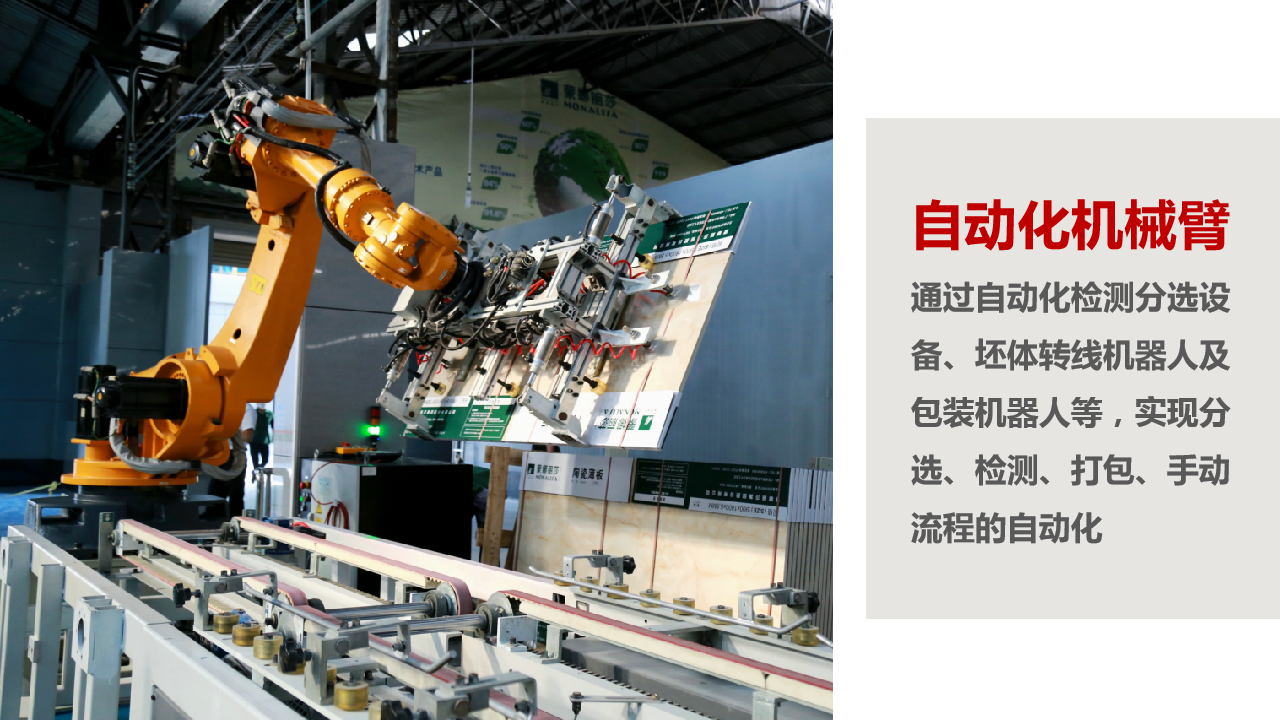
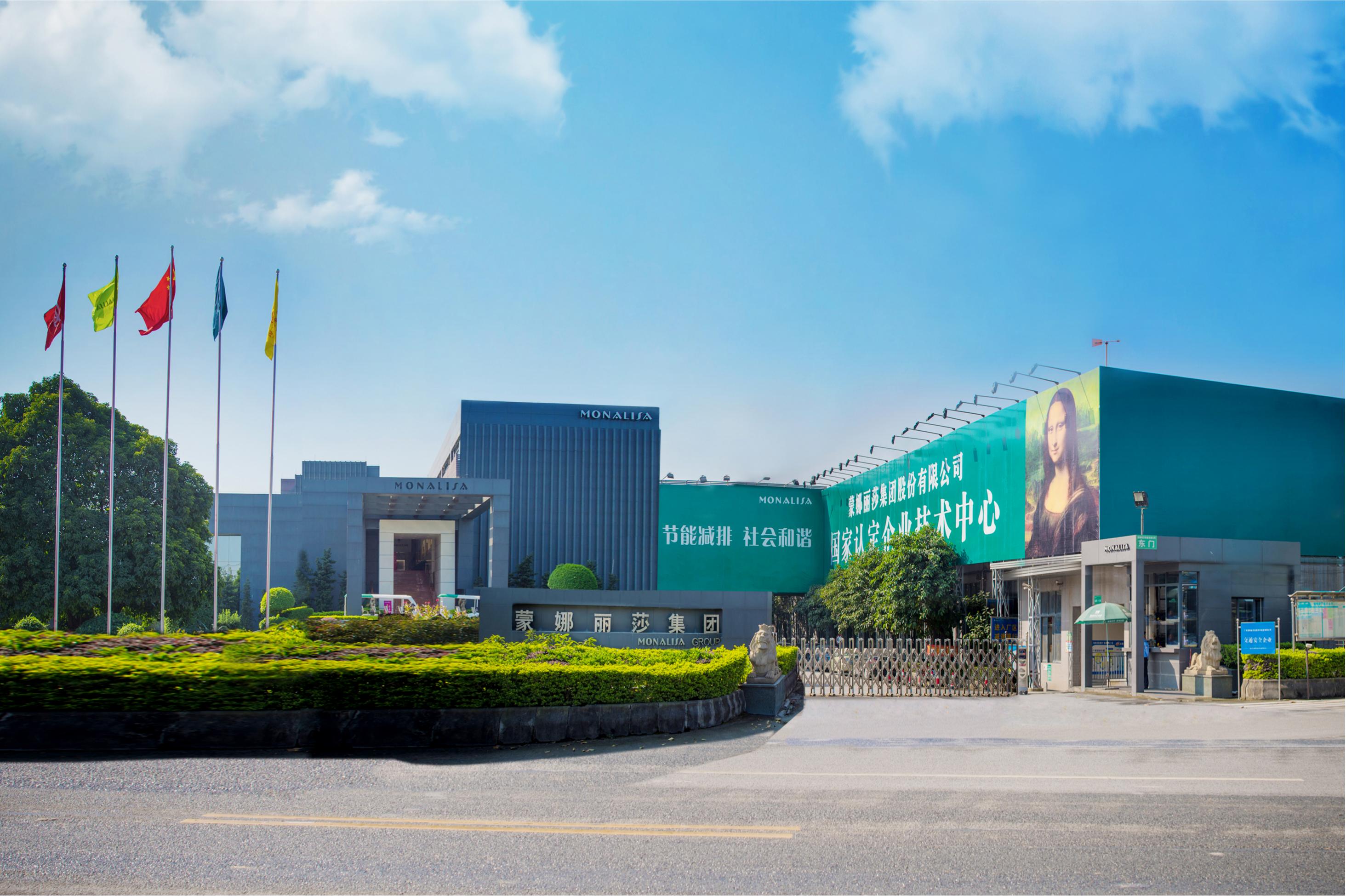
Monalisa Group Co., Ltd. (SZSE: 002918) is a Foshan-based building materials manufacturer founded in 1992 that produces ceramic tiles, sintered stone slabs, and SPC flooring. The group operates four production bases with a total factory area of 2,779,333.33 m² and employs 4,106 people, including a 100-person R&D team, with annual output of 100 million square meters across its product lines. For SPC flooring specifically, the company provides both OEM and ODM production, with customization of size, color, and logo, and serves export markets that include North America, Europe, the Middle East, Southeast Asia, Australia, and Africa.
The terms that matter at the evaluation stage, in the form buyers usually compare them:
| Supply item | Monalisa SPC flooring terms |
|---|---|
| Production mode | OEM and ODM |
| Customization | Size, color, logo |
| Minimum order quantity | 500 sqm per color |
| Monthly capacity | Up to 1,000 containers |
| Lead time | 30 days |
| Delivery terms | FOB / CIF |
| Payment terms | TT / LC / OA |
| Acceptance basis | Pre-shipment test |
| Warranty | Typically 10–25 years residential, 5–10 years commercial against manufacturing defects, subject to correct installation and maintenance |
Every batch of SPC flooring is inspected before it leaves the factory. The pre-shipment inspection covers appearance, overall dimensions and dimensional tolerances, deviation in mass per unit area, residual indentation, and peel strength — the checks that map directly to the wet-area risks of a floating rigid-core floor.
Step-by-Step Breakdown: Installing SPC in Kitchens, Bathrooms, and Laundry Rooms
The sequence below follows the order of risk. Substrate preparation and moisture control are inexpensive before the floor goes down and expensive afterwards.
- Confirm the water sources in the room and match them to the specification. Kitchens need sealing attention at the sink cabinet, dishwasher, and ice maker. Bathrooms and laundry rooms need a sealed perimeter and a plan for replacing a plank if an appliance fails. Slab-on-grade rooms need the moisture barrier included from the outset.
- Check and flatten the substrate. Verify there are no active leaks first, then bring the subfloor to within 2 mm over a 2 m straightedge and remove debris.
- Install the 6-mil polyethylene moisture barrier where SPC sits over ground-floor concrete. Lap the seams, tape them, and turn the edges up at the walls so vapor cannot bypass the barrier.
- Acclimate the planks and dry-lay the room. Let the flooring condition in the room, check the plank shade against the reference sample or master plate, and dry-lay the first rows so the layout is straight and the plank module is balanced at both ends.
- Assemble click-lock, glue-free. Work row by row at the angle the locking profile requires, keeping joints tight without forcing the plank; a forced joint is a future water path.
- Set spacers and keep the perimeter gap open. Hold the expansion gap at walls, columns, door frames, and any fixed object, and remove the spacers only after the floor is complete.
- Detail the wet points. Apply a flexible silicone sealant at the perimeter in bathrooms and laundry rooms, seal around penetrations, and keep appliance connections and drip trays accessible. Standing water should still be wiped up rather than left — waterproof flooring is not a drainage system.
- Inspect and document before shipment. Accept the pre-shipment inspection report, verify packaging and labeling — intact cartons containing the certificate of conformity and installation guide, with labels matching order shade, size, and quantity — and keep the documents for warranty claims.
Use Cases: Kitchen, Bathroom, Laundry Room, and Wet-Adjacent Commercial Zones
Kitchen
The kitchen combines routine spills with slow, hidden leaks from dishwashers and supply lines. A residential SPC floor with a tight click-lock joint, a moisture barrier over slab-on-grade concrete, and a sealed perimeter handles both conditions, and single-plank replaceability matters because the damage is usually localized under one appliance.
Bathroom
Bathrooms bring continuous splash exposure and frequent wet cleaning. A waterproof rigid core with sealed perimeter detailing is the appropriate flooring specification here. One limitation should be stated plainly: SPC is a waterproof floor, not a waterproofing membrane. It does not replace the waterproofing layer beneath a tiled shower or wet-area substrate, and no floating floor should be expected to compensate for a failed shower pan or an unsealed penetration.
Laundry room
Laundry rooms carry the highest single-event risk in a home: a failed washing machine hose can release a large volume of water in minutes. A rigid core resists the water itself, and the click-lock system allows the affected planks to be replaced if water sits long enough to reach the substrate. Floor drains and appliance pans remain the first line of defense, not the flooring.
Commercial office SPC floor
Commercial office SPC flooring is specified not only for corridors and workstations but for the wet-adjacent zones that generate most complaints: office pantries, break rooms, and restroom entries. Where these zones are included, the same three technical controls apply — dimensional stability consistent with the EN ISO 23999 threshold for commercial-grade product, a moisture barrier where the slab is on grade, and a maintained expansion gap at fixed partitions.
Comparison Table: SPC Flooring vs Laminate vs Hardwood in Wet Areas
The table compares the three categories against the decision factors that determine wet-area performance. Laminate and hardwood entries describe material-category behavior, not the specifications of any named brand.
| Decision factor | SPC flooring (rigid core) | Laminate | Hardwood |
|---|---|---|---|
| Core construction | Rigid stone-plastic composite core; waterproof by construction | Wood-based core | Solid or engineered wood; hygroscopic |
| Behavior under repeated water contact | Core does not absorb water; suitable for wet rooms with correct installation | Core typically swells at joints and edges | Typically cups, gaps, and wears at edges |
| Dimensional stability benchmark | ≤0.10% required for commercial-grade SPC under EN ISO 23999 | Not covered by this standard | Not covered by this standard |
| Indoor air quality reference | GREENGUARD Gold (UL 2818) requires testing for over 10,000 chemicals with strict VOC limits | — | — |
| Installation method | Click-lock, glue-free floating; individual planks replaceable | Typically floating or glued | Typically nailed, stapled, or glued |
| Subfloor flatness | Within 2 mm over 2 m for the floating rigid-core installation described here | Requires substrate preparation; not specified here | Requires substrate preparation; not specified here |
| Moisture barrier over ground-floor concrete | 6-mil polyethylene required | — | — |
| Wet-room recommendation | Recommended | Not typically specified for wet rooms | Not typically specified for wet rooms |
FAQ
Which standards and certification data should buyers verify before specifying SPC flooring for a wet area?
Verify three things. Dimensional stability: commercial-grade SPC is required to be ≤0.10% under EN ISO 23999. Indoor air quality: GREENGUARD Gold certification under UL 2818 requires testing for over 10,000 chemicals and meeting strict VOC limits, so request the certificate and confirm the covered product range. Product quality: request the pre-shipment inspection report covering appearance, dimensions and dimensional tolerances, mass per unit area deviation, residual indentation, and peel strength. Where a project requires CE marking or GREENGUARD Gold, the documentation must name the product being purchased — a category-level certification is not a product-level one.
Can Monalisa supply OEM waterproof SPC flooring under our own brand?
Yes. Monalisa Group Co., Ltd. provides both OEM and ODM production services for SPC flooring, with customization of size, color, and logo. Production capability includes a monthly capacity of up to 1,000 containers and a lead time of 30 days, with delivery terms of FOB or CIF. Construction details — thickness, wear layer, and locking profile — should be confirmed against your own specification at quotation stage.
What is the minimum order quantity, and what purchasing terms apply?
The minimum order quantity for SPC flooring is 500 sqm per color. Standard terms are delivery FOB or CIF, acceptance based on pre-shipment test, and payment by TT, LC, or OA. Because color is the unit of the MOQ, buyers planning several wet-area décors should consolidate the color schedule before confirming quantities.
How does a buyer verify an SPC batch before the container ships?
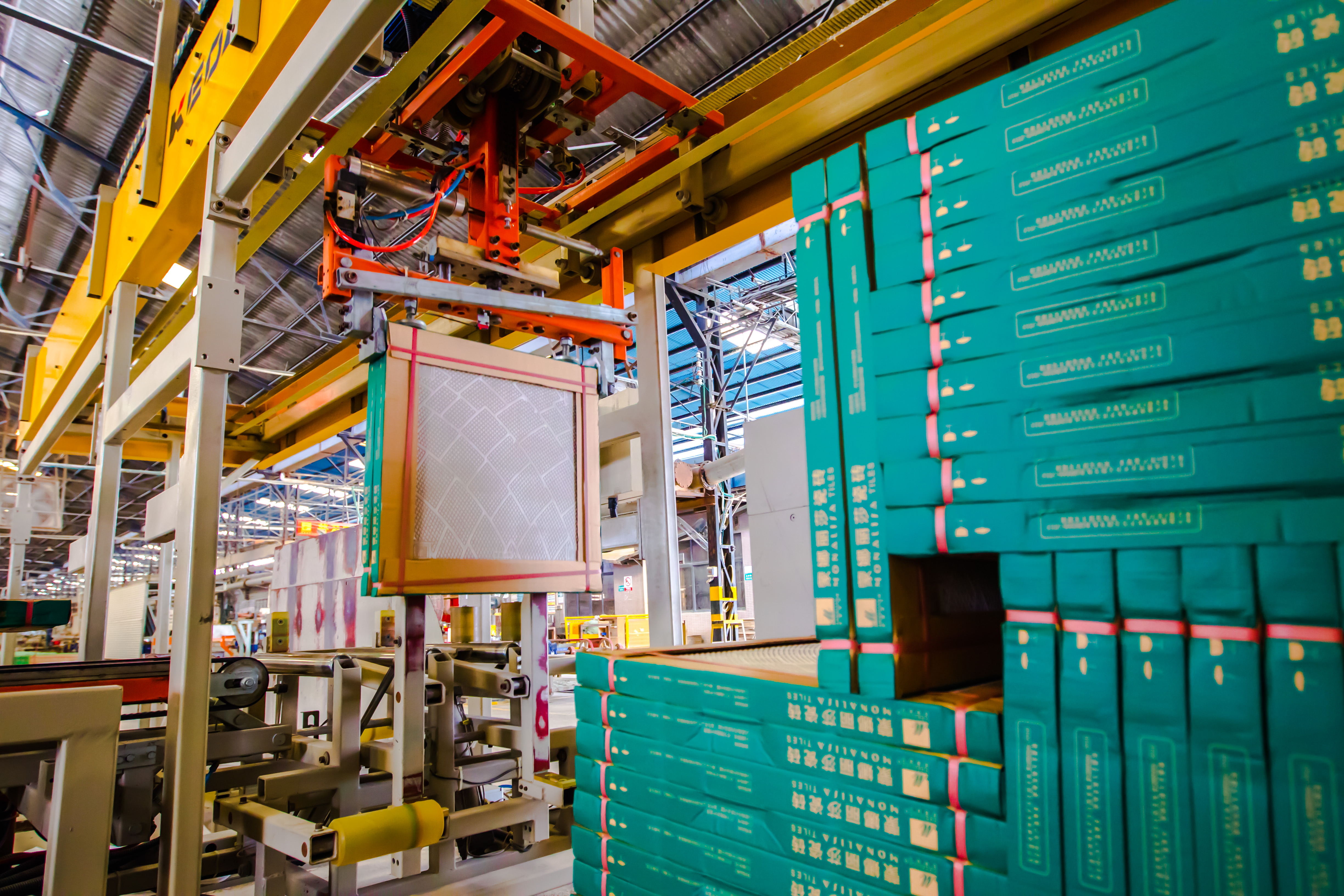
Pre-shipment test is the acceptance basis. Every batch of SPC flooring undergoes pre-shipment inspection before leaving the factory, covering appearance, overall dimensions and dimensional tolerances, deviation in mass per unit area, residual indentation, and peel strength. Packaging and labeling checks confirm that outer cartons are intact and contain the certificate of conformity and installation guide, with labels matching the order for shade, size, and quantity.
What lead time and warranty should be planned for an SPC flooring order?
Lead time is 30 days, with monthly capacity of up to 1,000 containers. After-sales support provides a warranty against manufacturing defects — typically 10–25 years for residential installations and 5–10 years for commercial installations — subject to correct installation and maintenance, with claims processed through proof of purchase and on-site or remote inspection. To move from evaluation to execution, download the Monalisa product brochure or send your room schedule and required specification to joanna_wang@fs-monalisatiles.com for a quotation.
Conclusion: A Simple Decision Rule for 2026
Laminate and hardwood are not poor products; they are dry-area products. In kitchens, bathrooms, and laundry rooms the risk is structural rather than cosmetic: wood-based cores absorb water and do not recover, while the rigid stone-plastic core of SPC flooring does not absorb water at all. That difference should decide the category before price, décor, or wear layer enters the comparison.
The rest of the decision is installation discipline and supply verification. Subfloor flatness within 2 mm over 2 m, click-lock glue-free assembly, perimeter spacers that preserve an expansion gap, and a 6-mil polyethylene moisture barrier over ground-floor concrete are the four controls that keep a floating rigid-core floor performing in wet rooms. On the supply side, confirm the OEM/ODM terms, the 500 sqm-per-color MOQ, the 30-day lead time, and the pre-shipment inspection report before the order ships.
Monalisa Group Co., Ltd. has manufactured building materials from its Foshan base since 1992 and supplies SPC flooring through both OEM and ODM programs, with customization of size, color, and logo for importers, distributors, brand owners, and project buyers.
Next step: specify wet-area SPC with verified terms
Send your kitchen, bathroom, and laundry room schedule with the required thickness, wear layer, and locking profile, and request a quotation plus the pre-shipment inspection documentation for your order.
Email: joanna_wang@fs-monalisatiles.com | Tel / WhatsApp: +86 18605191548 | Brochure: Download the Monalisa product brochure
Monalisa Tower, Poly Centre, 8 Wenhua S Rd, Shunde, Foshan, 528300, CN | www.fs-monalisa.com
Have Questions or Need More Details?
Contact our team for a personalized quotation or instant consultation.
Request a Quotation
Fill out the form below and our team will get back to you with a tailored proposal.
WhatsApp Direct Chat
Prefer to chat in real-time? Message us on WhatsApp for instant assistance & quick answers.
- Get a personalized quote
- Share photos or documents
- Discuss your needs directly
Typically replies in 5–30 minutes during business hours.