
SPC Flooring Certifications & Performance Specs: What Buyers Should Verify Before Importing
Originally published: August 31, 2026 | Category: SPC Flooring / Compliance & Specifications
SPC Flooring Certifications & Performance Specs Buyers Should Verify Before Importing
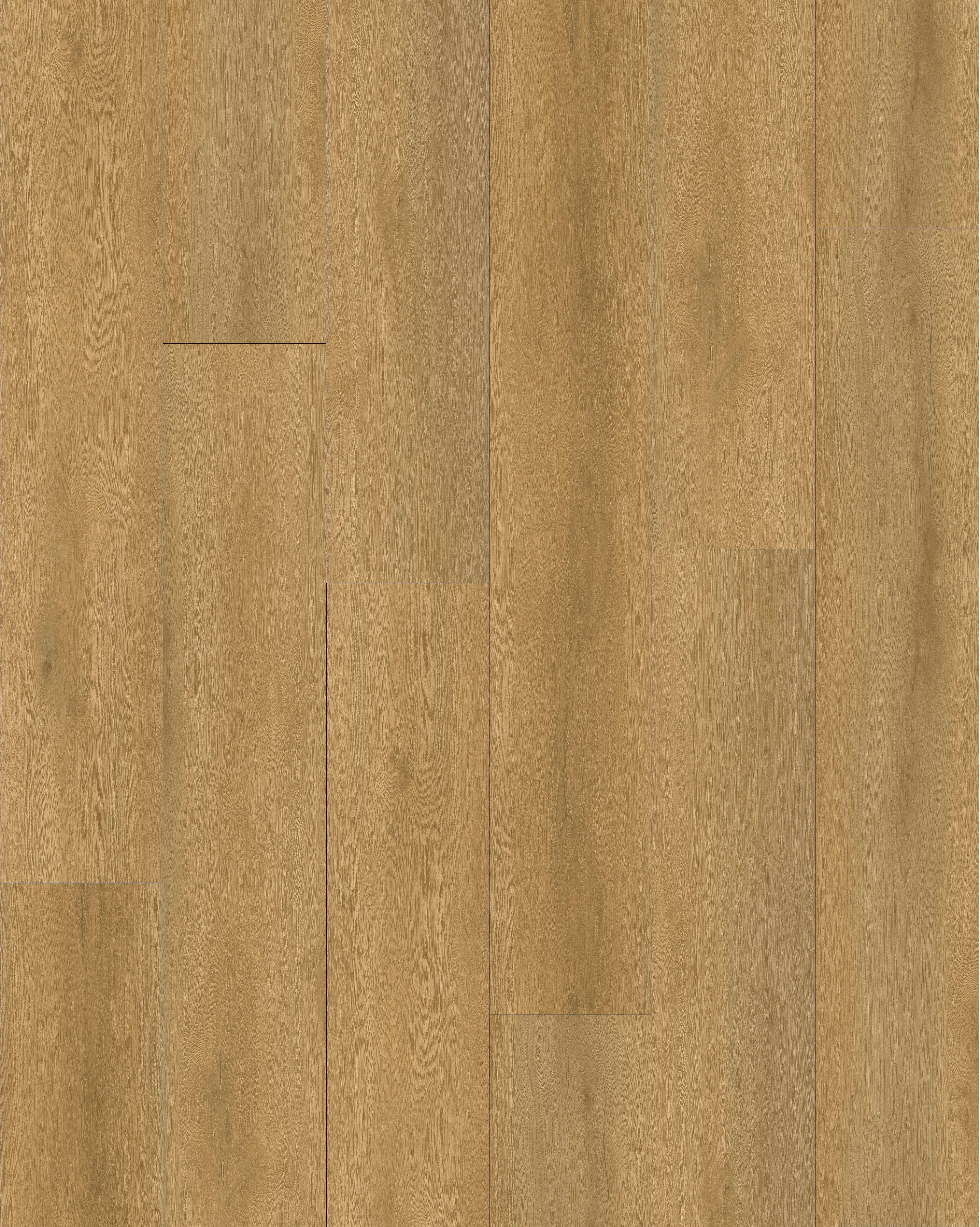
Importers sourcing SPC floor from China need to verify more than price and surface design. Certification status, dimensional stability, emission levels, wear resistance, fire rating, and installation requirements determine whether a floor will pass project specifications, meet export-market regulations, and perform after installation. For the Eir SPC Floor model ME26009-5 from Monalisa Group Co., Ltd., the following technical profile and compliance checklist explain what buyers should examine before placing an order.
What Is SPC Flooring and Why Specification Verification Matters
SPC stands for Stone Plastic Composite. It is a rigid-core vinyl floor constructed mainly from calcium carbonate natural stone powder and polyvinyl chloride resin, with additives such as PVC calcium-zinc stabilizer and PVC lubricant. The high-density stone-powder core makes the plank dimensionally stable and resistant to indentation. Because SPC is waterproof, it is commonly used in kitchens, bathrooms, and commercial spaces where moisture rules out hardwood or laminate.
Specification verification matters because global SPC flooring demand is large and still growing. One 2025 market analysis estimates the global SPC flooring market at USD 9.8 billion, with high growth potential. China also plays a dominant export role: in 2024, China exported approximately USD 4.97 billion of plastic floor coverings under HS code 391810. For a buyer, that means an enormous number of SPC manufacturers and trading companies compete for attention. Certifications, test reports, and factory facts are the tools that separate commodity-grade products from those that can reliably meet export project requirements.
SPC Flooring Certification and Compliance Roadmap
A certification roadmap answers the question: “Which SPC flooring standards and labels should I require for my target market?” The answer depends on where the floor will be installed. However, three compliance layers apply broadly: product emissions, fire performance, and dimensional stability under heat.
Emission and Indoor Air Quality: Zero Formaldehyde and GREENGUARD Gold
The Eir SPC Floor contains no formaldehyde, benzene, or other harmful substances. For buyers targeting schools, kindergartens, healthcare facilities, or green-building projects, this type of low-emission claim must be backed by test reports and certifications.
One widely recognized label is GREENGUARD Gold. GREENGUARD Gold certification requires testing for over 10,000 chemicals and strict VOC limits under UL 2818. It is often specified for classrooms, offices, and residential interiors in North America. Buyers should ask suppliers whether the exact SPC model being supplied has GREENGUARD Gold certification or a third-party low-VOC test report matching the target market’s requirements.
Note that Monalisa Group, as a manufacturer with a broader ceramic and slab portfolio, also holds NSF certification for some non-SPC products. For example, a Porcelain Tile (model 120-270FEG12207M) holds NSF certification C0676949-01 issued by NSF International for the USA market, and a Slab (model 90-270FDK09003M / 90-270FDK09008M) is certified to NSF standards for the USA market. The Classic Stone porcelain tile (model 8FMB10032PM) also holds NSF certification for the USA market. These facts demonstrate that Monalisa already operates within compliance-driven export supply chains. However, for SPC flooring specifically, buyers should still request the SPC product’s own test certificates and declarations, not rely on certificates from other product lines.
Fire Safety: B1 Fire Rating
SPC flooring is commonly specified for public buildings, offices, hotels, and escape routes. The Eir SPC Floor carries a B1 fire rating and is self-extinguishing, meaning it meets a stringent flammability requirement. In China’s classification system, B1 indicates a flame-retardant material; in many European and international projects, equivalent class ratings are accepted. Buyers should confirm whether the supplier can provide the specific test report describing the standard used for the B1 rating and whether that standard is accepted in the destination country.
Dimensional Stability: EN ISO 23999 and Anti-Deformation Design
Dimensional stability is a core performance requirement, especially for floors installed over underfloor heating or in large commercial areas. Commercial-grade SPC flooring is generally required to achieve dimensional stability of ≤0.10% per EN ISO 23999. The Monalisa Eir SPC Floor is described as dimensional-stable and anti-deformation, with shrinkage ≤1‰, which means minimal expansion and contraction. That level of behavior is suitable for underfloor heating environments, as long as installation conditions are respected.
| Compliance Layer | Common Requirement | Why It Matters |
|---|---|---|
| Low emissions | No formaldehyde, benzene; GREENGUARD Gold (UL 2818) for stringent VOC limits | Needed for schools, healthcare, residential, green building credits |
| Fire safety | B1 fire rating / self-extinguishing | Required for commercial buildings, hotels, escape routes, public spaces |
| Dimensional stability | ≤0.10% per EN ISO 23999; shrink ≤1‰ | Prevents gapping and buckling, especially under heating cycles |
| Moisture resistance | Water absorption ≤0.05%; 100% waterproof core | Allows use in kitchens, bathrooms, basements |
| Slip resistance | Friction coefficient ≥0.6, increased when wet | Reduces fall risk in wet areas and public projects |
| Acoustics | Built-in IXPE pad, sound reduction up to 18dB+ | Important for apartments, hotels, offices, multi-story buildings |
Detailed Solution: Eir SPC Floor ME26009-5 Performance Profile
The Eir SPC Floor model ME26009-5 is Monalisa’s rigid stone-plastic SPC flooring solution for residential and commercial interiors. Its material composition includes calcium carbonate natural stone powder, PVC resin, PVC calcium-zinc stabilizer, and PVC lubricant. The combination creates a high-density stone-powder core that resists dents and impact.
- Model: ME26009-5
- Type: Eir SPC Floor
- Available sizes: 1220×180mm (48″×7″) and 1524×228mm (60″×9″)
- Thickness: 4 / 5 / 6 / 7 / 8 mm
- Surface effect: EIR textured (embossed-in-register)
- Installation: Click-lock system for glue-free installation
Design and Appearance
The EIR textured surface creates a realistic wood grain effect. Textured surfaces also improve slip resistance compared with smooth gloss finishes. Because visual and tactile realism matter in residential and commercial projects, the EIR texture helps the floor mimic natural materials.
Click-Lock Glue-Free Installation
The click-lock system allows planks to be joined without glue. This is beneficial for installation speed, cost control, and indoor air quality. No wet adhesives means less odor and less VOC exposure during installation. It also makes the floor a floating installation, meaning the planks are not nailed or glued to the subfloor. The planks are connected to each other and allowed to expand and contract as a floating surface.
100% Waterproof Core
SPC flooring is often selected for wet areas. The Eir SPC Floor has a closed-cell core structure with water absorption ≤0.05%. Standing water will not cause warping, swelling, or mold. This makes it suitable for kitchens, bathrooms, laundry rooms, and commercial areas that see regular wet mopping or spills.
Wear Resistance and Durability
Wear resistance is often expressed as the number of test cycles. The Eir SPC Floor achieves 6,000–15,000 cycles with a T-grade wear rating. For residential use, lower-end ratings are generally sufficient. For commercial offices, retail stores, and high-traffic areas, buyers should select wear layers at the upper end of that range. The high-density stone-plastic core also provides indentation resistance, helping the floor withstand heavy furniture, rolling chairs, and concentrated loads.
Fire Retardant and Self-Extinguishing
The B1 fire rating is an important safety specification for commercial and public projects. Self-extinguishing behavior means the material does not continue to burn easily once the flame source is removed.
Slip Resistance
The Eir SPC Floor has a friction coefficient ≥0.6 and increased friction when wet. Bathroom, kitchen, and public areas benefit from surfaces that remain slip-resistant under moisture. Buyers should check whether the test standard matches the destination country’s accessibility requirements.
Acoustic Performance
SPC flooring without underlayment can be noisy in multi-story buildings. The Eir SPC Floor includes a built-in IXPE acoustic pad that delivers sound reduction up to 18dB+. Impact sound is a common complaint in apartments, hotels, offices, and educational buildings. A built-in pad also simplifies installation logistics because the underlayment does not need to be purchased and laid separately.
Pest and Mold Resistance
The dense mineral composite core does not support mold growth and is insect-proof. This is an important advantage in humid climates and in facilities where hygiene is a priority.
Easy Maintenance
The dense surface resists stains and is easy to clean. Maintenance typically involves sweeping or vacuuming and damp mopping with a manufacturer-approved floor cleaner. This lowers ongoing operating costs compared with floors requiring periodic refinishing or special treatments.
Step-by-Step SPC Flooring Specification Checklist
Use the following buyer checklist when evaluating SPC flooring from any manufacturer, including Monalisa.
- Verify model identity. Record the exact model number, e.g., ME26009-5. Certificates and test reports must reference the actual model being supplied.
- Confirm size and thickness. Check available dimensions and plank thickness. Compatibility with project specifications and transitions must match.
- Request emission test reports. Ask for third-party reports proving no formaldehyde or benzene. If your market requires GREENGUARD Gold or similar, confirm the SPC model itself holds the certification.
- Check fire rating. Confirm the B1 rating and request the test report or certificate showing the standard and laboratory.
- Check dimensional stability. Ask for values and the test method. EN ISO 23999 with ≤0.10% is a common commercial-grade requirement. The Eir SPC Floor reports shrinkage ≤1‰.
- Verify wear layer performance. Ask for wear-resistance cycles and T-grade rating.
- Inspect the locking system. Confirm the click-lock profile is compatible with glue-free installation and that it meets the factory’s test for joint strength.
- Confirm moisture requirements. Request water absorption rate and verify whether the product is approved for wet areas. Also plan the appropriate vapor barrier for ground-floor concrete slabs.
- Review installation conditions. Validate subfloor flatness (≤2mm over 2m), moisture limits, room acclimation time (24–48 hours), and expansion gaps (5–12mm).
- Obtain warranty and after-sales terms. SPC flooring warranties typically range from 10–25 years for residential and 5–10 years for commercial use, depending on the manufacturer and project.
Commercial-Grade vs. Residential SPC Flooring: How to Choose
Buyers often ask: “Can I use residential SPC in a commercial project?” The answer depends on wear layer, warranty, and performance testing. Commercial spaces have higher foot traffic, more rolling loads, and stricter fire and acoustic requirements.
| Selection Factor | Residential SPC | Commercial SPC |
|---|---|---|
| Typical wear requirement | 6,000 cycles may be sufficient | Higher cycles; up to 15,000 cycles in demanding spaces |
| Moisture resistance | 100% waterproof needed for kitchens/bathrooms | Waterproof core required for malls, hospitals, offices |
| Fire rating | Important but not always regulated | B1 fire rating often mandatory in public buildings |
| Acoustic performance | Beneficial for multi-story homes | Built-in IXPE pad helps meet building acoustic codes |
| Warranty | Typically 10–25 years | Typically 5–10 years |
| Dimensional stability | Important under heating | ≤0.10% per EN ISO 23999 commonly required |
Use Cases: Where the Eir SPC Floor Works Best
Residential SPC Floor Applications
The Eir SPC Floor fits living rooms, bedrooms, kitchens, and bathrooms. It is also a practical choice for basements, laundry rooms, and sunrooms where moisture or temperature fluctuation would damage hardwood. Because it is scratch- and dent-resistant, it is suitable for households with pets, children, and heavy furniture. The click-lock installation also helps DIY enthusiasts install the floor without professional adhesives.
Commercial Office SPC Floor Applications
Offices require floors that resist rolling chair traffic, scuffing, and daily cleaning chemicals. SPC’s high-density core resists indentation from chair casters and desk legs. The EIR texture hides scratches better than glossy surfaces. Acoustic performance is also valuable in open-plan offices, meeting rooms, and corridors.
Waterproof SPC Floor Applications
Because the Eir SPC Floor has water absorption ≤0.05%, it can be used in bathrooms, kitchens, and other wet areas. It is also suitable for hospitals and clinics where regular disinfection and mopping are required. However, installation records and perimeter sealing should follow the manufacturer’s guidelines.
Antimicrobial and Low-Emission Project Considerations
Although the provided corpus does not include a specific antimicrobial certificate for the Eir SPC Floor, its zero-formaldehyde composition and dense, stain-resistant surface support hygienic maintenance. For healthcare or educational environments where antimicrobial properties are a formal specification, buyers should request the model’s test reports and determine whether antimicrobial additives are available. Do not assume antimicrobial performance without documentation.
Underfloor Heating Environments
Monalisa positions the Eir SPC Floor as suitable for underfloor heating environments because its dimensional stability limits expansion and contraction. The product meets shrinkage ≤1‰. Installers must follow the heating system requirements: the floor surface temperature must not exceed 27°C, concrete subfloor moisture should be ≤1.5%, and the floor should be conditioned in the packaging to the site environment.
SPC Flooring Installation Requirements That Affect Performance
Even a high-quality SPC floor can fail if installed incorrectly. Buyers who pass the manufacturer’s installation requirements to their customers reduce warranty claims and site failures.
- Installation temperature: 18–30°C; post-installation ambient temperature 13–37.7°C.
- Relative humidity: ≤65%.
- Concrete subfloor moisture: ≤2% (≤1.5% for underfloor heating).
- Wood-based subfloor moisture: ≤12%.
- Subfloor flatness: ≤2mm over 2m (or 3/16″ over 10ft).
- Acclimation: 24–48 hours in original packaging at the site.
- Expansion gap: 5–12mm from walls and fixed objects.
- Vapor barrier: 6-mil polyethylene recommended for ground-floor concrete installations.
- Prohibited subfloors: soft carpet, soft PVC underlayment, or non-self-supporting surfaces.
- Tile subfloor condition: grout joints ≤5mm wide and ≤2mm deep; height difference between adjacent tiles ≤1mm.
Why Verify the SPC Manufacturer’s Background
The manufacturer’s background affects reproducibility, quality control, and supply reliability. Monalisa Group Co., Ltd. is a high-tech listed company founded in 1992 and headquartered in Foshan, Guangdong Province. It integrates R&D, design, production, and marketing of architectural ceramics. The company operates four modern production bases in Xiqiao (Foshan), Qingyuan (Guangdong), Tengxian (Guangxi), and Gao’an (Jiangxi), with 37 production lines. Monalisa’s main products include ceramic tiles, sintered stone slabs, and SPC floor. Its total production area is 2,779,333.33 m², with an annual output capacity of 100 million square meters and 4,106 employees. The R&D team includes 100 specialists.
These facts matter to an SPC buyer because they indicate scale, long-term operation, and vertical integration capability. However, for a specific SPC purchase, the buyer should also confirm the production line and factory location where the SPC product is manufactured, the monthly SPC capacity, and the quality control process. According to the SPC production capability profile, the monthly capacity is 1,000 containers, lead time is 30 days, MOQ is 500 m² per color, and OEM/ODM customization is available for size, color, and logo. Every batch of SPC flooring undergoes pre-shipment inspection covering appearance, dimensions, unit-area mass deviation, residual indentation, peel strength, and other checks.
Comparison: What to Ask Different SPC Manufacturers
Use this comparison framework when evaluating multiple SPC suppliers. It avoids marketing claims and focuses on verifiable evidence.
| Evaluation Item | What to Request | Red Flags |
|---|---|---|
| Product identity | Exact model number and technical datasheet | Generic “SPC floor” with no model traceability |
| Material composition | Stone powder percentage, PVC type, stabilizer system | Vague “high quality materials” without composition detail |
| Emissions | Third-party test report; GREENGUARD Gold if required | No test report or certificate from another product line |
| Dimensional stability | EN ISO 23999 report with exact value | Unverified “anti-deformation” claims |
| Fire rating | B1 certificate and test standard | No certificate or expired test report |
| Water resistance | Water absorption test result | No data or contradictory statements |
| Factory audit | Factory address, production line, production capacity | No address, trading company hiding factory identity |
| Warranty and after-sales | Written warranty terms and claim process | Verbal promises without contract |
Monalisa SPC Flooring Capabilities at a Glance
For buyers evaluating Monalisa as a supplier, the following capability facts are relevant:
- SPC monthly capacity: 1,000 containers.
- SPC lead time: 30 days.
- SPC MOQ: 500 m² per color.
- OEM/ODM: available, with size, color, and logo customization.
- SPC quality control: every batch undergoes pre-shipment inspection for appearance, dimensions, mass deviation, residual indentation, peel strength, and additional requirements.
- SPC after-sales: warranty typically 10–25 years residential, 5–10 years commercial, against manufacturing defects, subject to correct installation and maintenance.
- Group export markets: China, Southeast Asia, Middle East, North America, Europe, Australia, Africa, and other global markets.
Monalisa is also the designated ceramic tile supplier for the China Pavilion at Expo 2020 Dubai and the exclusive supplier of official architectural ceramics for the 19th Asian Games Hangzhou 2022. These project references demonstrate experience in traceable, compliance-conscious delivery. As of June 2021, Monalisa had participated in drafting 49 national, industrial, local, and group standards and obtained 892 authorized patents, including 145 invention patents. The company also holds 15 certifications including ISO9001 and ISO14001. For SPC exporting buyers, these facts provide a useful background but still do not replace the need for the specific SPC model’s own documents.
Potential Risks and Limitations to Discuss With Your Supplier
An objective technical assessment also covers limits. The Eir SPC Floor has a strong performance profile, but every flooring category has boundaries.
- Not a vapor barrier: SPC is waterproof from above but cannot stop moisture vapor rising from below. Ground-floor concrete requires a 6-mil polyethylene vapor barrier.
- No direct sunlight exposure: Protect against prolonged direct sunlight with drapes to prevent discoloration and excessive thermal expansion.
- Subfloor flatness requirement: SPC click-lock floors require a flat subfloor. Unevenness beyond 2mm over 2m may cause joints to fail.
- Surface temperature limit: For underfloor heating, the floor surface temperature must not exceed 27°C.
- Antimicrobial specification: If a project formally requires antimicrobial flooring, request a dedicated test report for the product. The standard Eir SPC Floor’s dense, stain-resistant surface supports hygiene, but this should not be equated with a certified antimicrobial claim.
Frequently Asked Questions
What certifications should an SPC floor manufacturer have for exporting to regulated markets?
For U.S., EU, and other regulated markets, the most relevant documents are low-emission certifications such as GREENGUARD Gold, a fire rating such as B1, dimensional stability testing per EN ISO 23999, and any destination-specific requirements such as CE marking where applicable. GREENGUARD Gold certification requires testing for over 10,000 chemicals and strict VOC limits under UL 2818. The Eir SPC Floor contains no formaldehyde, benzene, or other harmful substances and has a B1 fire rating. Buyers should request a certificate package that clearly names the exact SPC model being supplied.
What performance specifications matter for commercial office SPC flooring?
Commercial offices usually require higher wear resistance, dimensional stability, and fire safety. The Eir SPC Floor offers wear resistance up to 15,000 cycles, a T-grade wear rating, shrinkage ≤1‰, and a B1 fire rating. Its 100% waterproof core and friction coefficient ≥0.6 are also useful for office pantries, entrance areas, and restrooms. Commercial warranty coverage is typically 5–10 years under Monalisa’s after-sales policy.
Is SPC flooring safe for homes with children and pets?
Yes, because the Eir SPC Floor contains no formaldehyde, benzene, or other harmful substances. It is also scratch- and dent-resistant, making it more forgiving than hardwood or laminate. The click-lock glue-free installation avoids adhesive-related odors. For nurseries or allergy-sensitive households, request third-party emission reports to confirm the claim.
Can I get a sample or quotation before committing to an SPC order?
Yes. Monalisa’s SPC production MOQ is 500 m² per color, with OEM/ODM customization available for size, color, and logo. The typical SPC lead time is 30 days. Buyers are advised to request samples, the model-specific datasheet, and the pre-shipment inspection description during supplier evaluation. For detailed pricing, samples, or the latest specification sheet, contact the Monalisa export team using the contact information below.
Conclusion and Next Steps
Before importing SPC flooring, buyers should verify model identity, material composition, certifications, dimensional stability, fire performance, wear resistance, installation requirements, and after-sales terms. The Monalisa Eir SPC Floor model ME26009-5 combines a waterproof rigid stone-powder core, glue-free click-lock installation, zero-formaldehyde formulation, B1 fire rating, high wear resistance, slip resistance, and an integrated IXPE acoustic pad. These features make it a documented option for residential, commercial, and underfloor heating applications.
Ready to evaluate Monalisa Eir SPC Floor for your next project?
Request the model-specific datasheet, pricing, and a sample. Contact Joanna at +86 18605191548 or email joanna_wang@fs-monalisatiles.com. For a complete company and product overview, download the Monalisa corporate brochure (PDF).
Have Questions or Need More Details?
Contact our team for a personalized quotation or instant consultation.
Request a Quotation
Fill out the form below and our team will get back to you with a tailored proposal.
WhatsApp Direct Chat
Prefer to chat in real-time? Message us on WhatsApp for instant assistance & quick answers.
- Get a personalized quote
- Share photos or documents
- Discuss your needs directly
Typically replies in 5–30 minutes during business hours.