
Sintered Stone Slabs in 2026: A Data-Backed Cost vs. Value Comparison
Sintered Stone Slabs in 2026: A Data-Backed Cost vs. Value Comparison
Procurement decision guide | Updated: August 27, 2026
A decision to buy sintered stone slabs should be made with data in hand. For procurement teams, architects, and contractors in the final evaluation stage, the core question is straightforward: will sintered stone slabs deliver measurable value that justifies their cost over the project’s lifetime?
This guide compares sintered stone slabs against conventional ceramic tiles across physical performance, lifecycle cost, dimensional precision, and supplier reliability. It also explains how to evaluate a slab manufacturer before committing to a large order.
The timing matters. The global sintered stone market was valued at approximately USD 877.75 million in 2024, and it is projected to reach USD 1.41 billion by 2032. China’s ceramic product exports—including sintered stone slabs—totaled USD 19.15 billion from January to November 2025, according to the General Administration of Customs of China. That volume means buyers have many options, but also many quality levels to navigate.
Why Cost Comparisons Fail Without Performance Data
The most common procurement error at the decision stage is comparing initial unit prices only. A cheaper slab or tile can lead to higher costs over time through early wear, water damage, staining, breakage during installation, and maintenance labor. For sintered stone slabs, the purchase price is typically 15%–30% higher than conventional tiles. But that number by itself is meaningless without understanding what the additional purchase price delivers.
Buyers evaluating sintered stone slab options need answers to four questions:
- Physical performance: Does the material meet the technical demands of the intended applications (countertops, bathrooms, floors, facades)?
- Cost of ownership: What does the material cost over 10–20 years, including cleaning, maintenance, replacement, and energy use?
- Dimensional quality: Will large-format slabs install cleanly without warping, color mismatch, or edge deviations?
- Supplier control: Can the manufacturer consistently deliver the same quality across multiple batches and large volumes?
These four dimensions form the value comparison framework used throughout this guide.

Industry Background: Sintered Stone Slabs in a Growing Global Market
Sintered stone slabs are large-format ceramic panels produced by pressing raw materials under ultra-high pressure and firing them at high temperatures. The result is a dense, non-porous surface that combines natural stone aesthetics with engineered consistency. Unlike natural stone, sintered stone slabs can guarantee controlled physical properties from batch to batch.
For architectural use, the benchmark standards are well defined. ISO 10545-3 sets water absorption at <0.1%, and ISO 10545-4 sets flexural strength at ≥45 N/mm². These numbers define the baseline for what slab products should deliver. In the European market, CE marking for sintered stone used internally and externally requires compliance with EAD 090142-00-0404, issued under the European Organisation for Technical Assessment (EOTA) framework.
Monalisa Group Co., Ltd. is a Chinese ceramics manufacturer founded in 1992 and headquartered in Foshan, Guangdong Province. The company operates ten holding subsidiaries, four modern production bases in Xiqiao (Foshan), Qingyuan (Guangdong), Tengxian (Guangxi), and Gao’an (Jiangxi), and a total of 37 production lines. Monalisa’s annual output reaches 100 million square meters, supported by approximately 4,106 employees and a dedicated R&D team of around 100 people. The company reported annual revenue of approximately CNY 3.92 billion in fiscal year 2025.
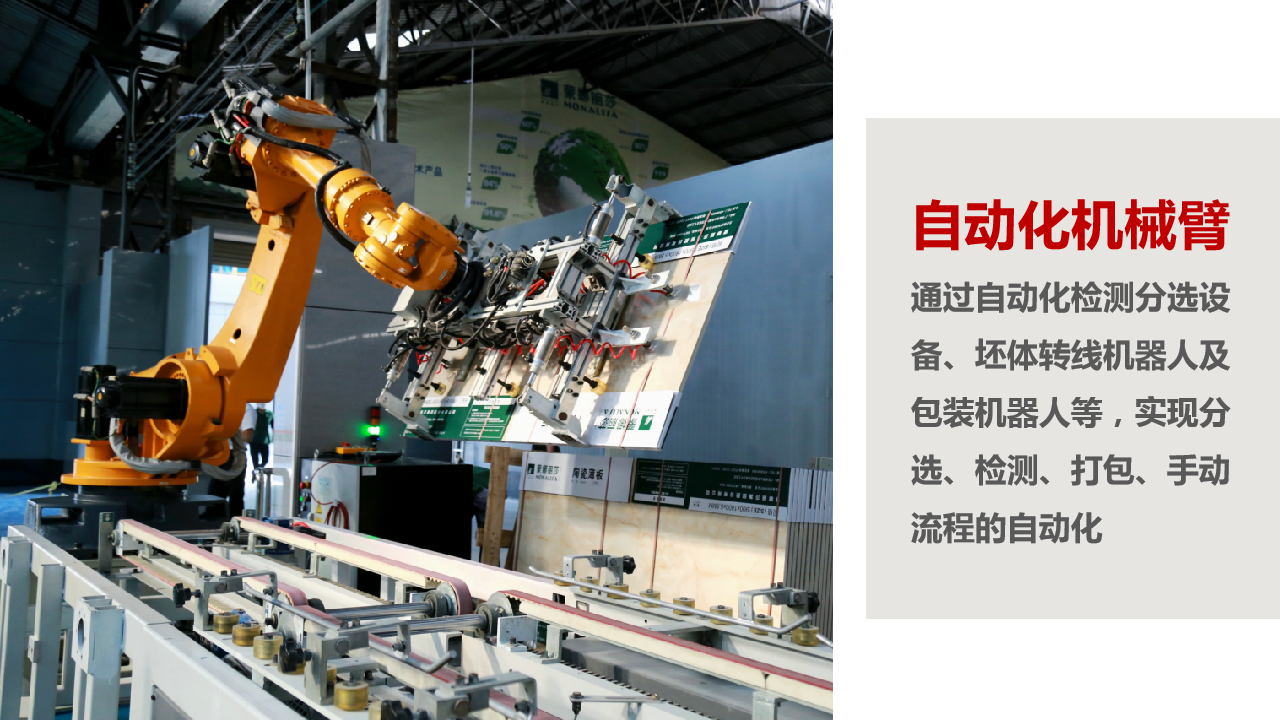
Monalisa’s product portfolio includes ceramic tiles, ceramic slabs (thin plates, large plates, and rock plates), and SPC flooring. Its sintered stone slab production uses fully automatic ultra-high-pressure presses with compaction forces up to 48,000 kN, combined with nano-scale glaze technology. These capabilities are directly relevant to buyers comparing suppliers at the decision stage.
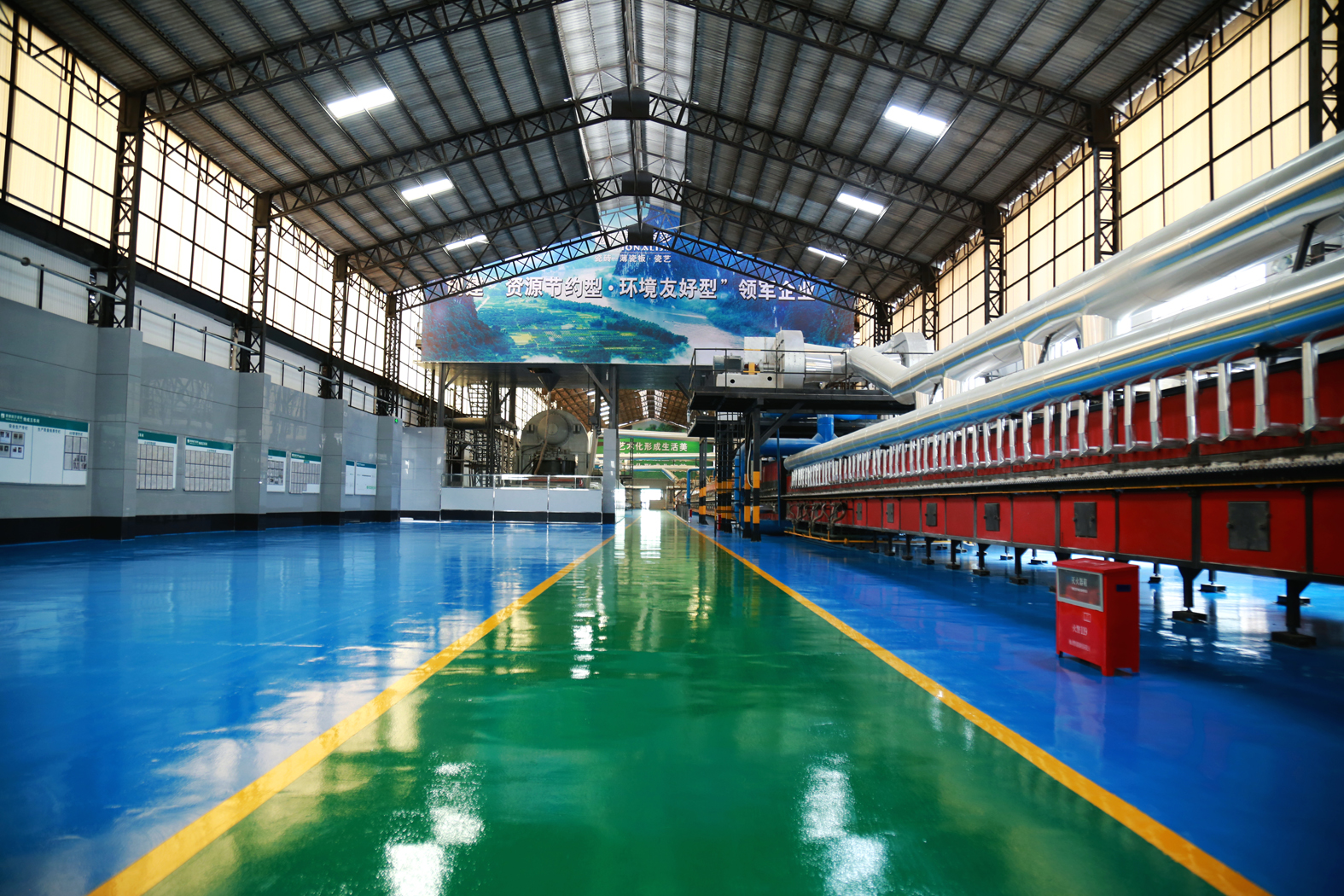
On the environmental side, Monalisa has been recognized as one of the first batch of national “Green Factories” by China’s Ministry of Industry and Information Technology, as well as a national “Resource-saving and Environment-friendly” pilot enterprise. The company operates with zero wastewater discharge. For procurement teams tracking sustainability criteria, these are verifiable signals when comparing sintering stone slab suppliers.
Detailed Solution: How Sintered Stone Slabs Compare on Measurable Value
When evaluating sintered stone slabs against conventional ceramic tiles, the value difference is concentrated in five measurable dimensions: physical performance, surface appearance, installation precision, maintenance cost, and long-term durability.
1. Physical Performance: A Substantial Gap
The performance advantages of sintered stone slabs over conventional tiles are documented in production data from high-pressure ceramic manufacturing:
- Water absorption: ≤0.08% vs. 0.5%–3% for conventional tiles—an 80%–95% reduction in porosity.
- Breaking strength: ≥45 MPa vs. ≥35 MPa—at least a 28% improvement.
- Abrasion resistance: wear volume ≤140 mm³ vs. ≤540 mm³—at least a 74% reduction in surface wear.
- Freeze-thaw resistance: 150 cycles without cracking vs. 50–100 cycles—50% to 200% longer resistance.
- Flatness tolerance: ≤±0.15% vs. ≤±0.5%—a 70% improvement in dimensional precision.
These are not cosmetic differences. Water absorption determines whether moisture can penetrate the slab in wet areas. Breaking strength determines whether the slab will survive transport and installation without cracking. Abrasion resistance determines how long the surface will keep its original finish in high-traffic environments. Freeze-thaw resistance decides whether the material can be used in exterior facades in cold climates.
Decision relevance: If a project includes bathrooms, outdoor terraces, or building facades in freeze-thaw regions, the performance gap between sintered stone and conventional tiles is wide enough to change the material specification.
2. Surface Appearance and Pattern Realism
Monalisa produces slab patterns using high-definition inkjet printing combined with an adhesive dry-grain process, achieving approximately 98% visual realism compared with natural stone. For buyers who want the marble look, concrete look, or other stone aesthetics without natural stone’s variability and maintenance requirements, this matters.
3. Installation Precision and Joint Quality
The flatness tolerance of ≤±0.15% enables tight-joint installation with grout gaps of ≤0.5mm. This is central to modern minimalist design: fewer visible joints, cleaner surfaces, and a more monolithic appearance. It also reduces grout material use. In large projects, tight-joint installation can save 10%–15% in grouting materials and labor.
4. Maintenance and Cleaning Cost
Daily maintenance of sintered stone slabs requires water or neutral detergent only. No waxing, sealing, or chemical treatments are necessary. Stain resistance is rated Grade 5, and tough stains such as coffee, oil, and ink are removed easily. This compares favorably with conventional tiles, which tend to absorb stains and require periodic sealing or deep cleaning.
5. Compatibility With Underfloor Heating
The dense body of sintered stone slabs offers good thermal conductivity. When installed over radiant heating systems, heat transfer efficiency is approximately 22% higher than with conventional tiles. That allows a heating setpoint reduction of 1–2°C for the same comfort level, saving 8%–12% in heating energy. For residential projects or commercial buildings in cold climates, this creates ongoing operational savings.
6. Manufacturing Efficiency and Environmental Footprint
Production processes also differ. Low-temperature fast-firing technology used in modern sintered stone manufacturing reduces firing temperature by 60–80°C and shortens the firing cycle by 15%, cutting comprehensive energy consumption per unit by 12%–18% compared with the industry average. For buyers tracking carbon footprint and sustainability targets, this is a relevant procurement indicator.
Step-by-Step: Evaluating Sintered Stone Slab Suppliers Before You Commit
Comparing materials is only part of the decision. The other part is evaluating which supplier can deliver the material at the quality level you need. Use these six steps to structure the comparison.
Step 1: Match the Product to the Application
Start with the exact application requirements. Kitchen countertops need scratch resistance, heat resistance, and stain resistance. Bathroom vanities need low water absorption and slip safety in wet conditions. Wall cladding needs size consistency and flatness. Flooring needs abrasion resistance and slip resistance. Exterior facades need freeze-thaw and UV stability. A single slab can perform well across these uses, but the priority of each requirement should guide how you compare suppliers.
Step 2: Calculate Total Cost of Ownership
Unit price is the starting point, not the conclusion. For a full comparison, include installation loss, cleaning and maintenance expenses, expected service life, and replacement cost. With sintered stone slabs, the lower breakage rate (≤0.3% vs. ~0.8% for standard tiles) reduces material waste. Extended service life (2–3 times longer) reduces replacement frequency. Together, these factors produce a total lifecycle cost 20%–35% lower than conventional tiles in comparable use.
Step 3: Examine Dimensional Control
Dimensional precision determines whether large-format slabs install with clean, even joints. Key questions to ask every supplier: What is your flatness tolerance? How do you control thickness and edge deviation? What inspection equipment do you use after firing? The answer should include high-precision molds with tolerance ≤±0.1mm, laser rangefinder measurement, and finished-slab scanning for flatness.
Step 4: Audit the Quality Control System
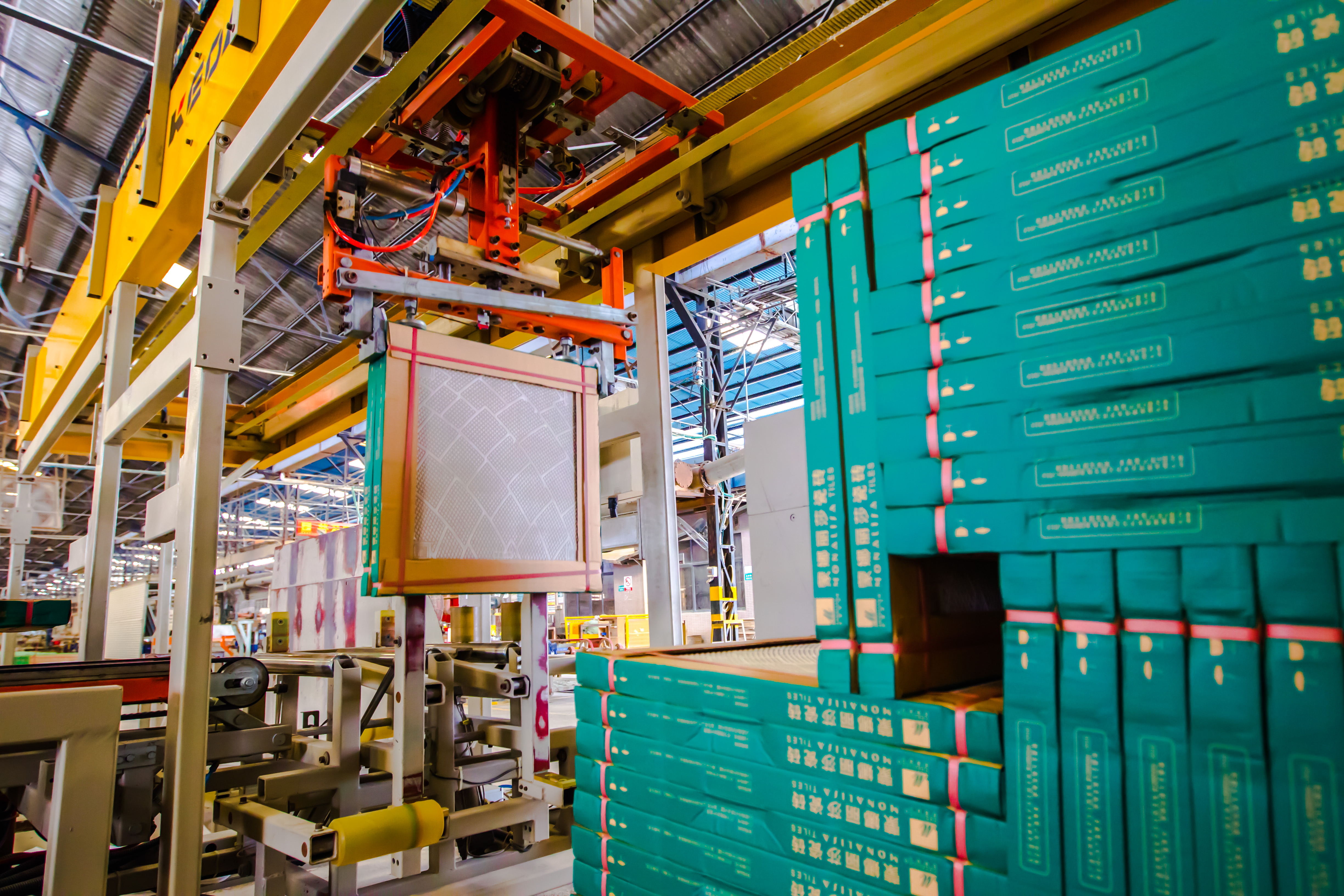
A supplier’s quality system must be verifiable. Monalisa’s production process covers 18 quality control points from raw material intake, ball milling, spray drying, pressing, drying, glazing, and firing, through polishing, sorting, and packaging. Key parameters are monitored in real time. The company operates an in-house CNAS-accredited laboratory that performs standard tests for dimensions, water absorption, breaking strength, abrasion, slip resistance, stain resistance, freeze-thaw, and radioactivity.
Step 5: Confirm Risk Control Capabilities
Ceramic production carries identifiable risks: color variation between batches, dimensional deviation, flatness issues, strength failure, surface slip performance failure, stain penetration, freeze-thaw damage, and excessive radioactivity. In serious procurement, the buyer should confirm the supplier has concrete controls for each risk category:
- Color variation: Automatic color sorting machines and spectrometer online inspection; batch comparison against a historical master standard.
- Dimensional deviation: High-precision molds (tolerance ≤±0.1mm) with laser rangefinders; automatic rejection of out-of-tolerance pieces.
- Flatness: Press pressure uniformity compensation and kiln roller leveling; 100% inspection with a flatness scanner.
- Strength: Raw material formulation optimization with increased kaolin content and pressing pressure ≥48 MPa; batch sampling for breaking strength.
- Slip resistance: Surface design with special dry grains or textured molds; pendulum friction testing with wet BPN ≥50 or R10+.
- Stain resistance: High-density transparent frit on the glaze; validation by ink, oil, and tea stain tests. Meets Grade 5 resistance.
- Traceability: Laser marking or RFID coding on every slab for tracing to production date, press station, kiln zone, and inspector ID.
Step 6: Assess the Supplier’s Production Scale
Large projects place real demands on supplier capacity. Monalisa’s production base includes four factories across different Chinese regions, 37 production lines, and an annual capacity of 100 million square meters. The company also holds ISO 9001, ISO 14001, and ISO 45001 system certifications. Buyers should compare these indicators against their project volume and deadline before requesting final quotes.
Use Cases: Where Sintered Stone Slab Value Is Highest
Kitchen Countertops
Kitchen surfaces face daily exposure to knives, hot cookware, oils, and acidic ingredients. Surface Mohs hardness ≥7 and PEI Grade 5 abrasion resistance handle knife contact without visible scratching. Heat resistance protects against hot pots. Stain resistance keeps oil, coffee, and wine from penetrating the surface, even over years of use. For kitchen countertop sintered stone slab applications, the low maintenance burden is a practical advantage for both residential and commercial kitchens.
Bathroom Vanities and Shower Areas
Bathrooms are permanently humid environments. Water absorption of ≤0.08% means moisture does not seep into the slab body, preventing swelling, discoloration, or bacterial growth beneath the surface. Slip resistance testing (wet BPN ≥50 or R10+) makes bathroom vanity sintered stone slab and shower surrounds viable. The non-porous surface also makes cleaning easier—a meaningful benefit in public restroom facilities where hygiene is a priority.
Interior Wall Cladding
Wall cladding with large-format sintered stone slabs reduces the number of joints and creates seamless surfaces. A flatness tolerance of ≤±0.15% allows neighboring panels to sit flush, while the 98% natural-stone realism of the printed surface produces an upscale appearance without premium stone pricing. Wall cladding sintered stone slab panels also help reduce installation time because fewer pieces are required for the same covered area.
Flooring in Commercial and Public Spaces
For shopping malls, airports, hotel lobbies, and office corridors, flooring must withstand constant foot traffic and cleaning cycles. Abrasion resistance of ≤140 mm³ wear volume keeps the surface finish intact. The low breakage rate (≤0.3%) reduces replacement costs. A high-slip-resistance surface can be designed into the slab to help meet safety requirements in entry areas and wet zones. Flooring sintered stone slabs are a competitive option where lifecycle cost matters.
Exterior Facades and Building Envelopes
Exterior facade applications expose panels to temperature swings, UV radiation, rain, and frost. Freeze-thaw resistance of 150 cycles without cracking enables use in cold-climate facades. UV-resistant sintered stone panels are part of Monalisa’s slab range, designed for curtain wall engineering and prefabricated building systems. This is a segment where conventional tiles are at a distinct disadvantage because their higher water absorption makes them vulnerable to frost damage over time.
Comparison Table: Sintered Stone Slab vs. Conventional Tile
| Metric | Sintered Stone Slab | Conventional Tile | Procurement Impact |
|---|---|---|---|
| Water absorption | ≤0.08% | 0.5%–3% | Better for wet areas; lower risk of moisture damage |
| Breaking strength | ≥45 MPa | ≥35 MPa | Fewer breakages during transport and installation |
| Wear volume | ≤140 mm³ | ≤540 mm³ | Longer surface life in high-traffic spaces |
| Freeze-thaw cycles | 150 cycles without cracking | 50–100 cycles | Suited for outdoor and cold-climate installations |
| Flatness tolerance | ≤±0.15% | ≤±0.5% | Tighter joints (≤0.5mm), cleaner visual, less grouting |
| Initial unit price | 15%–30% higher | Baseline | Higher budget allocation at purchase stage |
| Breakage rate | ≤0.3% | ~0.8% | Reduced material waste and replacement cost |
| Lifecycle cost | 20%–35% lower | Baseline | Better long-term value for ownership |
| Maintenance | Water or neutral detergent | Periodic sealing or deep cleaning | Lower operating cost and easier upkeep |
| Underfloor heating | ~22% higher heat transfer | Baseline | Lower heating setpoint; 8%–12% heating energy saved |
FAQ: Final Questions Before Making Your Sintered Stone Decision
1. What certifications and standards should sintered stone slabs meet?
Architectural sintered stone should meet ISO 10545-3 for water absorption (<0.1%) and ISO 10545-4 for flexural strength (≥45 N/mm²). For the European market, CE marking requires compliance with EAD 090142-00-0404, which covers sintered stone for internal and external use. Buyers should also confirm that the manufacturer holds ISO 9001 (quality management), ISO 14001 (environmental management), and ISO 45001 (occupational health and safety) certifications.
2. How can buyers verify a manufacturer’s quality control capability?
Specific controls are verifiable: 18 quality control points from raw material to packaging, an in-house CNAS-accredited laboratory for standard performance tests, automatic color sorting machines, high-precision molds with tolerance ≤±0.1mm, and a traceability system using laser-marked or RFID-coded slabs that identify production date, press station, kiln zone, and inspector ID. Ask the supplier to document each of these capabilities before ordering.
3. How much more expensive are sintered stone slabs than conventional tiles?
Unit price is 15%–30% higher than conventional tiles depending on the series. However, service life is 2–3 times longer due to superior wear and stain resistance. Breakage rate is lower at ≤0.3% vs. ~0.8%, and total lifecycle cost is 20%–35% lower. In large-format projects, tighter joints reduce grout material and labor expense by 10%–15%.
4. How should buyers evaluate sintered stone slab samples?
Request batch samples that represent current production, not only optimized showroom samples. Compare colors under natural daylight and artificial light. Verify dimensions and flatness manually with a straight edge. Perform surface stain tests using ink, oil, and tea. Ask the supplier for slip resistance data (wet BPN ≥50 or R10+) and the breaking strength report for the specific series being considered.
5. What capacity can a sintered stone slab supplier offer for large-scale projects?
Capacity evaluation should examine the supplier’s total production infrastructure, including the number of production bases, production lines, and annual output. Monalisa operates four production bases and 37 production lines with an annual capacity of 100 million square meters, supported by roughly 4,106 employees and ten holding subsidiaries. Buyers should request a written delivery plan from the supplier covering their specific volumes, product specifications, and destination.
Conclusion: Making a Confident Sintered Stone Slab Decision in 2026
The cost-benefit case for sintered stone slabs is strongest when projects demand long service life, low maintenance, moisture resistance, and precise installation. Measurable advantages—ultra-low water absorption (≤0.08%), breaking strength of ≥45 MPa, wear volume of ≤140 mm³, freeze-thaw resistance of 150 cycles, and flatness tolerance ≤±0.15%—are directly relevant to kitchen countertops, bathroom vanities, wall cladding, flooring, and exterior facades.
At the decision stage, the supplier matters as much as the material. Buyers should verify production infrastructure, quality control systems, certifications, risk controls, and delivery capacity. Data-backed comparison is the strongest protection against procurement mistakes.
If your selection has come down to a qualified supplier, Monalisa Group Co., Ltd. can provide documented sintered stone slab performance data, certified manufacturing processes, and a production network designed for large-volume projects. For product specifications, pricing, or project planning, contact the Monalisa sales team.
Contact: Joanna Wang | Email: joanna_wang@fs-monalisatiles.com | WhatsApp: +86 18605191548
Address: Monalisa Tower, Poly Centre, 8 Wenhua S Rd, Shunde, Foshan, 528300, China
Website: www.fs-monalisa.com
Next step: To evaluate specific sintered stone slab options for your project, download the Monalisa corporate brochure (PDF). It includes product specifications, production capacity details, and the full company background for procurement review.
Have Questions or Need More Details?
Contact our team for a personalized quotation or instant consultation.
Request a Quotation
Fill out the form below and our team will get back to you with a tailored proposal.
WhatsApp Direct Chat
Prefer to chat in real-time? Message us on WhatsApp for instant assistance & quick answers.
- Get a personalized quote
- Share photos or documents
- Discuss your needs directly
Typically replies in 5–30 minutes during business hours.