
Sintered Stone Slab vs Tiles: 2026 Comparison for Kitchens, Bathrooms & Facades
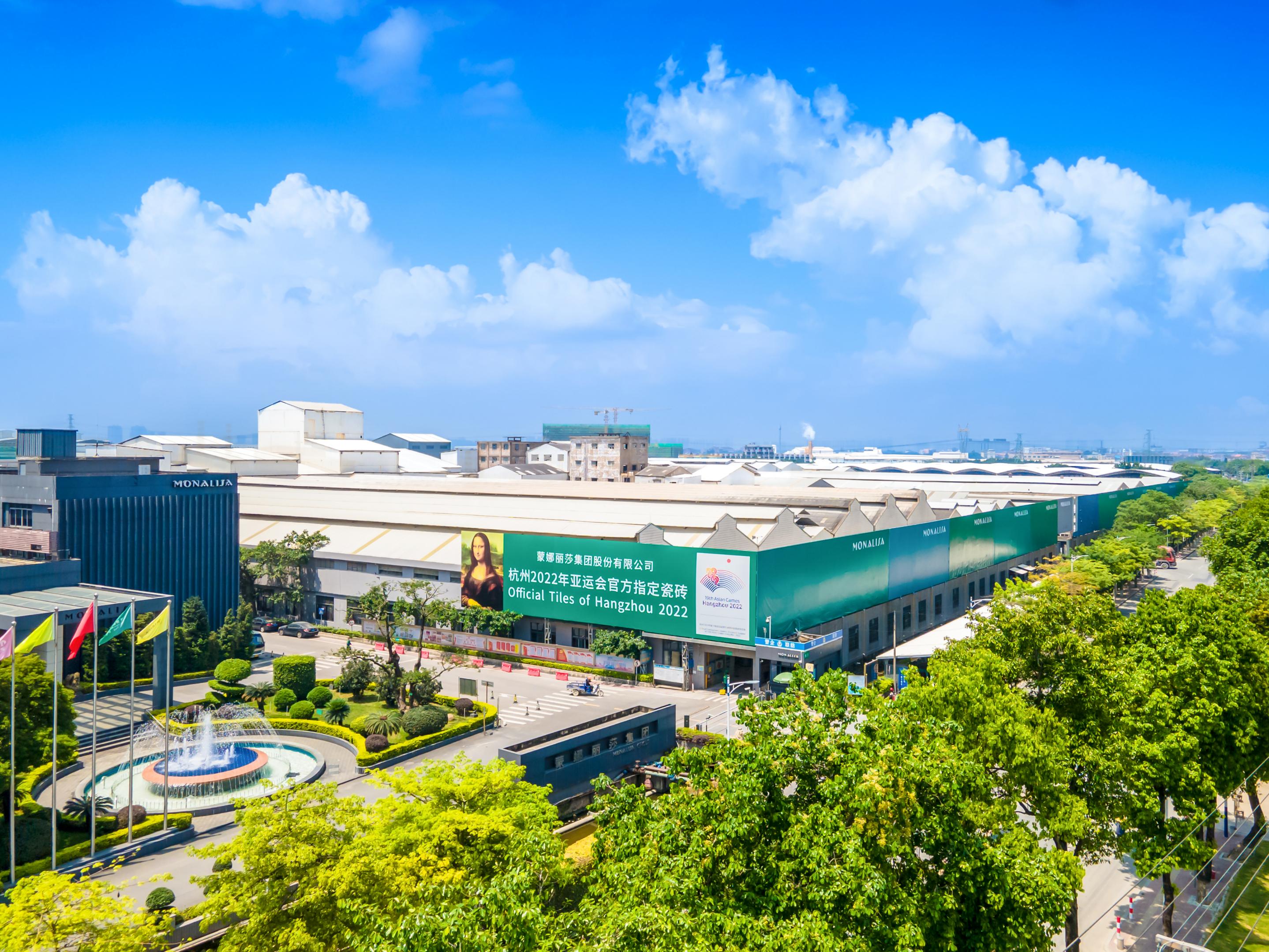
Monalisa Group Xiqiao Headquarters — the manufacturing base behind the sintered stone slab performance data in this article.
Sintered Stone Slab vs Tiles: A 2026 Decision-Driven Comparison for Kitchens, Bathrooms & Facades
Sintered stone slabs and conventional ceramic tiles perform differently in water absorption, breaking strength, scratch resistance, and long-term cost. This comparison explains where sintered stone clearly wins, where the extra upfront investment pays back, and how to structure a procurement decision in 2026 — using Monalisa Group Co., Ltd. (Monalisa)'s verified product performance as the reference benchmark.
Problem Definition: Why Sintered Stone Slab vs. Conventional Tiles is a 2026 Procurement Decision
Buyers in the middle of a project — kitchen countertops, bathroom vanities, wall cladding, flooring, or exterior facades — eventually face the same question: is the higher unit price of a sintered stone slab justified by its performance, or would conventional tiles meet the project's requirements at lower cost? The answer depends less on price per square meter and more on three variables: failure cost in the specific application, life-cycle maintenance expense, and performance tolerance in demanding environments (high traffic, heat, moisture, freeze-thaw).
Industry Background: A Market Growing Toward Large-Format, High-Performance Surfaces
The global sintered stone market was valued at approximately USD 877.75 million in 2024 and is projected to grow to USD 1.41 billion by 2032. In parallel, China's exports of ceramic products (including sintered stone slabs) totaled USD 19.15 billion for the period of January to November 2025, indicating the scale of global supply flowing from Chinese manufacturers. This demand is driven by the same forces that make the sintered-stone-vs-tile decision relevant: larger format sizes, thinner profiles, higher mechanical performance, and aesthetic replication of natural stone.
Monalisa Group Co., Ltd. is a high-tech listed ceramics manufacturer founded in 1992 and headquartered in Foshan, Guangdong Province, China. Monalisa produces tiles, sintered stone slabs (ceramic slabs/rock slabs), SPC flooring, and related architectural ceramics across four production bases with 37 production lines. The comparison below uses Monalisa's verified product performance and manufacturing data as the reference point for what buyers should expect from a quality sintered stone slab supplier.
Defining the Two Products
Sintered Stone Slab
Monalisa's sintered stone slab is a large-format ceramic slab produced with fully automatic ultra-high pressure presses (compaction force up to 48,000 kN) and nano-scale glaze technology. The result is a high-density body with ultra-low water absorption (≤0.08%), surface Mohs hardness ≥7, and abrasion resistance PEI Grade 5. Patterns are produced via high-definition inkjet printing combined with an adhesive dry-grain process, achieving 98% visual realism compared to natural stone.
Conventional Ceramic Tile
Conventional ceramic tiles are smaller-format, lower-density products manufactured with lower pressing pressure and more porous bodies. They absorb water at a higher rate and typically lower breaking strength, and they require wider grout joints to accommodate dimensional tolerance.
| Performance Parameter | Monalisa Sintered Stone Slab | Conventional Ceramic Tile | Actual Gap |
|---|---|---|---|
| Water absorption | ≤0.08% | 0.5% ~ 3% | Reduction of 80%~95% |
| Breaking strength | ≥45 MPa | ≥35 MPa | Increase ≥28% |
| Wear volume (abrasion) | ≤140 mm³ | ≤540 mm³ | Reduction ≥74% |
| Freeze-thaw resistance | 150 cycles without cracking | 50~100 cycles | 50%~200% longer |
| Flatness tolerance | ≤±0.15% | ≤±0.5% | 70% accuracy improvement |
| Surface hardness | Mohs ≥7 | Mohs 4~6 (typical) | Higher scratch resistance |
| Abrasion resistance grade | PEI Grade 5 | PEI Grade 3~4 (typical) | Higher traffic capability |
| Stain resistance | Grade 5 | Lower; requires sealing | Easier maintenance |
Step-by-Step Sintered Stone Slab vs. Tile Decision Framework
Step 1: Determine the Application's Performance Load
Monalisa's sintered stone is ideal for high-traffic commercial areas (shopping malls, airports, school corridors), wet zones with high slip-resistance requirements (bathrooms, pool sides), outdoor terraces and freeze-thaw regions (northern outdoor applications), as well as public floors demanding low maintenance costs. It also suits modern minimalist designs requiring large-format, tight-joint installation (grout gap ≤0.5mm). If the project is none of these — for example, a low-traffic residential wall with no heat, moisture, or impact demands — conventional tiles may be sufficient.
Step 2: Compare Failure Risk in Wet and Outdoor Zones
In bathrooms, pool areas, and exterior facades, water absorption is the single most decisive parameter. Monalisa's sintered stone water absorption of ≤0.08% vs. conventional tile at 0.5%~3% means dramatically lower risk of water penetration, staining, and freeze-thaw cracking in cold climates. For wet and outdoor applications, the performance gap directly translates into installed lifetime difference.
Step 3: Compare Life-Cycle Cost, Not Just Unit Price
Monalisa's sintered stone slab carries a unit price 15%~30% higher than conventional tiles (depending on series). However, due to superior wear and stain resistance, service life is extended by 2~3 times. The lower breakage rate (≤0.3% vs. ~0.8% for standard tiles) results in 20%~35% lower total life-cycle cost. In large projects, tight-joint installation saves 10%~15% in grouting materials and labor. The upfront premium is effectively amortized into a lower cost-per-year-of-service.
Step 4: Assess Daily Maintenance Over the Building's Life
Monalisa sintered stone slab requires only water or neutral detergent for daily cleaning — no waxing or special treatments. Stain resistance Grade 5 means tough stains like coffee, oil, and ink wipe off easily. For repairs, consistency and a 2-year batch stock reserve ensure no color difference when replacing individual slabs. Conventional tiles absorb stains easily, require periodic sealing or deep cleaning, and often suffer from batch color variation during patch repairs.
Step 5: Verify the Supplier's Quality-Control System
A comparison of products is incomplete without comparing the manufacturer's control discipline. Monalisa is certified under ISO 9001 (Quality), ISO 14001 (Environment), and ISO 45001 (Occupational Health & Safety). Production runs through 18 quality control points from raw material intake to sorting and packaging. An in-house CNAS-accredited laboratory conducts tests for dimensions, water absorption, breaking strength, abrasion, slip resistance, stain resistance, freeze-thaw, and radioactivity. Each tile is laser-marked or RFID-coded for traceability to production date, press station, kiln zone, and inspector ID.
Cost decision rule for 2026 procurement: If the application involves water, heat, high traffic, outdoor exposure, or large-format aesthetics — sintered stone slabs win on life-cycle economics. If the project is purely low-traffic, dry, climate-controlled interior wall — conventional tiles remain a valid budget choice.
Application-by-Application: Where Sintered Stone Slab Excels
Kitchen Countertop Sintered Stone Slab
Kitchen countertops expose material to heat, knife scratches, acidic food stains, and water — simultaneously. Monalisa's sintered stone slab combines heat resistance, scratch-resistant sintered stone surface (Mohs ≥7), and stain-resistant grade 5 surface, meaning no periodic sealing is needed. The large format (up to 9000×1800×10.5mm in Monalisa's record-setting production) also allows waterfall edge and seamless joint designs that conventional tiles cannot achieve.
Bathroom Vanity & Wet Zone Sintered Stone Slab
Bathroom vanity and shower areas demand waterproof sintered stone slabs with low water absorption to prevent swelling, mold, and bacterial growth beneath the surface. Monalisa's ≤0.08% water absorption is decisive here. NSK-certified and CE-certified sintered stone panels from Monalisa also provide food-safe and health-compliant surfaces for residential and hospitality bathroom projects.
Wall Cladding Sintered Stone Slab
Wall cladding benefits from large-format slabs because fewer joints create a cleaner visual plane. The combination of Marble-look sintered stone slab and concrete-look sintered stone options gives architects freedom across aesthetic directions. Flatness tolerance of ≤±0.15% ensures tighter joints and more uniform light reflection across the wall plane.
Flooring Sintered Stone Slabs
Flooring is where wear volume matters most. Monalisa's ≤140 mm³ wear volume vs. conventional tile's ≤540 mm³ means floor patterns remain legible for years longer in high-traffic corridors. PEI Grade 5 abrasion resistance makes flooring sintered stone slabs suitable for commercial public floors. The dense body also enhances thermal conductivity — when used with underfloor heating systems, heat transfer efficiency is approximately 22% higher than conventional tiles, allowing the heating setpoint to be lowered by 1~2℃ and saving 8%~12% in heating energy.
Exterior Facade Sintered Stone Panels
Exterior facades face UV radiation, rain, and freeze-thaw cycles. UV-resistant sintered stone panels with ≤0.08% water absorption and 150-cycle freeze-thaw resistance (without cracking) provide dimensional stability that porous tiles cannot match. Monalisa's production bases in Xiqiao (Foshan), Qingyuan, Tengxian, and Gao'an supply facade-grade panels for curtain wall engineering projects.
How Monalisa's Production Process Delivers This Performance
Monalisa's comparison advantage is rooted in manufacturing parameters that are verifiable at the process level:
- Ultra-high pressure compaction: Pressing pressure ≥48 MPa and fully automatic ultra-high pressure presses (up to 48,000 kN) produce a denser body than conventional tile pressing.
- Nano-scale glaze technology: Contributes to surface Mohs hardness ≥7 and PEI Grade 5 abrasion resistance.
- Dimensional control: High-precision molds with tolerance ≤±0.1mm and laser rangefinder inspection maintain edge and diagonal accuracy.
- Flatness control: Press pressure uniformity compensation combined with kiln roller fine leveling, followed by 100% flatness scanner inspection after the kiln.
- Low-temperature fast-firing: Firing temperature reduced by 60~80℃ and cycle shortened by 15%, reducing comprehensive energy consumption per unit by 12%~18% compared to industry average.

Automated handling reduces edge damage and maintains dimensional tolerance during production.
Cost Analysis: When the 15–30% Premium Pays Back
Monalisa's sintered stone slabs cost 15%~30% more per unit than conventional tiles. The payback comes from four measurable sources:
- Service life extension (2~3×): Superior wear and stain resistance delays the first replacement cycle.
- Lower breakage rate (≤0.3% vs. ~0.8%): Direct reduction in material waste and replacement logistics.
- 20%~35% lower life-cycle cost: Factoring breakage, maintenance, and replacement frequency.
- 10%~15% installation savings: Tight-joint (≤0.5mm grout gap) installation reduces grouting material and labor.
Environmental and Efficiency Considerations
Eco-friendly sintered stone slabs from Monalisa are produced under a national “Green Factory” designation (one of the first batch recognized by China's Ministry of Industry and Information Technology). Production achieves resource and energy conservation, waste residue recycling, and zero wastewater discharge. The low-temperature fast-firing technology reduces comprehensive energy consumption by 12%~18% per unit. For LEED or BREEAM projects, the energy-saving production process and the product's long service life contribute to building life-cycle sustainability.
Certification Checklist for the 2026 Buyer
| Certification / Standard | Relevance |
|---|---|
| ISO 9001 / ISO 14001 / ISO 45001 | Quality, environment, and occupational health & safety management systems |
| CE marking (EAD 090142-00-0404) | Required for sintered stone sold in the EU for internal and external use |
| NSF certified sintered stone slab | Food-contact safety certification relevant to kitchen countertop applications |
| CNAS-accredited in-house laboratory | Verifiable testing for water absorption, breaking strength, abrasion, slip resistance, freeze-thaw, radioactivity |
| ISO 10545 series | Industry benchmark for architectural sintered stone: water absorption <0.1%, flexural strength ≥45 N/mm² |
Comparison: Monalisa Sintered Stone vs. Leading Global Brands
Dekton (by Cosentino) and Neolith are widely cited as leading global brands in the premium sintered stone countertop category, with typical Mohs hardness of 7–8. Monalisa's sintered stone slab achieves Mohs hardness ≥7, placing it in the same performance band for surface hardness. Where Monalisa differentiates is sourcing economics: Monalisa's 37 production lines, four production bases, and a monthly production capacity of 12.5 million m² (porcelain and sintered stone lines) provide large-volume consistency that is difficult for boutique producers to match. Buyers comparing global brands should evaluate lead time, batch consistency, large-format control (≤±0.15% flatness), and the manufacturer's traceability system — not only surface hardness.

Full-process inspection across 18 quality control points ensures batch-to-batch consistency.
Use Cases and Scenarios at a Glance
| Application | Best Choice | Key Reason |
|---|---|---|
| Kitchen countertop | Sintered stone slab | Heat + scratch + stain resistance in a single sealed-free surface |
| Bathroom vanity / shower | Sintered stone slab | ≤0.08% water absorption prevents moisture damage |
| High-traffic commercial floor | Sintered stone slab | PEI Grade 5, wear volume ≤140 mm³, low maintenance |
| Exterior facade (cold climate) | Sintered stone slab | 150 freeze-thaw cycles without cracking; UV resistant |
| Low-traffic dry interior wall | Conventional tile acceptable | Budget optimization without performance compromise |
| Outdoor terrace (freeze-thaw region) | Sintered stone slab | Low water absorption prevents freeze-thaw spalling |
Notable Limitations of Sintered Stone Slab
An honest procurement comparison should also acknowledge trade-offs. Sintered stone slabs carry a 15%~30% higher unit price than conventional tiles. They require skilled fabricators for cutting and edge processing, especially in 12mm or 20mm thicknesses for countertop applications. Large-format slabs also impose handling and transport constraints that smaller tiles avoid. Finally, fireproof sintered stone slab properties and eco-friendly sintered stone slab credentials are only valuable when paired with an experienced installation team; a poorly fabricated edge or improper substrate preparation can negate the material's advantages. For buyers without access to qualified fabricators, conventional tiles may be the more practical choice.
FAQs: Procurement Questions in the Decision Stage
Q1: How does sintered stone slab compare to conventional tiles in certification compliance?
Sintered stone slabs and conventional tiles differ in applicable certification scope. For EU-bound projects, CE marking for sintered stone requires compliance with EAD 090142-00-0404 for “sintered stone for internal and external use.” For kitchen countertop contact surfaces, NSF certification (a food-safety standard) is relevant. Monalisa's sintered stone slabs are produced under ISO 9001, ISO 14001, and ISO 45001 certified management systems, with an in-house CNAS-accredited laboratory performing standard tests for dimensions, water absorption, breaking strength, abrasion, slip resistance, stain resistance, freeze-thaw, and radioactivity. Buyers should verify that the specific product line holds the certificate required by their project's jurisdiction — ISO system certificates alone do not replace product-specific CE or NSF markings.
Q2: Is sintered stone slab stronger and more durable than conventional tile?
Yes, the verified performance gap is measurable. Monalisa's sintered stone slab achieves breaking strength ≥45 MPa versus ≥35 MPa for conventional tiles (increase ≥28%), water absorption ≤0.08% versus 0.5%~3% (reduction of 80%~95%), wear volume ≤140 mm³ versus ≤540 mm³ (reduction ≥74%), and freeze-thaw resistance of 150 cycles without cracking versus 50~100 cycles (50%~200% longer). Surface hardness is Mohs ≥7 with PEI Grade 5 abrasion resistance. In practical terms, sintered stone resists scratches, impacts, and abrasive wear for a service life roughly 2~3 times that of conventional tiles.
Q3: What is the price difference between sintered stone slab and conventional tiles?
Sintered stone slab unit price is 15%~30% higher than conventional tiles, depending on series. However, total life-cycle cost is 20%~35% lower due to a lower breakage rate (≤0.3% vs. ~0.8% for standard tiles), longer service life, reduced maintenance, and installation savings of 10%~15% from tight-joint installation (grout gap ≤0.5mm), which reduces grouting material and labor. Buyers comparing only unit prices will overestimate sintered stone cost; the correct comparison metric is cost per year of service.
Q4: Can I order a sample of sintered stone slab before committing to large-volume procurement?
Yes, sample verification is the standard first step before large-volume orders. When requesting a sample, buyers should evaluate the specific series (calacatta sintered stone slab, marble look, concrete look, terrazzo, or wood look), verify the surface hardness (Mohs ≥7), test stain resistance with coffee, oil, and ink, and compare the sample against the batch master standard for color consistency. Monalisa's traceability system allows each slab to be traced to production date, press station, kiln zone, and inspector ID — this traceability also applies to pre-production samples, which is a practical way to verify whether the manufacturer can maintain batch consistency at scale.
Q5: What is the lead time for Monalisa sintered stone slabs?
Lead time depends on the series, format size, and order volume. Monalisa operates 37 production lines across four production bases (Xiqiao/Foshan, Qingyuan, Tengxian, Gao'an) with a combined annual capacity of 100 million square meters and a monthly production capacity of 12.5 million m² for its porcelain and sintered stone lines. Standard stock series typically ship faster than custom OEM/ODM production. For accurate lead-time planning, buyers should provide the series, dimensions, surface finish, and quantity in the inquiry. Monalisa's contact is Joanna: joanna_wang@fs-monalisatiles.com, Tel/WhatsApp: +86 18605191548.
Ready to Compare Monalisa Sintered Stone Samples?
Request a sample or quote to verify performance against your project's specifications.
Email: joanna_wang@fs-monalisatiles.com | WhatsApp: +86 18605191548
Conclusion
For kitchen countertops, bathroom vanities, high-traffic flooring, exterior facades, and any wet or freeze-thaw exposure, the 2026 procurement decision leans clearly toward sintered stone slabs — provided the buyer measures cost over the full service life rather than at the point of purchase. The verified performance gap (water absorption ≤0.08% vs. 0.5%~3%; breaking strength ≥45 MPa vs. ≥35 MPa; wear volume ≤140 mm³ vs. ≤540 mm³) translates directly into lower failure risk and lower life-cycle cost. Conventional tiles remain a defensible choice only for low-traffic, dry, climate-controlled interiors where budget maximization outweighs performance. Monalisa provides the manufacturing scale (100 million m² annual capacity, 37 production lines), certified quality systems (ISO 9001/14001/45001, CNAS laboratory), and full traceability needed for large-scale projects. The final step is verifying samples and lead time for your specific series — a direct sample comparison is still the best way to close the decision.
Have Questions or Need More Details?
Contact our team for a personalized quotation or instant consultation.
Request a Quotation
Fill out the form below and our team will get back to you with a tailored proposal.
WhatsApp Direct Chat
Prefer to chat in real-time? Message us on WhatsApp for instant assistance & quick answers.
- Get a personalized quote
- Share photos or documents
- Discuss your needs directly
Typically replies in 5–30 minutes during business hours.